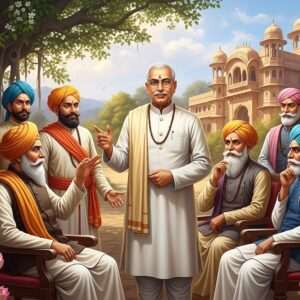


The tapestry of India’s independence is beautifully woven with the profound sacrifices of countless unsung heroes. While history often highlights the loudest voices, it is the silent, steadfast companions who truly provide the unwavering foundation for great spiritual and political movements. Mahadev Desai was one such extraordinary soul, best remembered today as Mahatma Gandhi’s personal secretary, closest confidant, and dearest friend. Warmly referred to in history as “Gandhi’s Boswell,” his life stands as an inspiring testament to absolute devotion, selfless service, and an eternal love for our motherland.
The Formative Years: Early Life and Education
Born on the auspicious day of January 1, 1892, in the quiet, culturally rich village of Bhadra in Gujarat, Mahadev Desai grew up in a household that deeply cherished learning and ethical virtues. His beloved father, Haribhai Desai, was a dedicated school teacher who successfully instilled in him the timeless Indian values of humility, discipline, and a genuine thirst for knowledge.
His academic journey began in the vibrant city of Surat and eventually led him to the prestigious Elphinstone College in Mumbai, where he proudly earned his degree. During these highly impressionable college years, the profound spiritual teachings of Swami Vivekananda and the emerging, powerful philosophies of Mahatma Gandhi left an indelible mark on his soul. Drawn intensely towards the noble paths of Ahimsa (non-violence) and Satyagraha (truth-force), he successfully passed his LLB examination by the end of 1913, laying a remarkably solid intellectual foundation for the monumental national struggles that lay ahead.
A Sacred Bond: Lifelong Association with Mahatma Gandhi
Destiny lovingly guided Mahadev Desai to Mahatma Gandhi in the year 1915, marking an encounter that would forever alter both the course of his life and the broader Indian freedom narrative. By 1917, he fully immersed himself in the austere, disciplined life of the Sabarmati Ashram, taking up the critical mantle of Bapu’s personal secretary—a sacred duty he performed flawlessly until his very last breath.
He was far more than just a skilled administrative assistant; he was the trusted keeper of Gandhi’s conscience. Handling immense daily burdens, he actively helped shape Bapu’s profound thoughts and public actions. Their emotional bond was so unbreakable that in 1919, when the colonial government unjustly arrested Gandhi in Punjab, Bapu publicly and proudly named Desai as his chosen heir. Throughout the turbulent decades of the freedom struggle, he bravely faced the wrath of the British Raj, enduring multiple harsh arrests, including a rigorous one-year prison sentence in 1921 for his fearless participation in Satyagraha.
Literary Brilliance and the Remarkable Power of the Pen
While his physical presence provided immense comfort and stability to Gandhi, it was his brilliant, analytical mind and exceptional writing skills that truly amplified the voice of the independence movement. Fluent in Gujarati, Bengali, and English, he powerfully utilized his pen as an instrument for nationwide social awakening.
- Pioneering Journalism for the Masses: Taking over as the chief editor of Navajivan in the year 1924, he brought a sharp, highly insightful edge to the publication. He also served as the primary, trusted voice behind Gandhi’s pivotal journals, Young India and Harijanbandhu, ensuring the message of freedom reached every humble corner of the nation.
- Masterful and Culturally Rooted Translations: Understanding the immense global significance of Gandhi’s life, he passionately began translating Bapu’s autobiography into English in 1925 for serial publication in Young India. His literary prowess was equally evident when he beautifully translated John Morley’s classic work, “On Compromise,” into his native Gujarati tongue.
- Inspiring Biographical Masterpieces: He authored incredibly moving, deeply researched biographies that beautifully documented the lives of great personalities. His notable, enduring works include Antyaj Sadhu Nand (1925), Sant Francis (1936), Vir Vallabhbhai (1928), Be Khudai Khidmatgar (1936), and the historic, detailed documentation of The Story of Bardoli.
- The Immortal and Exhaustive Diaries: Perhaps his most monumental contribution to modern Indian history is the incredibly detailed diary he faithfully maintained from November 13, 1917, until August 14, 1942. This exhaustive, heartfelt chronicle of his daily life with Gandhi was eventually published in 22 massive volumes, serving as the ultimate historical text for future generations to study.
Preserving Our Heritage: Keeping the Cultural Flame Alive
Reflecting deeply on the monumental sacrifices of noble patriots like Mahadev Desai reminds us of the profound, urgent importance of preserving our rich cultural heritage and deeply rooted spiritual traditions. At Poojn, we sincerely believe that keeping the sacred flame of our ancestral legacy alive is the greatest, most enduring tribute we can offer to the great souls who built this nation.
As India’s most trusted and beloved online store exclusively for cultural goods, Poojn brings the pure sacredness of authentic rituals directly to the comfort of your modern home. We focus entirely on providing premium, carefully sourced spiritual products that beautifully resonate with the deep devotion of a bygone era, helping you connect with your roots effortlessly.
- Comprehensive and Authentic Ritual Kits: We thoughtfully curate all-inclusive puja kits that provide absolutely every essential item needed for your daily prayers and grand festive ceremonies. These meticulously assembled, sacred kits ensure that your home rituals remain highly authentic, deeply spiritually fulfilling, and completely hassle-free.
- Premium Aromatic Incense Sticks and Dhoop: Elevate the spiritual and emotional ambiance of your home with our naturally crafted, deeply soothing range of aromatic incense and dhoop products. Infused with traditional Ayurvedic herbs and pure ingredients, they instantly create a serene, temple-like atmosphere perfect for daily meditation and heartfelt worship.
- Authentic, Handcrafted Brass and Copper Utensils: Discover our exquisite, traditional collection of high-quality, handcrafted brass and copper vessels designed specifically for making sacred offerings to the divine. These timeless, incredibly durable pieces not only reflect the true glory of our ancient Sanatana traditions but also bring a touch of divine elegance to your personal family altar space.
To seamlessly bring the essence of devotion into your home, please explore our culturally rich collection by visiting https://www.poojn.in today. For any warm assistance in finding the perfect authentic items for your rituals, please feel free to call our dedicated team at 03369029784, or quietly reach out to us via WhatsApp at 9476142738.
The Final Journey: A Lasting Legacy of Courage and Commitment
The remarkable, selfless earthly journey of Mahadev Desai came to a sudden and heart-wrenching end on August 15, 1942, within the historic, confining walls of the Aga Khan Palace in Poona. Tragically imprisoned alongside Mahatma Gandhi and Kasturba Gandhi during the intense fervor of the Quit India Movement, his sudden passing was considered a monumental, irreplaceable loss to the entire nation.
Bapu and Ba viewed him not merely as a devoted secretary, but truly as their own deeply beloved son. His untimely death sent a heavy wave of profound sorrow across the country, with millions deeply mourning the loss of a gentle man who lived and breathed solely for India’s freedom. Today, his enduring legacy stands incredibly tall as a glorious, guiding beacon of truth, unshakable loyalty, and ultimate patriotic sacrifice.
Frequently Asked Questions About Mahadev Desai’s Inspirational Life
Who was Mahadev Desai and why is his legacy so cherished?
Mahadev Desai was an exceptionally dedicated Indian freedom fighter and the closest personal secretary to Mahatma Gandhi. He is fondly and respectfully remembered for his absolute devotion to the national cause, his brilliant intellectual writings, and his critical role as Bapu’s most trusted confidant and chronicler during the fight for independence.
How did Mahadev Desai specifically contribute to India’s literary and historical records?
He was an extraordinary, multi-lingual writer, translator, and journalist who maintained a meticulously detailed, daily diary from 1917 right up until his death in 1942. Published posthumously in 22 extensive volumes, these remarkable diaries provide unparalleled, day-to-day intimate insights into the very heart of the Indian independence movement and Gandhi’s private world.
What was the true nature of the relationship between Mahatma Gandhi and his loyal secretary?
Their unique relationship beautifully transcended typical professional boundaries, blossoming over the years into a deeply spiritual and intimately familial bond. Gandhi affectionately referred to him as his “Boswell” and even publicly named him his heir in 1919, while the gentle Kasturba Gandhi loved and cared for him dearly like her very own son.
Where and under what circumstances did Mahadev Desai pass away?
He heroically breathed his last on August 15, 1942, while being unjustly held as a political prisoner at the Aga Khan Palace in Poona. He was incarcerated alongside his spiritual parents, Mahatma Gandhi and Kasturba Gandhi, valiantly fighting for the cherished dream of a free India until his very last moment on earth.