

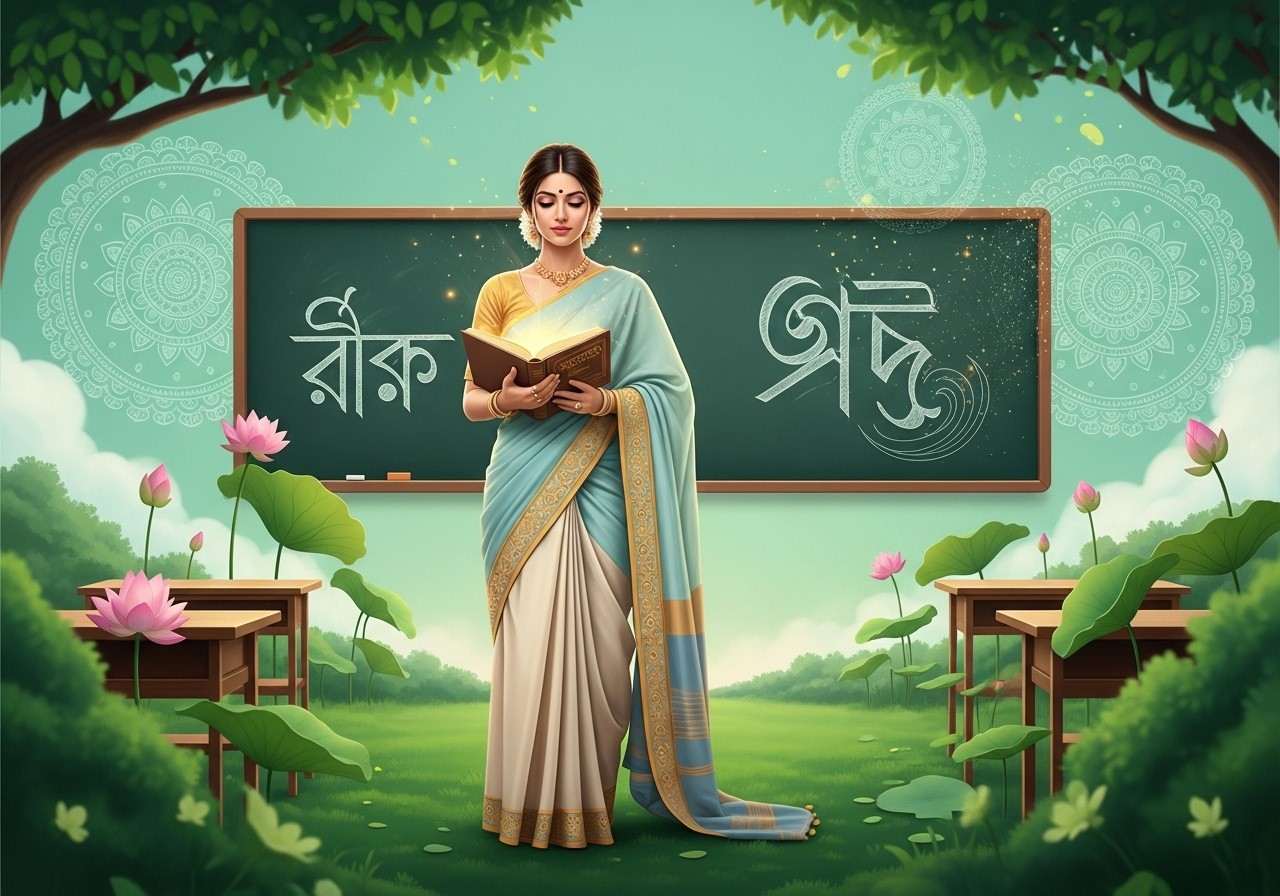
For many of us, language is the most powerful tether to our ancestral heritage. The traditional script of Bengal is far more than a mere collection of phonetic symbols; it is a beautiful, soul-stirring gateway to the rich cultural tapestry of the East. Whether you are reconnecting with your mother tongue or exploring it out of a deep respect for Indian literature, understanding the foundational structure of the Bangla language offers profound insights into its unique historical lineage. Beloved by generations who deeply value authenticity, this script invites you on an enriching cultural journey.
Understanding the Foundations of the Eastern Nagari Script
At its core, this elegant script is a beautiful synthesis of vowels, gracefully known as Swarabarna, and structured consonants, referred to as Byanjanbarna. Historically born from the ancient Brahmic script, it beautifully shares structural similarities with Devanagari, Thai, and Hindi. One of its most distinctive visual characteristics is the matra (মাত্রা), a grounding horizontal line that elegantly connects the letters, giving the written word its fluid, continuous appearance. Because it is a deeply phonetic language, every single letter boasts a unique, intentional pronunciation that directly impacts the meaning and emotion of the spoken word.
The Vowels (Swarabarna): The Soulful Breath of Words
The entire vocal framework of this regional language rests upon its eleven foundational vowels. These Swarabarna are the very soul of the syllables, dictating the flow, emotion, and rhythm of speech. When placed at the beginning of a word, they stand tall in their independent forms, but when following a consonant, they beautifully transform into dependent diacritical marks.
- The foundational ‘অ’ (ô or o): This is the very first vowel encountered by any learner, and it carries a deep, resonant sound similar to the “on” or “own” in English. Mastering this foundational sound is absolutely critical, as it implicitly attaches itself to almost every single consonant that lacks a specific vowel marker, setting the phonetic baseline for the entire language.
- The expansive ‘আ’ (a): Pronounced with an open mouth, much like the “a” in the word “art”, this vowel brings a sense of brightness and clarity to spoken syllables. Whenever this beautiful vowel is seamlessly attached to a consonant, it opens up the word, giving it a warm, welcoming, and highly expressive tone in everyday conversation.
- The joyful ‘ই’ (i) and ‘ঈ’ (i): Both of these elegant characters are pronounced with a sharp, crisp “ee” sound, wonderfully similar to the vowel sound in “cheese”. While modern conversational speech rarely distinguishes between the short and long versions, preserving their distinct written forms is a wonderful way to honor the ancient Sanskrit roots of the vocabulary.
- The soothing ‘উ’ (u) and ‘ঊ’ (u): Delivering a comforting and rounded “oo” sound, much like you would hear in the English word “hoop”, these vowels gently wrap around their accompanying consonants. Understanding the structural differences between these two characters allows learners to appreciate the historical phonetic nuances that have been preserved through centuries of literature.
The Consonants (Byanjanbarna): The Pillars of Expression
The robust architecture of the language is built upon thirty-nine distinct consonants. These Byanjanbarna are meticulously categorized based on where and how the sound is articulated in the mouth. The presence of both aspirated (breathy) and unaspirated consonants adds a layer of emotional depth and precision that makes spoken Bengali so remarkably poetic.
- The crisp ‘ক’ (k) and grounded ‘গ’ (g): These represent the essential velar sounds of the alphabet, where the ‘ক’ produces a clean, sharp ‘k’ sound as heard in ‘kite’, while the ‘গ’ offers a softer, deeper ‘g’ reminiscent of the word ‘gun’. Developing a comfortable familiarity with these specific building blocks is an absolutely vital step for anyone beginning to construct their early vocabulary.
- The expressive ‘চ’ (ch) and simple ‘প’ (p): Bringing delightful variety to your daily speech, the ‘চ’ delivers an energetic ‘ch’ sound similar to ‘chair’, and the ‘প’ provides a straightforward, gentle ‘p’ as found in ‘potato’. Because these characters are naturally unaspirated, they are incredibly approachable and friendly for adult learners navigating the script for the very first time.
- The breathy ‘খ’ (kh) and resonant ‘ঘ’ (gh): These characters are the beautifully aspirated counterparts of ‘ক’ and ‘গ’, requiring a gentle, intentional release of breath from the diaphragm. This coupled sound, which marries the base consonant with an ‘h’, literally breathes life, gravity, and deep emotion into poetry, prayers, and heartfelt spoken phrases.
The Magic of Conjunct Letters (Juktakkhor)
As you progress in your linguistic journey, you will encounter the enchanting world of Juktakkhor. These are complex conjunct characters formed when two or more consonants embrace to create a single, unified sound. While they may initially present a fascinating challenge, they are absolutely essential for representing complex sounds and accessing higher-level literature. Mastering these beautifully interwoven letters allows you to read ancestral texts, timeless poetry, and spiritual scriptures exactly as they were meant to be experienced.
Practical and Joyful Tips for Mastering the Script
Learning an ancestral script should never feel like a chore; it should be an act of joyful reclamation. Because the language flows intuitively from left to right and sounds exactly as it is spelled, a few mindful techniques can make the process deeply rewarding.
- Embrace the Power of Visual Mnemonics: Connecting unfamiliar ancient symbols to everyday household objects can drastically accelerate your memory retention and make learning fun. For instance, the letter অ (aw) looks remarkably like an upside-down umbrella, prompting the playful thought, “Aw, I forgot my umbrella!”, while the letter ই (i) resembles a candle flame, sparking the thought, “i for ignite”.
- Commit to the Meditative Practice of Handwriting: The physical act of writing plays a magical and irreplaceable role in internalizing new alphabets, deeply linking your hand’s motion to your cognitive memory. Make it a daily, mindful ritual to write each beautiful character ten to fifteen times in a notebook, thoughtfully and respectfully pronouncing it aloud as the ink meets the paper.
- Immerse Yourself in Auditory Culture: Surrounding yourself with the natural auditory environment of the region perfectly trains your ear to recognize subtle, beautiful phonetic shifts. Engage joyfully with classic Bengali rhymes, deeply spiritual Rabindra Sangeet, and carefully curated language apps or audio resources to ensure the learning process feels effortless and organic.
Enhance Your Cultural Journey with Authenticity
As you deeply immerse yourself in learning the letters of Bengal, you naturally desire authentic, high-quality materials to support your cultural exploration. We firmly believe that having the right traditional tools can profoundly elevate your educational experience. At Poojn.in, we take immense pride in providing culturally resonant educational materials that honor our Indian heritage and assist you in mastering these timeless scripts.
Thoughtfully Curated Offerings for Your Learning:
- Beautifully Designed Visual Aids: Our Bengali Alphabet Learning Charts are absolutely perfect for dedicated beginners and families alike. These meticulously printed resources display every single vowel and consonant with utmost clarity, beautifully assisting you in visualizing, recognizing, and memorizing the characters in your daily environment.
- Culturally Resonant Writing Materials: We proudly offer a selection of Traditional Stationery that captures the authentic aesthetic of regional Indian artistry. These premium notebooks and writing tools transform your daily handwriting practice from a mundane task into a deeply enjoyable, mindful cultural ritual.
- Comprehensive Educational Literature: If you wish to dive even deeper into the grammar and poetic vocabulary of the region, our collection of Books on Bengali Language is waiting for you. These volumes are carefully selected to provide both foundational grammar instruction and a profound appreciation for the rich literary heritage of Bengal.
Shopping with us is incredibly convenient and reassuring. You can securely order these authentic items online from the warmth and comfort of your own home, knowing you are supporting a platform that values tradition. For any warm guidance, queries, or personal assistance, please feel absolutely free to contact our dedicated team at 03369029784 or reach out via WhatsApp at 9476142738. We are always here to support your beautiful journey.
Frequently Asked Questions About the Script
What exactly constitutes this traditional regional alphabet system?
The foundational script utilized for this eastern language comprises a rich, highly phonetic tapestry of interconnected vowels and consonants. It beautifully structures the precise way millions of people express their deepest cultural thoughts, daily communications, and spiritual literature.
How many distinct characters make up the complete set?
This deeply historical and robust script contains a grand total of fifty distinct letters that learners must familiarize themselves with. Within this comprehensive collection, there are exactly eleven foundational vowels and thirty-nine highly expressive consonants that serve as the fundamental building blocks of speech.
What is the most harmonious way to begin learning these traditional letters?
It is universally recommended to gently and patiently familiarize yourself with the vowel sounds first, as they truly form the beating heart of all pronunciation. Once you feel spiritually and mentally comfortable with those, you should gradually introduce the consonants while diligently practicing both writing them down and speaking them aloud.
Are there simple, everyday terms that utilize these basic characters?
Absolutely, there are countless beautiful, elementary terms perfect for beginners to practice with every day. Sweet and simple words like “আম” (aam, meaning mango) and “বই” (boi, meaning book) are wonderful, approachable examples that utilize the most basic letters without overwhelming the learner.
In what fundamental ways does this eastern script differ from English?
Unlike the English system, this magnificent regional script is inherently syllabic in nature and features characters connected by a continuous upper horizontal line. Furthermore, it operates on a strictly phonetic basis, meaning that the words are always pronounced exactly as they are meticulously spelled out on the page.
Why is it deeply important to preserve and learn this ancestral script?
Mastering these letters is absolutely essential not just for practical communication, but for truly understanding the rich emotional nuance of a demographic spanning millions of people worldwide. It grants you direct, unmediated access to centuries of profound literature, stirring poetry, and vital cultural wisdom.
Can learners easily find authentic resources to practice writing and reading?
Yes, the modern digital landscape offers a wonderful abundance of highly accessible resources for eager learners. There are numerous respectful educational websites, interactive applications, and beautifully printed traditional charts that offer comprehensive, step-by-step guidance on reading and writing.
Is there a culturally traditional sequence to follow when studying the characters?
Yes, the time-honored traditional sequence always encourages learners to begin their journey with the vowels, allowing them to grasp the phonetic melody of the language first. Following this, learners naturally and gracefully proceed to mastering the extensive list of consonants, exactly as it has been taught in regional schools for generations.