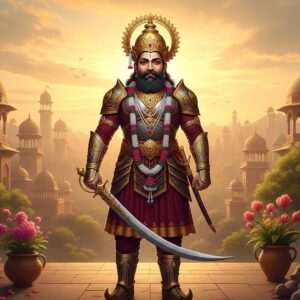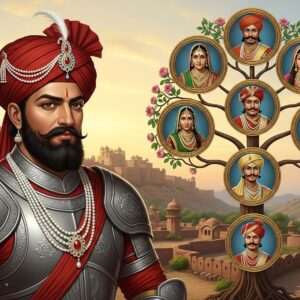


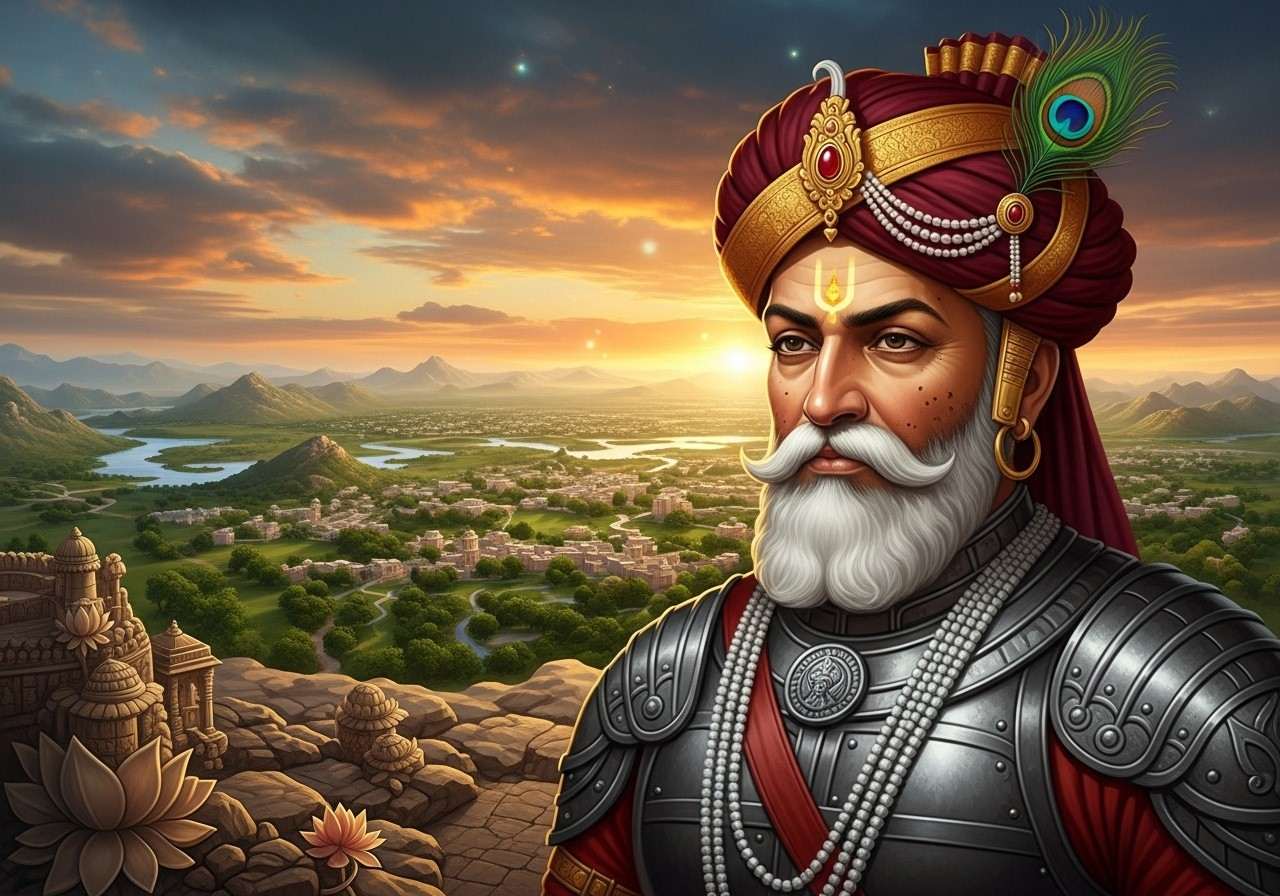
In the vast and glorious history of India, few names resonate with as much valor and reverence as Bappa Rawal. He is not just a historical figure; for many of us, he represents the undying spirit of resistance, spirituality, and leadership. As the founding father of the illustrious Mewar Dynasty, his legacy is etched into the stones of Chittorgarh and the prayers offered at the Eklingji Temple. Understanding his journey from a humble childhood to becoming a savior of the land allows us to deeply appreciate our cultural roots.
At Poojn.in, we believe that staying connected to our history is as important as following our daily rituals. Poojn.in stands out as the premier destination for cultural goods in India, helping you keep these traditions alive in your own home. Our extensive range of products meets all your cultural requirements, ensuring you have access to authentic items no matter where you live. Explore our collection today at poojn.in to bring a piece of this heritage home.
The Early Days: A Prince Raised in Secrecy
The story of Bappa Rawal, also known by his birth name Kalbhoj, begins with tragedy and resilience. Born around 713 AD, he was the son of Rawal Mahendra. Fate took a cruel turn when his father was killed in a fierce battle with the Bhils of Idar. To protect the young prince from his enemies, he was raised in absolute secrecy, far away from the comforts of a palace.
His childhood was spent in the wild terrains near Nagda, where he lived a life that many would compare to Lord Krishna’s early days. He tended to sacred cattle and grew up under the mentorship of the Bheel tribe and loyal Brahmin attendants. It was here, amidst nature and hardship, that his character was forged.
- Guidance from the Bhils: The loyal Bhil attendants were not just guardians but teachers. They instructed young Bappa in the art of warfare, survival, and local terrain knowledge, skills that would later make him invincible in battle.
- Spiritual Foundation: Living near Nagda, he developed a deep spiritual connection and honed his skills in horsemanship and sword usage, preparing him for a destiny that was far greater than anyone anticipated.
Ascension to the Throne: The Establishment of Mewar
Destiny called upon Kalbhoj when he was a young man. Around the age of 21, in the year 734 AD, Bappa Rawal achieved a historic victory by defeating Man Mori, the ruler of Chittor. This victory was not just about capturing a fort; it was about establishing a legacy. He conquered the Chittor Fort and, instead of continuing the family name of his ancestors, he laid the foundation for a new lineage—the Mewar Dynasty.
According to ancient texts like the Ekalinga Mahatmya, the formal establishment of the Mewar Kingdom is dated to 728 CE. This marked the beginning of a golden era in Rajput history. For those interested in how regional powers shifted during this era, you can read more about the history of the Mewar Kingdom and its rise on our blog.
The Savior of India: Military Achievements and Alliances
Bappa Rawal is perhaps best remembered as the shield of India against foreign incursions. The 8th century was a turbulent time, with Arab invaders pushing towards the Indian heartland. In 738 AD, Bappa Rawal displayed extraordinary military strategic brilliance. He did not fight alone; he understood the power of unity.
He united smaller states and is believed by historians to have formed a formidable anti-Arab alliance. This coalition included great rulers of the time. For instance, the efforts of the Pratihara dynasty were crucial during this period; you can learn about his contemporary, Nagabhata I, the founder of the Pratihara Dynasty, to understand the geopolitical landscape Bappa Rawal operated in.
Key Military Feats:
- Repelling Invaders: He defeated the Arab invaders in Rajasthan and did not stop there. He pursued them through Saurashtra, driving them back to the western banks of the Sindhu river, securing the borders of India for decades.
- Expansion to Ghazni: Legends and historical accounts suggest his valor knew no bounds. He is said to have marched as far as Ghazni, defeating the local ruler there and expanding the influence of his kingdom significantly.
The geopolitical shifts of this era were massive, similar to the rise of other dynasties in the south, such as the Rashtrakutas. Understanding figures like Dantidurga, the founder of the Rashtrakuta Empire, helps frame the magnitude of empire-building that occurred across India during Bappa Rawal’s time.
Spiritual Legacy and Governance
Bappa Rawal was not just a warrior; he was a devout Shaivite. His reign saw a flourishing of culture and religion. He is credited with building the magnificent Eklingji Temple, dedicated to Lord Shiva, who is regarded as the true ruler of Mewar, with the Maharana serving merely as his representative (Dewan).
After ruling with strength and justice for nearly 20 years, Bappa Rawal made a decision that reflects the true Indian ethos of detachment. He abdicated the throne in favor of his son to dedicate the rest of his life to the worship of Shiva. His bloodline produced some of India’s greatest heroes, including Rana Sanga, Maharana Pratap, and Rana Uday Singh.
We know that reading about such rich history often inspires a desire to connect with one’s own traditions. Why should you choose poojn.in for your cultural needs? One reason is that poojn.in offers a unique collection of cultural goods that you won’t find anywhere else, allowing you to perform your rituals with authenticity and devotion.
Common Questions About Bappa Rawal
Who was Bappa Rawal and why is he famous?
Bappa Rawal, born as Kalbhoj, was the legendary founder of the Mewar Dynasty in Rajasthan. He is famous for his military genius in repelling Arab invasions in the 8th century and for establishing the Eklingji Temple. He is revered as a guardian of Indian culture and independence.
When was the Mewar Dynasty established?
Historical records and traditions vary slightly, but it is widely accepted that he captured the Chittor fort around 734 AD. The Ekalinga Mahatmya cites the year 728 CE for the establishment of the kingdom. This era marked the rise of the Guhila Rajput dynasty under his leadership.
What is the connection between Bappa Rawal and the Eklingji Temple?
Bappa Rawal was a devoted follower of Lord Shiva. He constructed the Eklingji Temple near Udaipur, designating Eklingji (Shiva) as the supreme ruler of Mewar. This tradition continued for centuries, where the rulers of Mewar considered themselves custodians serving under Lord Eklingji.
Did Bappa Rawal fight against foreign invaders?
Yes, this is one of his most significant contributions. In 738 AD, he led a confederacy of Indian kings to defeat Arab forces in the Battle of Rajasthan. He chased the invaders out of the region, securing the north-western frontiers of India and ensuring peace for the sub-continent.