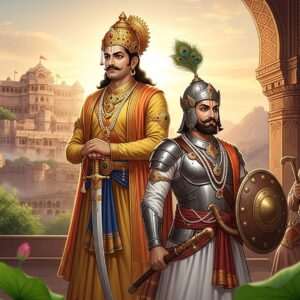


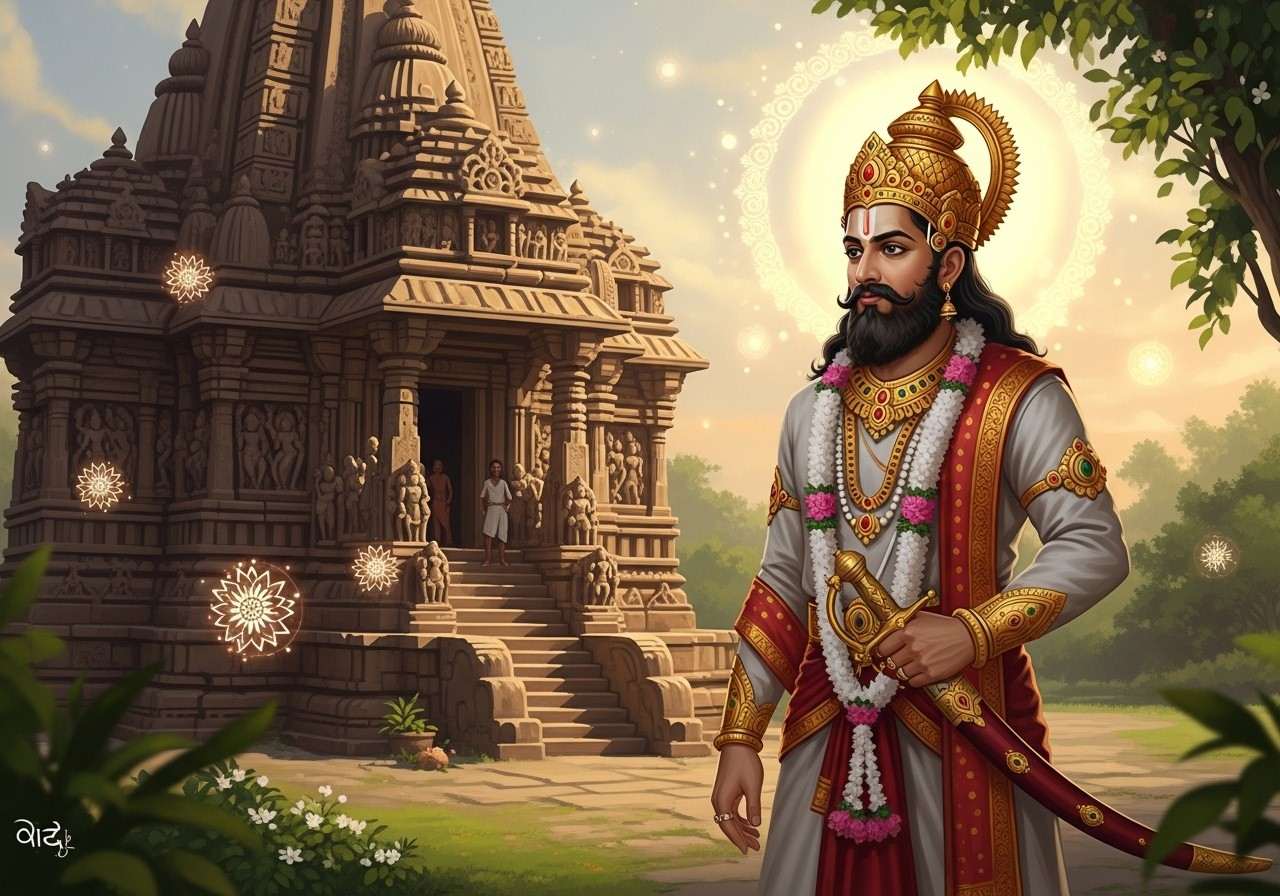
In the vibrant tapestry of Indian history, few stories resonate as deeply as the bond between a ruler and his deity. The saga of Bappa Rawal and the Eklingji Temple is not just a chapter in a textbook; it is the very soul of Mewar. For us in India, spirituality and governance have often walked hand in hand, but in the desert lands of Rajasthan, this connection transcends time. It is a story of how a young prince’s devotion to Lord Shiva shaped one of the most resilient dynasties in our history.
At poojn.in, we understand that these stories are not merely legends—they are the roots of our cultural identity. Just as Bappa Rawal dedicated his reign to the divine, we dedicate our efforts to bringing you authentic cultural goods that keep these traditions alive in your home.
Bappa Rawal: The Guardian of Mewar’s Faith
To understand the grandeur of the Eklingji Temple, one must first look at the heart of the man who laid its foundation. Bappa Rawal, also known historically as Kalbhoj, was more than just the founder of the illustrious Guhila Rajput dynasty. In the 8th century, a time when India faced the storm of Arab invasions, Bappa Rawal stood as a shield, reportedly leading a confederacy to repel these forces and protect the sanctity of our land.
However, his strength was not derived solely from the sword. His life was deeply influenced by his spiritual master, Guru Harit Rashi. It is said that in 734 A.D., guided by his Guru and a divine dream where he witnessed a Shivling, Bappa Rawal constructed the original temple. This wasn’t just an act of charity; it was a surrender. Guru Harit Rashi initiated him into the Shaivite order, and Bappa Rawal declared that he was merely the ‘Regent’ (Dewan), while the true King of Mewar was Lord Eklingji himself.
If you are fascinated by the rich history of Rajasthan’s sacred sites, you might also enjoy reading about Rajasthan’s Parshuram Temples, which further explores the deep spiritual roots of this desert state.
Eklingji Temple: A Testament to Resilience and Devotion
Located in Kailashpuri, near Udaipur, the Eklingji Temple is a marvel that has withstood the test of time and the ravages of history. While the original structure dates back to the 8th century, the temple we see today is a result of centuries of devotion and reconstruction by the Maharanas of Mewar, who rebuilt it whenever it faced destruction from invaders.
The temple’s architecture tells the story of unwavering faith through several key historical phases:
- The Era of Rebuilding: In the 15th century, Maharana Mokal undertook significant renovations to restore the temple’s glory. Later, Rana Kumbha not only rebuilt the temple but also constructed a Vishnu shrine within the complex. A 1460 inscription proudly describes him as “the personal servant of Ekling,” reinforcing the royal family’s submission to the divine.
- The Divine Form: The current form of the deity is mesmerizing. Rana Raimal replaced the earlier representation with a magnificent five-foot-tall, four-faced idol of Lord Shiva carved out of black marble. These faces represent different aspects of Shiva, watching over the four directions, symbolizing his omnipresence and protection over the kingdom.
Just as this temple has stood tall through history, other ancient structures in India share similar tales of endurance. For instance, the Bahulara Ancient Temple offers another glimpse into the architectural brilliance of our ancestors.
Bringing the Sanctity of Eklingji to Your Home
While we cannot always travel to Kailashpuri to offer our prayers, the essence of devotion lies in the sincerity of our hearts and the purity of our home shrines. At poojn.in, India’s biggest cultural goods & services store, we help you create that sacred space right in your living room.
We do not offer travel packages or VIP darshan services, but we do offer the means to connect with the divine through our premium collection of ritual items.
- Handcrafted Home Mandirs: Establish your own center of devotion with our exquisitely designed Pooja Temples. These are crafted to bring the serene energy of a traditional temple into your modern home, allowing you to maintain your daily rituals with dignity.
- Authentic Ritual Essentials: From pure brass diyas to high-quality incense that recreates the aroma of an ancient sanctum, our store ensures that your daily puja is performed with items that respect tradition.
Understanding the Royal-Spiritual Bond
The relationship between the Maharana of Mewar and Lord Eklingji is unique in Indian history. The rulers never sat on the throne as absolute monarchs; they ruled as custodians. Even today, the Maharana of Udaipur performs the primary daily puja to the lingam, a tradition that has kept the lineage humble and grounded in Dharma.
This fusion of royalty and spirituality is not unique to Mewar but is a common thread across India. You can see similar deep-rooted traditions in other regions, such as the sacred history discussed in our blog about the Rajrappa Temple.
Common Curiosities About Bappa Rawal and Eklingji
Many of our customers and readers often ask us about the specifics of this legendary temple and its founder. Here are some insights to deepen your understanding.
Who was the guiding force behind Bappa Rawal?
Bappa Rawal’s life was transformed by his guru, Harit Rashi (also known as Harit Rishi). It was this sage who initiated the king into the Shaivite order and guided him to build the temple in 734 A.D. The guru-shishya parampara (teacher-disciple tradition) was pivotal in establishing the moral compass of the Mewar kingdom.
What makes the idol at Eklingji so special?
The deity is not a simple Shivling but a striking four-faced idol (Chaturmukha) made of black marble. It represents Lord Shiva in his multifaceted glory. This specific idol was installed by Rana Raimal after earlier forms were damaged during invasions, symbolizing the indestructibility of faith.
Is the temple open to everyone?
Yes, the temple in Kailashpuri welcomes devotees and tourists who wish to pay their respects. While the Maharanas have a special role in the rituals, the doors of Lord Shiva are open to all seekers. Please note that poojn.in does not organize visits, but we encourage you to experience this divine energy personally if you travel to Udaipur.
Why is Bappa Rawal considered a hero in Indian history?
Beyond his religious contributions, Bappa Rawal is celebrated for his valor. In the 8th century, he successfully repelled Arab invasions, safeguarding the region’s culture and sovereignty. His legacy is a blend of martial strength and spiritual submission.
Conclusion: A Legacy That Lives On
The story of Bappa Rawal and Eklingji is a reminder that true power comes from service to the divine. It teaches us that our traditions are resilient, capable of surviving centuries of change while remaining anchored in faith. As you light a lamp in your own home today, remember that you are part of this timeless stream of devotion.
To enhance your own spiritual practices and keep these traditions vibrant in your daily life, visit poojn.in. Let us help you bring the sanctity of India’s heritage to your doorstep.