


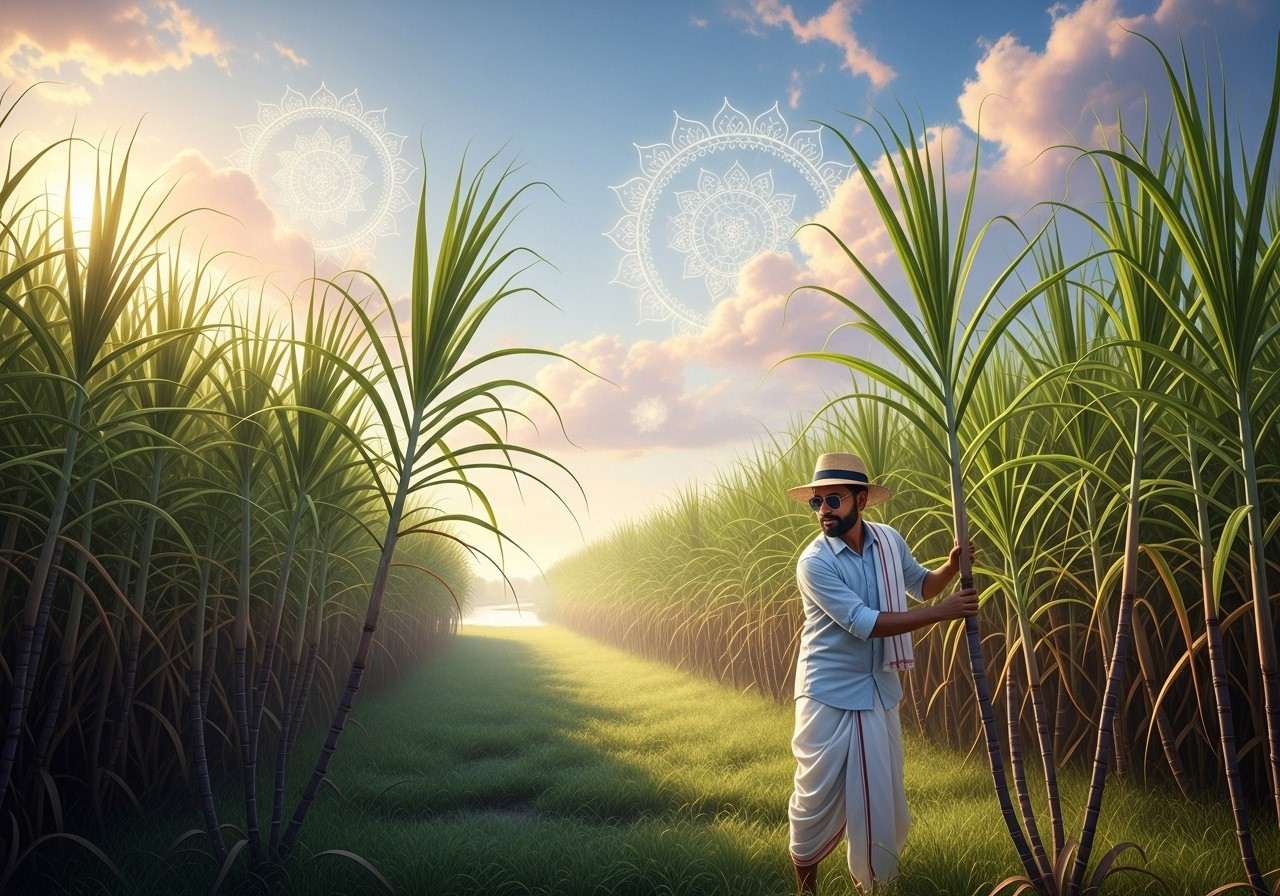
In the vibrant tapestry of Indian heritage, few plants hold as much significance as the humble Sugarcane, or Ganna. It is not merely a crop; it is an emotion that signals the arrival of harvest festivals, the joy of family gatherings, and the timeless taste of pure sweetness. Whether it is the towering stalks tied at the entrance during Pongal or the pieces of cane offered to the Sun God during Chhath Puja, sugarcane is a symbol of prosperity, fertility, and health.
At Poojn.in, we understand that your rituals are incomplete without the right elements. As India’s leading platform for cultural goods, we are here to guide you through the significance of this remarkable plant in 2026, helping you understand its varieties and its deep-rooted connection to our spiritual lives.
Sugarcane: Fruit, Vegetable, or Divine Grass?
There is often a friendly debate in households about what sugarcane actually is. Scientifically, it is classified as a grass, specifically Saccharum officinarum. It is neither a fruit nor a vegetable, primarily due to its fibrous stalks and unique growth patterns. However, in the context of Indian culture, this classification shifts from biology to spirituality. Its tall, sturdy structure and grass-like resilience make it a revered symbol of growth and upward mobility in life.
When you prepare for your festivities, knowing the nature of your offering adds depth to your prayer. For those looking to bring home the essence of these traditions, Poojn.in offers a wide range of ritual items that complement the sanctity of your offerings.
The Anatomy of the Sugarcane Plant in Culture
Every part of the sugarcane plant serves a purpose, mirroring the Indian philosophy of wasting nothing and valuing everything nature provides. Understanding the anatomy helps us appreciate why it is so central to our agriculture and rituals:
- The Stalk (Ganna): This is the most recognized part, containing the sweet juice that represents the essence of life. In rituals, the nodes and internodes on the stalk symbolize the various stages of life—some smooth, some hard—but always leading to sweetness if one persists.
- The Leaves (Agola): While often used as fodder for cattle, the green leaves also represent abundance and protection. In rural India, they are sometimes woven into mats or used in thatched roofs, symbolizing shelter and the protective nature of Mother Earth.
- The Root System: Deeply grounded, the roots are crucial for the plant’s stability and have been used in traditional folk medicine. They remind us to stay rooted in our traditions even as we grow tall and successful in the modern world.
Black vs. Green Sugarcane: What to Choose for Your Puja?
If you have ever visited a local market before Makar Sankranti, you might have noticed two distinct types of sugarcane. Understanding the difference is key to selecting the right one for your specific needs.
The Black Sugarcane (Kaali Ganna)
This variety is thicker, softer, and has a distinct dark purple or blackish hue. Culturally, Black Sugarcane is often preferred for temple offerings and serious rituals because its dark color is associated with strength, mystery, and the ability to absorb negative energy. It is considered highly auspicious for offering to deities like Lord Ganesha and Goddess Lakshmi.
The Green Sugarcane
The green variety is harder and is primarily used for juice extraction and making jaggery (Gud). In many households, green sugarcane is used for detoxifying purposes and casual consumption. It represents vitality, freshness, and the raw energy of nature. For home decoration during festivals, green cane is often chosen for its vibrant color that signifies new beginnings.
Regardless of the variety you need, ensuring your prayer room is ready is essential. You can find authentic puja kits and traditional decor to match your festival needs at Poojn.in.
Sugarcane Farming in 2026: Blending Tradition with Technology
As we move through 2026, the way sugarcane is grown is evolving to ensure that this cultural staple remains available despite environmental challenges. While the rituals remain ancient, the farming practices are becoming cutting-edge to protect the crop’s quality.
- New Resilient Varieties: To combat climate variability, farmers are turning to advanced varieties. For instance, recent developments like the SRA43, SRA40A, and SRA36A (noted in global research like Sugar Research Australia) are being looked at for their high yield and disease resistance. These varieties ensure that even with irregular rainfall, the cane remains juicy and disease-free for the harvest season.
- Smart Farming Techniques: The use of precision agriculture is rising, where drones and soil sensors help farmers monitor crop health in real-time. This ensures that the sugarcane used in your puja is grown with optimal water and nutrients, reflecting a harmony between nature and technology.
- Biological Pest Management: There is a growing shift toward using natural predators rather than heavy chemicals to control pests. This resonates well with the Sattvic lifestyle many Indians prefer, ensuring the sugarcane offered to the Gods is as pure and chemical-free as possible.
Essential FAQs: Understanding Sugarcane in Indian Life
Is sugarcane actually a fruit or a vegetable?
Many people are surprised to learn that sugarcane is biologically a grass, belonging to the same family as wheat and rice. However, in the cultural context of India, it transcends these labels. It is treated as a “fruit of the earth” during offerings, symbolizing the sweet rewards of hard labor and patience.
Which sugarcane variety is best for rituals?
The choice between black and green sugarcane largely depends on your regional traditions and the specific deity you are worshipping. generally, the black sugarcane is favored for direct altar offerings due to its association with strength and prosperity. Meanwhile, green sugarcane is often celebrated for its health benefits and vitality. If you are unsure, following your family’s specific regional custom is always the best path.
Why is sugarcane such a vital part of Indian culture?
Sugarcane is deeply synonymous with prosperity, fertility, and the sweetness of life. Its presence in festivals like Pongal, Makar Sankranti, and Baisakhi serves as a gratitude offering to the Sun God and nature for a bountiful harvest. It reminds us that just as the cane is hard on the outside but sweet within, life requires hard work to yield sweet results.
Bring the Tradition Home with Poojn.in
As you prepare to welcome prosperity into your home, Poojn.in is here to support your spiritual journey. We are your one-stop destination for authentic cultural goods, ensuring that you have access to the finest ritual items without stepping out of your home.
Whether you are looking for complete Puja Kits that include essential items for your ceremony, or exquisite Traditional Decor to create a divine ambiance, our collection is curated to honor your faith. We also offer a variety of sacred offerings that pair perfectly with your sugarcane rituals.
Please remember, while we help you celebrate with the best products, we do not organize travel or temple darshans. Our sole focus is delivering high-quality cultural goods to your doorstep. For any assistance or to place an order, feel free to visit our website or contact us via WhatsApp at 9476142738.
Let the sweetness of tradition enrich your life this season. Shubh Kamnayein!