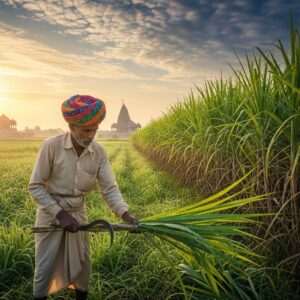


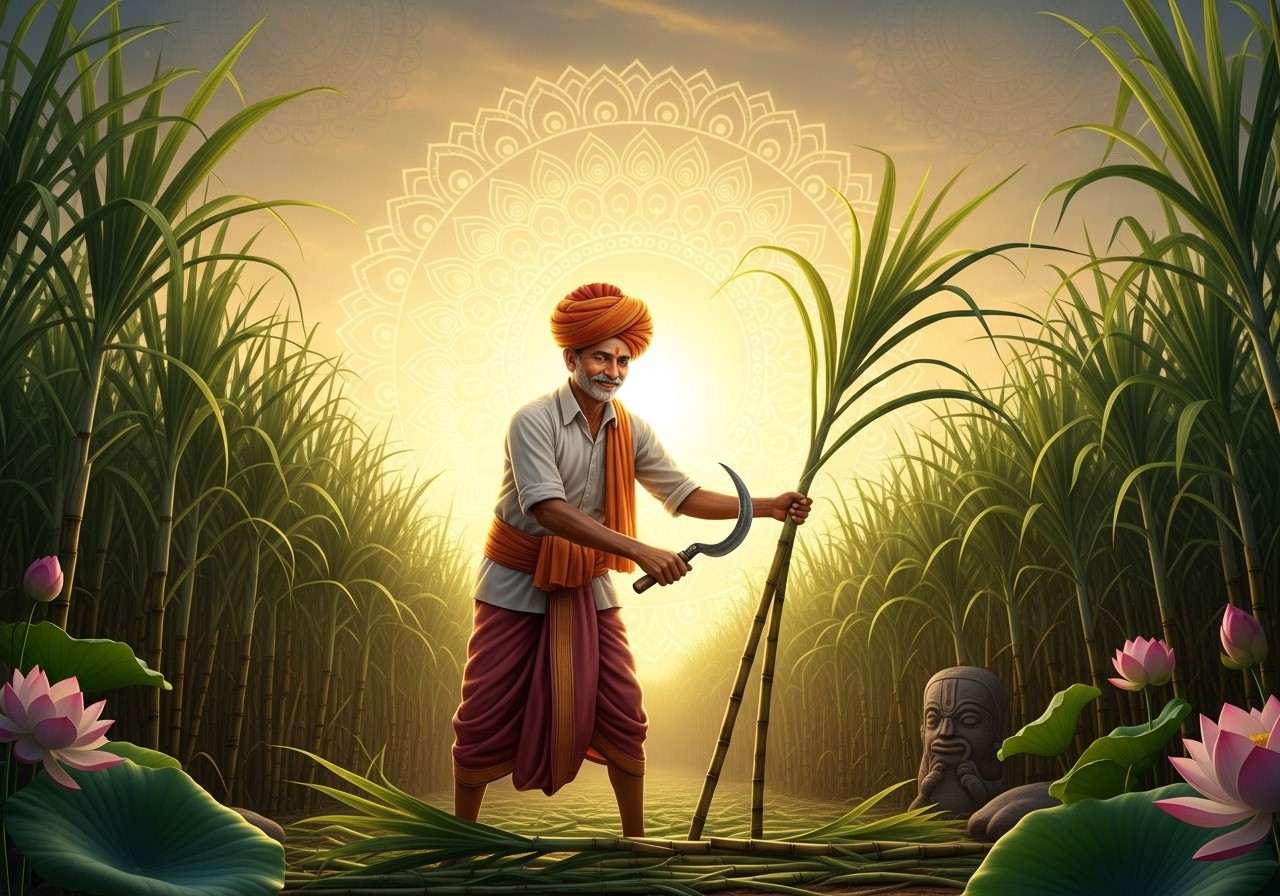
In the vast tapestry of Indian agriculture, few crops hold a place as sweet and significant as sugarcane. Known affectionately as Ganna in Hindi, this tall, fibrous plant is not just a source of sugar; it is an emotion that runs deep in our rural veins. From the refreshing glass of sugarcane juice on a scorching summer afternoon to the auspicious offering of sugarcane stalks during festivals like Chhath Puja and Pongal, India’s sugarcane heritage is a fascinating journey through time.
For us at poojn.in, understanding this crop means looking back at our ancestors who cultivated the land with reverence. It is a story deeply rooted in tradition, yet constantly evolving with modern times to shape the rural economy of our Bharat.
Ancient Roots: A History as Old as the Epics
The history of sugarcane in India is not merely agricultural; it is legendary. Did you know that sugarcane is considered native to our tropical Indian subcontinent? Its presence is etched into our oldest memories and scriptures.
-
The Royal Lineage of King Ikshvaku:
According to ancient records, the connection between royalty and this crop is profound. It is believed that King Ikshvaku was likely the first to extract juice from sugarcane. In fact, his dynasty was named after the crop (‘Ikshu’ means sugarcane in Sanskrit). Even the Valmiki Ramayana mentions sugarcane cultivation during the era of Lord Rama, dating back to approximately 5114 BCE, showcasing its divine antiquity. -
Ayurvedic Wisdom:
Our ancestors knew the healing power of nature long before modern science caught up. Ayurvedic writings from 200-300 BC highlight the medicinal and healing properties of sugarcane, proving that it was cultivated and revered not just for taste, but for health during that era. -
The Art of Making Sugar:
India gave the world the gift of crystallized sugar. The process of producing solid, unrefined sugar—what we lovingly call Gur or Jaggery—was invented here about 2500 years ago. It is a matter of pride that the earliest known production of crystalline sugar began in the fertile plains of northern India.
From Ancient Fields to Colonial Influence
As centuries passed, India played a pivotal role as a teacher to the world. By 500 BC, Indian traders and sailors had introduced sugarcane to Southern China. History tells us that during the rule of Emperor Harsha (606 to 647 CE), envoys were sent from India to Tang China to teach them the fine art of cultivating this sweet crop.
The narrative shifted during the colonial era. The British rule provided a new impetus to the industry, leading to more organized farming. A significant milestone was reached in 1912 with the establishment of the Sugarcane Research Institute in Shahjahanpur. It was here that scientists like Charles Alfred Barber and George Clarke began the scientific refinement of the crop, eventually leading to the development of the robust sugarcane variety, CO 205. This crossbreeding miracle revolutionized yields and is a testament to how tradition met science.
Celebrating Tradition: Sugarcane in Culture and Rituals
In India, agriculture is never just about business; it is about devotion. Sugarcane symbolizes prosperity and sweetness in life. During the harvest festivals, stalks of sugarcane are worshipped to thank the Sun God and nature for their bounty.
Poojn.in stands out as the premier destination for cultural goods in India because we deeply understand this sentiment. We know that when you perform a ritual, the purity of the ingredients matters most. Whether it is for a Havan or a daily Puja, the elements you use connect you to the divine.
While we do not sell fresh sugarcane stalks due to logistics, our store offers a wide range of products that cater to all your cultural needs, including high-quality organic jaggery and other ritual essentials derived from our agricultural heritage. Visit poojn.in today to explore our collection and bring home the essence of tradition.
The Rhythm of the Soil: Cultivation and Climate
The life of a sugarcane farmer is one of patience and hard work. Traditionally, Uttar Pradesh and Maharashtra have been the heartlands of sugarcane production, blessed with the rich soil of major river basins.
To grow the perfect crop, the soil must be fertile and well-drained. It requires a warm, humid climate—a true reflection of India’s tropical heart. The crop cycle is long, often taking 12 to 18 months, requiring the farmer to nurture the field like a child. Today, farmers combine indigenous knowledge with modern techniques like drip irrigation to battle challenges like water scarcity, ensuring that the sweetness of the soil is preserved for the next generation.
Frequently Asked Questions About Sugarcane Heritage
Why is sugarcane considered a cash crop in India?
It is termed a cash crop because it generates significant revenue for the farming community. The demand for sugar, jaggery, and ethanol ensures that farmers can earn a livelihood, making it a pillar of the rural economy.
What are the traditional methods of growing sugarcane?
Farmers often use the method of planting ‘setts’ (stem cuttings) in furrows. They rely heavily on organic manure and community wisdom passed down through generations to maintain soil health without excessive chemicals.
Is sugarcane a Kharif or Rabi crop?
Interestingly, it doesn’t fit neatly into just one box. Sugarcane is a long-duration crop, usually planted between February and March. Because it stays in the field for over a year, it spans across both the Kharif and Rabi seasons.
How does Poojn.in support this heritage?
We support this heritage by keeping the traditions alive in Indian households. By providing authentic cultural goods and ritual items that use natural ingredients, we ensure that the legacy of our farmers finds a place in your prayer room. You can browse our unique collection at poojn.in.
Embracing the Sweet Future
India’s sugarcane journey is a testament to resilience. From the verses of the Ramayana to the modern sugar mills of Maharashtra, it is a crop that has seen empires rise and fall. As we move forward, the balance between honoring our traditional roots and embracing sustainable innovation will define the future of this industry.
For those who wish to keep these traditions alive in their homes, remember that poojn.in offers a unique collection of cultural goods that you won’t find anywhere else. We are here to serve your spiritual and cultural needs with the utmost respect and authenticity.