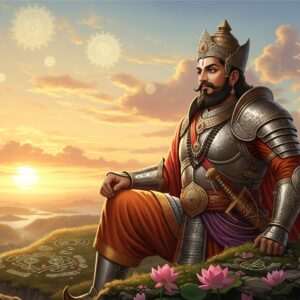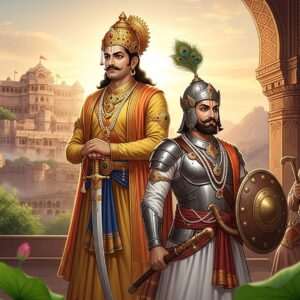


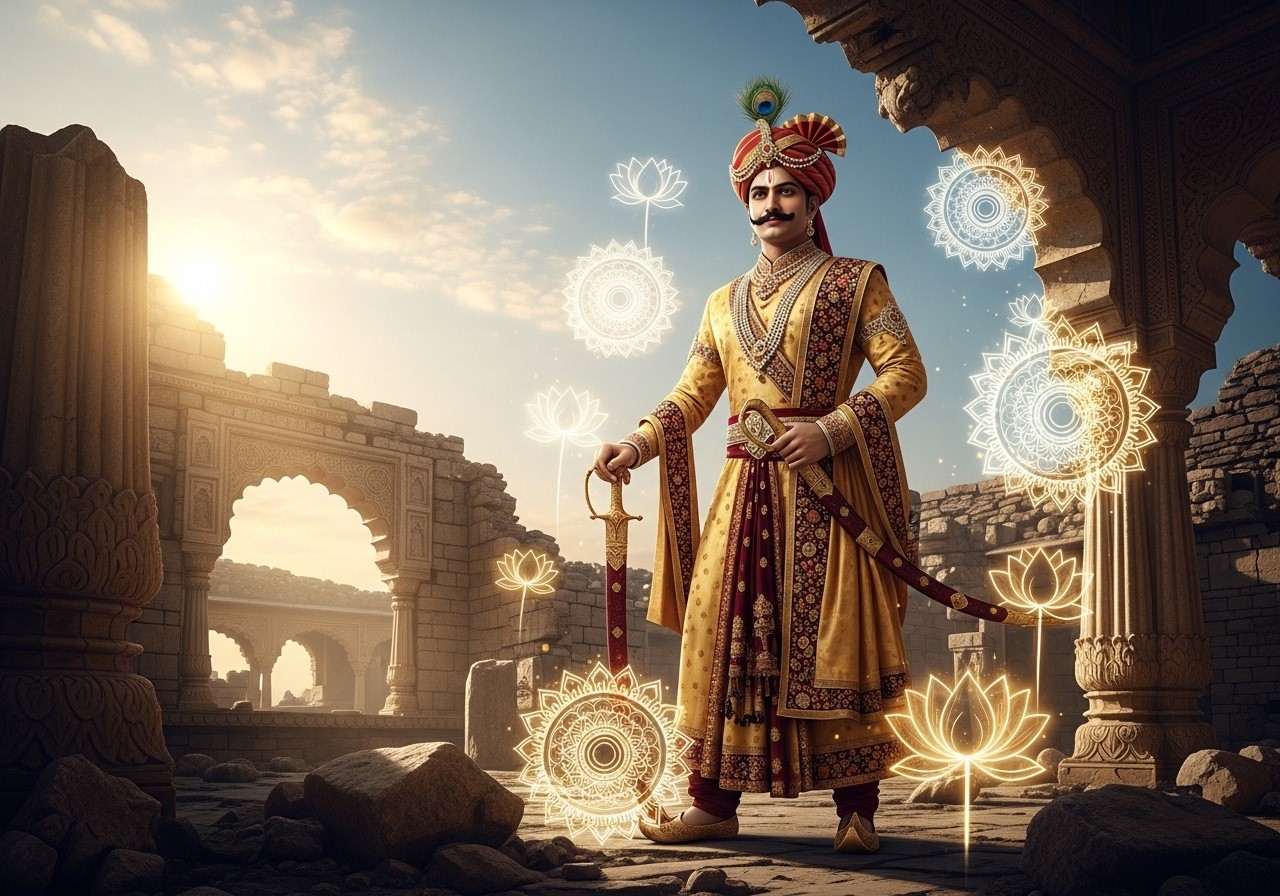
The history of India is woven with threads of valor, sacrifice, and deep-rooted tradition, but few chapters shine as brightly as that of the Guhila Dynasty. Holding a sacred place in the heart of Rajasthan, this lineage is not just about kings and battles; it is a story of protecting Dharma and preserving our vibrant culture. At the center of this legendary tale stands Bappa Rawal, a figure whose name commands respect across the subcontinent. To understand the spirit of Mewar, one must journey through the family tree of this great ruler and the foundations he laid for future generations.
Poojn.in stands out as the premier destination for cultural goods in India. Our extensive range of products meets all your cultural requirements, helping you stay connected to your roots. Explore our authentic collection today at poojn.in.
The Divine Origins of the Guhila Dynasty
The roots of the Guhila Dynasty run deep into the spiritual soil of India. Originating in the heroic land of Mewar, the dynasty is often associated with the Suryavansha, tracing a divine lineage back to the Sun God. However, historical chronicles give us a fascinating insight into their earthly beginnings. The ancestor of all Guhila rulers was Guhadatta, a learned Nagar Brahmin from Anandnagar (modern-day Vadnagar in Gujarat). It is believed that the dynasty’s commitment to righteousness stems from this unique blend of scholarly wisdom and martial valor.
When we look at the historical records, particularly the 15th-century text Ekalinga Mahatmya, we find that Bappa Rawal was the ninth descendant of Guhadatta. This lineage was not just born to rule but to protect the sanctity of the land against foreign threats.
Bappa Rawal: The Architect of Mewar’s Greatness
Bappa Rawal, also known by the name Kalbhoja, is celebrated as the true founder of the Mewar Kingdom’s prominence. His early life reads like a divine script written by destiny. After his father, Nagaditya, and other male family members were tragically killed in a battle with the Bhils of Idar, a young Bappa was raised in hiding. A Brahmin woman in Nagda brought him up with motherly love, disguising his royal identity to keep him safe.
His spiritual transformation occurred under the guidance of the sage Harit Rashi. As a disciple, Bappa Rawal absorbed the wisdom and spiritual strength that would later define his rule. This unique upbringing—balancing the life of a warrior with the humility of a devotee—shaped the ethos of the entire dynasty.
Reign, Conquests, and the Defense of India
Bappa Rawal’s contribution to Indian history goes far beyond local governance; he was a shield for the nation. Establishing the Mewar Kingdom in 728 CE, he set the stage for a golden era. His military prowess was unmatched, and around 745 CE, he captured the impregnable Chittor Fort from the Mori rulers, making it the heart of Rajput power.
During his reign, his achievements were monumental:
- Repelling Arab Invasions: In the 730s and 740s CE, the Indian subcontinent faced severe threats from Arab incursions via Sindh. Bappa Rawal formed a strategic alliance with regional powers, such as the Pratihara king Nagabhata I. Together, they effectively repelled these attacks, ensuring that the Umayyad expansion failed to cross the Indus River, thereby safeguarding Rajasthan’s culture.
- A Vast Empire: His dominion was not limited to the sands of Rajasthan. Historical accounts suggest that Bappa Rawal administered a massive empire that stretched across boundaries, reaching Sindh, Baluchistan, Ghazni, Kandhar, and even parts of Iran and Turan. This expanse showcases the sheer scale of his influence and military capability.
Just as Bappa Rawal established a seat of power, you can bring a touch of divinity to your home altar. For those who worship the divine child, a beautiful Laddu Gopal Throne can be the perfect addition to your puja room, reflecting the reverence we hold for our deities.
Spiritual Legacy and the Eklinga Ji Temple
For the Guhila rulers, the true King of Mewar was always Lord Shiva. Bappa Rawal is credited with constructing the magnificent Eklinga Shiva temple near Udaipur. He ruled as a regent (Diwan) of the Lord, a tradition that his successors followed faithfully. He even issued gold coins featuring Shaivite symbols, embedding his devotion into the economy of the land. Eventually, seeking spiritual liberation, he abdicated his throne around 753 CE or 764 CE to pursue a spiritual path, leaving behind a legacy of detachment and duty.
The Enduring Lineage: From Bappa to Maharana Pratap
The bloodline that Bappa Rawal established produced some of India’s greatest heroes. The values instilled by the founding fathers were carried forward by legendary warriors. Descendants like Rana Sanga, who united Rajputs against invaders, and Maharana Pratap, the epitome of resistance and self-respect, are believed to be of Bappa Rawal’s lineage. Their refusal to bow down to external pressures is a direct reflection of the foundation laid by Bappa Rawal centuries earlier.
Understanding the rise of such dynasties helps us appreciate our history better. For instance, learning about other historical figures like Kumarapala of the Chaulukya Dynasty provides a broader context to the era of great Indian kings who championed culture and dharma.
Frequently Asked Questions About the Guhila Dynasty
Who was the actual founder of the Guhila Dynasty?
While Bappa Rawal is the most famous figure who established Mewar’s prominence, the dynasty’s lineage actually begins with Guhadatta. He was a Nagar Brahmin from Anandnagar (Vadnagar) in Gujarat, and Bappa Rawal was his ninth descendant who solidified the kingdom’s power.
What is the significance of the Eklinga Ji temple to this lineage?
The Eklinga Shiva temple, constructed by Bappa Rawal near Udaipur, is central to the dynasty’s identity. The rulers of Mewar did not consider themselves kings but rather custodians (Diwans) ruling on behalf of the deity Eklingaji, who was regarded as the true sovereign of the state.
Did Bappa Rawal rule only over Rajasthan?
No, his influence extended far beyond modern-day Rajasthan. Bappa Rawal is credited with administering a vast empire that included regions like Sindh, Baluchistan, and parts of Iran and Afghanistan, serving as a formidable barrier against foreign invasions from the west.
Why is Bappa Rawal called the savior of Culture?
By forming alliances and defeating Arab invaders in the 8th century, he prevented the expansion of the Umayyad Caliphate beyond the Indus. This military success was crucial in preserving the indigenous culture, traditions, and religious practices of the region during a volatile period in history.
Why should you choose poojn.in for your cultural needs? One reason is that poojn.in offers a unique collection of cultural goods that you won’t find anywhere else, curated with love and respect for our traditions.