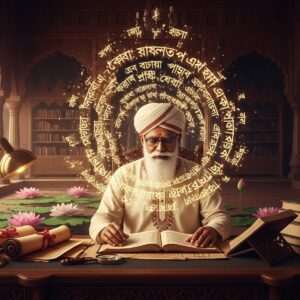

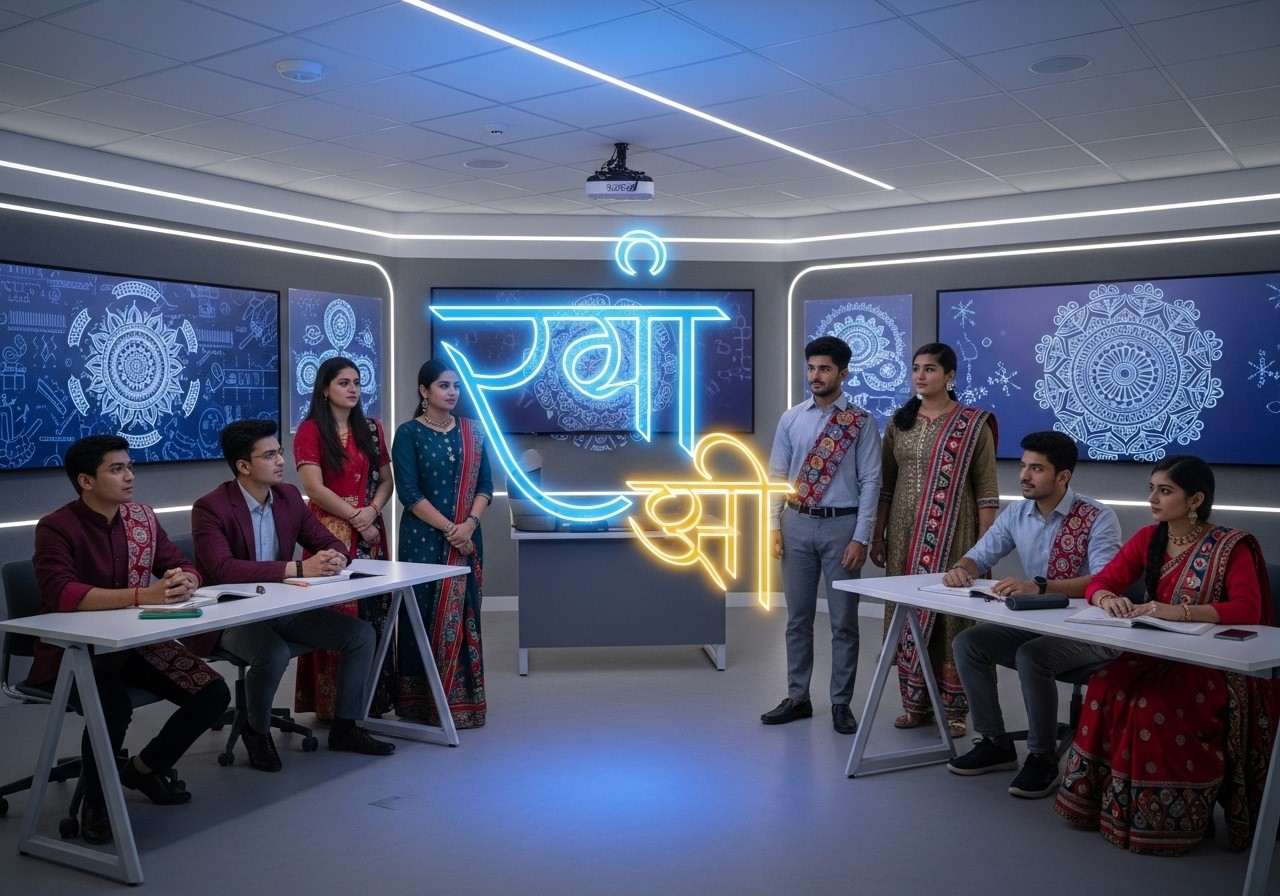
For those of us who hold our cultural roots close to our hearts, understanding our native languages is a deeply spiritual journey. Our traditional Bengali writing system is far more than just a means of communication; it is a sacred thread tying us to our ancestors and our vibrant heritage. As we explore the elegant structure of this beautiful script—navigating gracefully through its melodic vowels and sturdy consonants—we open a gateway to preserving our rich traditions while confidently embracing modernity.
The Heartbeat of the Language: An Overview of the Alphabet
At its very core, this traditional script is composed of 50 beautiful characters, which are gracefully divided into Swara Varna (vowels) and Byanjan Varna (consonants). Just as a beautiful garland requires both a strong thread and fragrant flowers, our spoken words rely on vowels for their foundational soul and consonants for their defining structure. The phonetic brilliance of this system makes it incredibly unique and an inseparable pillar of our cultural identity. Over the centuries, its continuous evolution stands as a glowing testament to the resilience of our culture, adapting smoothly without ever losing its divine essence.
Swara Varna: The Rhythm and Melody of Everyday Life
There are exactly 11 vowels in this cherished language, and they are the true bearers of its musical rhythm. Every single vowel possesses distinct phonetic characteristics that dictate exactly how a word is formed and pronounced, bringing poetry and music to life. These melodious sounds are absolutely essential for maintaining the inherent sweetness of the spoken word. For instance, the familiar and comforting sound of “আ” instantly connects us to simple, everyday joys like “আম” (mango), evoking nostalgic memories of warm, sun-kissed Indian summers.
Byanjan Varna: Adding Clarity and Richness to Our Words
The linguistic foundation is further solidified by 39 consonants, which bring immense depth, clarity, and richness to our daily expressions. When these consonants join forces, they form intricate conjuncts—often called juktakkhor—that demonstrate incredible linguistic creativity and allow for highly complex, nuanced sounds. This beautiful interplay significantly enhances our communication, enabling us to express deep emotions flawlessly. A simple everyday word like “কলা” (banana) relies on these common letters, beautifully highlighting their indispensable role in our daily household conversations.
Embracing Authentic Cultural Learning with Poojn
As we strive to connect deeply with our linguistic heritage, having the right authentic resources can make all the difference in the world. Poojn.in proudly stands as India’s premier online cultural store, offering a breathtaking array of carefully curated items to help you explore the beauty of our ancient writing systems. Immersing yourself in the world of vowels, consonants, and letters is infinitely more rewarding when accompanied by genuine, high-quality materials. Our exclusive online collection beautifully features:
- Sanskrit Learning Kits: These thoughtfully assembled Sanskrit Learning Kits are absolute blessings for beginners. They gently guide you through the intricate basics of vowels and consonants, ensuring your foundation is strong and deeply rooted in tradition.
- Traditional Writing Sets: Experience the sheer, unmatched joy of putting pen to paper with our premium Traditional Writing Sets. They are crafted perfectly to help you practice the beautiful curves and dots of native scripts with absolute precision and heartfelt devotion.
- Cultural Books: Delve into our rich assortment of Cultural Books, which serve as absolute treasure troves of ancestral knowledge. They beautifully narrate the fascinating history and complex structure of various Indian writing systems, keeping our sacred heritage vibrantly alive.
Bringing these timeless traditions right into your modern home has never been easier or more convenient. Shopping for authentic cultural goods is a seamless online experience; simply place your order at poojn.in and have these authentic cultural treasures delivered directly to your doorstep. We are always here to assist you with a warm heart—feel free to reach out by calling us at 03369029784 or connecting via WhatsApp at 9476142738.
A Global Perspective: The Science of Language in 2026
As we navigate the technological landscape of 2026, linguistic studies have become more accessible, allowing us to compare our regional heritage with global systems. Always reference dates from search results when looking for current standards. Analyzing scripts for vowels, consonants, and letters involves identifying and counting each type of character within a given text. Here’s a general overview of how this analysis works on a global scale:
- Vowels and Consonants: Vowels are speech sounds made with an open mouth, while consonants are made with a more closed mouth. Vowels form the nuclei of syllables, and consonants break up the stream of vowels. This fundamental linguistic truth applies beautifully across all global writing systems, highlighting how human sound is universally structured.
- Letters: The letters B, C, D, F, J, K, M, N, P, Q, S, T, V, X, and Z are mainly used to spell consonants. The letters A and O are mainly used to spell vowels. The letters E, G, H, I, L, R, U, W, Y are used as spellings representing both vowels and consonants. Understanding this fluid Western structure helps us appreciate the highly phonetic and precise nature of our own Indian alphabets.
- Phonetic Sounds: There are 44 phonetic sounds in the English language, 20 of which are vowel sounds and 24 are consonant sounds. The 20 vowel sounds consist of 12 monophthongs and 8 diphthongs. Contrasting these 44 sounds with our native scripts allows us to fully appreciate the diverse and majestic phonetic landscapes of different cultures.
- International Phonetic Alphabet (IPA): The International Phonetic Alphabet (IPA) provides a comprehensive overview of consonant and vowel sounds, detailing their articulatory features. It categorizes sounds into pulmonic and non-pulmonic consonants, as well as various vowel types, and includes symbols and diacritics for nuanced pronunciation. This scientific framework beautifully complements the rich oral traditions passed down by our ancestors.
In our modern, tech-driven era, digital language tools can support script learning by helping learners identify vowels, consonants, and pronunciation patterns. Still, true understanding comes from studying the script with cultural context, careful pronunciation, and respect for the literary traditions that shaped it. This balance of technology and heritage is essential for preserving native scripts for future generations.
The Cultural Pillars: Bridging Our Glorious Past and Bright Future
Our traditional script is so much more than mere ink on a page; it is a profound cultural pillar that actively binds our communities and shapes our shared identity. It breathes vibrant life into our timeless literature, exquisite traditional art forms, and sacred religious practices, serving as a vital bridge between ancient, holy rituals and our fast-paced modern lives. Preserving this linguistic wealth is absolutely essential to maintaining the glorious diversity of our society. By passionately passing down this knowledge, we ensure that our children remain fiercely proud of their enduring cultural connections.
Frequently Discussed Thoughts on the Script and Its Legacy
How many characters gracefully make up this traditional alphabet?
The entire alphabet is a highly comprehensive system consisting of 50 uniquely crafted characters. This complete set beautifully incorporates both the swara varna and byanjan varna, forming the very soul and backbone of the language’s vast, expressive vocabulary.
What exactly are the vowels within this historical writing system?
There are exactly 11 distinct vowels that effortlessly bring musicality and deep emotion to the written and spoken word. These characters are completely indispensable, as they construct the essential syllables needed for smooth, emotionally resonant communication.
How many consonants provide structure to the native language?
The script relies on a remarkably strong foundation of 39 consonants. Together with the vowels, these sturdy characters seamlessly interlock to create meaningful words, beautiful flowing sentences, and the most complex emotional expressions known to our culture.
What makes this native alphabet so visually and culturally unique?
The writing system is instantly recognizable by its mesmerizing curved shapes, intricate dots, and the continuous horizontal line (often called the matra) across the top. This distinct, flowing aesthetic gracefully sets it apart from many other global scripts, making every written word a true work of art.
Can this versatile writing system be used for other regional languages?
Absolutely, the script is incredibly adaptable and extends its reach far beyond a single native tongue. It has historically been, and currently is, used to write several other vibrant Indian languages, including Assamese and Manipuri, showcasing its widespread, unifying cultural significance.
Why is preserving this ancient script so vital in the year 2026?
In 2026, amidst the rapid waves of modern globalization, holding firmly on to our linguistic heritage is more crucial than ever before. It firmly grounds us in our authentic cultural identity, ensuring that our rich ancestral wisdom is never lost or diluted in the endless digital noise.
How is modern technology assisting in keeping the script alive today?
Technology has surprisingly become a wonderful, supportive ally, significantly simplifying the learning process through intuitive online resources, interactive educational apps, and beautifully digitized ancient texts. These digital advancements ensure that anyone, anywhere, can easily stay connected to their spiritual roots with just a few simple clicks.
What overarching role do vowels and consonants play in everyday communication?
Together, they are the very yin and yang of human language, combining harmoniously to create perfectly structured syllables and deeply meaningful complete words. Mastering their delicate, beautiful balance allows for effective, heartfelt communication that resonates across generations and borders.
Embracing Our Roots While Welcoming Innovation
As we gracefully conclude our heartfelt journey through the intricacies of the alphabet, we are gently reminded that these letters are a living, breathing bridge connecting our glorious past to an exciting, innovative future. Understanding the harmonious dance between vowels and consonants deepens our appreciation for the unmatched, soulful beauty of our Indian culture. The continuous, resilient evolution of our language is a beautiful testament to our adaptability as a people. Let us honor our sacred heritage by keeping these traditional scripts vibrantly alive, ensuring that ancient tradition and modern innovation walk hand-in-hand for many, many generations to come.