


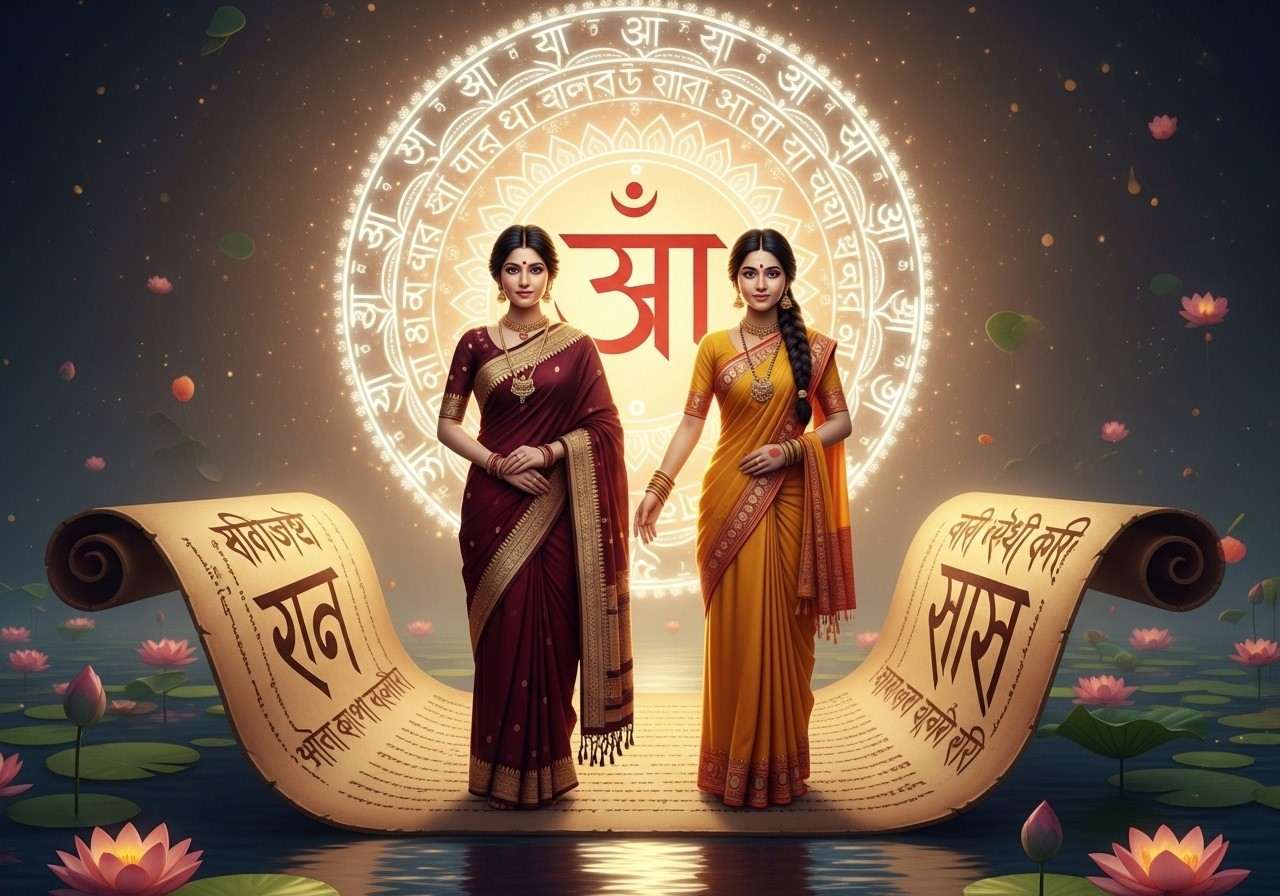
India is a magnificent land of beautiful contrasts and profound unities. For us Indians, our languages are not merely a way to communicate; they are the very soul of our ancestors and the heartbeat of our rich traditions. Embarking on a heartfelt journey into the world of Indian writing systems reveals a truly fascinating relationship between Bengali and Hindi. These sister languages carry deep, sacred historical roots and immense cultural significance, beautifully highlighting both the diversity and the unbreakable unity of India’s linguistic heritage. Understanding the connection between these scripts is wonderfully essential for those of us who deeply value our Indian traditions and wish to appreciate the divine beauty of our cultural tapestry.
The Deep Historical Roots We Proudly Share
When we look back at our glorious past, we see that both the Bengali and Hindi writing systems share incredibly ancient and revered origins. The graceful Bengali alphabet gently evolved from the sacred Brahmi script, passing through historically rich stages like the Gupta and Siddham eras over centuries. Similarly, the Hindi writing system, lovingly known to all of us as Devanagari, also traces its holy roots directly back to Brahmi, evolving through the magnificent Gupta and Nagari periods. These profound historical developments were naturally influenced by regional linguistic needs and the changing socio-political landscapes of our great nation. Understanding this shared history helps us deeply appreciate how these sacred alphabets beautifully adapted to meet the cultural demands of our ancestors.
Shared Bloodlines: How Our Sister Languages Connect
Despite the geographical distances between the East and the heartland of India, both Bengali and Hindi share several breathtaking similarities that prove we are all part of one big linguistic family. Let us explore the ties that bind these beautiful sister scripts together:
- A Common Ancestry in Antiquity: Both of these beautiful writing systems can be proudly traced back to the ancient Brahmi script, which stands as one of India’s earliest and most revered writing systems. As centuries passed, they gently and naturally evolved through intermediate historical stages like the glorious Gupta and Siddham eras, shaping the rich heritage we cherish today.
- Belonging to the Same Language Family: It is truly fascinating to note that both Bengali and Hindi belong to the Indo-Aryan branch of the massive Indo-European language family. This deep-rooted linguistic kinship fosters a powerful cultural bond that effortlessly transcends our regional differences and brings us closer together as proud Indians.
- Structural Similarity as Alphasyllabaries: At their very core, both writing systems function as alphasyllabaries, elegantly employing a highly scientific and phonetic system of vowels and consonants. This simply means that each character represents a beautifully complete syllable, making the pronunciation of our holy mantras and daily words incredibly logical and rhythmic.
- The Sacred Sanskrit Connection: Our ancient spiritual roots are highly visible, as both languages lovingly evolved from Sanskrit, sharing numerous phonetic sounds, cognates, and cultural nuances. Many of the everyday words spoken in Bengali are directly derived from Sanskrit, which feels incredibly similar to the highly Sanskritized, pure version of Hindi often used in our religious contexts and pujas.
- Familiar and Comforting Grammatical Rhythms: For anyone trying to learn or appreciate both, you will quickly find that they share very similar grammatical structures, notably including the classic use of subject-object-verb (SOV) word order and postpositions. This fundamental grammatical similarity makes it so much easier for speakers of one language to grasp the soulful meaning of the other effortlessly.
- The Unifying Shirorekha (The Top Line): Visually, both scripts are elegantly crowned with a distinct horizontal line at the very top of the characters, which is lovingly called the mātrā or shirorekhā. This beautiful architectural feature gives our traditional Indian scripts a deeply distinctive and grounding visual identity that instantly feels like home to us.
Where the Paths Diverged: Celebrating Unique Identities
While their shared roots fill our hearts with pride, the unique flavors of each region have given them distinct personalities. Despite these heartwarming similarities, the Bengali script began to gracefully diverge from the Devanagari script (used for Hindi) around the 11th century AD. This historical split developed beautifully, giving Bengali its own unique visual identity due to regional artistic styling and highly localized writing rules.
Today, the Bengali script proudly boasts 50 primary letters, while the Hindi alphabet beautifully utilizes 47 characters. Another fascinating main difference between the two sister scripts is the abundant and unique use of diacritical marks in the Bengali script, which are not utilized in quite the same way or frequency in Hindi. Furthermore, in Bengali, consonant clusters are elegantly written combined as a single joined letter, whereas in Hindi, they are generally and clearly written using separate half-letters. These beautiful differences allow each language to capture regional dialects and sweet local accents perfectly.
Digitalization and Language Preservation
In our fast-paced contemporary India, balancing our old-world charm with modern technology is vital. Digitalization has wonderfully transformed the daily use of both Bengali and Hindi. Early technological challenges, such as correct character encoding for online platforms, have been brilliantly addressed through widespread Unicode adoption and sophisticated font development. These wonderful digital tools have made our mother tongues much more accessible, allowing wider communication and a vibrant cultural exchange across state borders. This rapid technological progress actively supports language preservation, ensuring that our ancestral writing systems continue to thrive beautifully in a modern world.
Bringing Our Rich Traditions Home with Poojn.in
As you immerse yourself in the divine beauty of these sister scripts, bringing home the physical elements of these cultures can make your daily rituals profoundly more fulfilling. At Poojn.in, India’s most trusted cultural store, we are dedicated to bringing the sanctity of our traditions right to your doorstep. We offer a wide, premium range of cultural goods that seamlessly connect you to the rich, devotional traditions of both Bengali and Hindi-speaking regions. Understanding the deep emotional connection between these sister languages can profoundly enhance your everyday appreciation of cultural rituals and home practices.
- Sacred Books on Spiritual Traditions and Scripts: Explore our lovingly curated collection of books that delve deeply into the profound history, spiritual meaning, and development of our divine Indian languages, including Bengali and Hindi. These carefully selected cultural books provide deep, thought-provoking insights into how these beautiful writing systems have evolved to carry the weight of our rich cultural significance and sacred mantras.
- Authentic Ritual Items for Your Daily Puja: Our online cultural store takes immense pride in providing the most authentic and pristine ritual items used in both Bengali and Hindi spiritual traditions. From beautifully crafted, heavy brass puja thalis to soul-soothing, fragrant incense sticks, you will easily and conveniently find absolutely everything you need to elevate your daily spiritual practices and festive home celebrations.
- Language Learning Tools and Cultural Materials: If you are feeling deeply inspired and interested in reconnecting with these rich languages, we warmly invite you to check out our language learning tools and cultural study materials. They are meticulously and thoughtfully designed to help you deeply understand the wonderful, intricate nuances of Bengali and Hindi writing much better, bringing you closer to your cherished ancestral roots.
For more detailed information, or to fill your home with authentic divine blessings, please visit https://www.poojn.in. We are always here to help! You can warmly contact our customer support team at 03369029784, or if you prefer messaging, comfortably reach us via WhatsApp at 9476142738 for any spiritual or product-related queries.
Frequently Asked Questions About Our Sister Languages
How are the Bengali and Hindi alphabets fundamentally similar?
The Bengali and Hindi alphabets share deeply rooted, sacred origins in our ancient Indian scripts. They both derive beautifully from the historic Brahmi script, making them visually and structurally connected. However, as they evolved, the Bengali letters became more rounded and flowing, while Hindi utilizes the Devanagari style, known for its elegant straight lines and sharp angles.
Can a native Hindi speaker easily understand the Bengali script?
While both writing systems wonderfully share a common ancient origin, they have developed very distinct characters and pronunciations over the centuries. A Hindi speaker may certainly recognize some familiar letter shapes, but truly understanding written Bengali requires dedicating time to learn its specific, beautiful alphabet and unique phonetic rules.
What are the main visual differences between the Bengali and Hindi alphabets?
The most striking difference lies in the artistic appearance of the letters themselves. The Bengali script is noticeably more curved and circular, whereas Hindi proudly uses the linear, structured Devanagari script. Additionally, Bengali possesses 50 letters with unique pronunciation rules and diacritical marks that wonderfully differ from the 47 characters found in Hindi.
Is it simple to convert Hindi text directly into the Bengali script?
Converting Hindi text seamlessly into Bengali involves understanding profound phonetic differences and beautiful script variations. While modern digital tools or language experts can certainly help with the translation and conversion, it requires a solid, respectful grasp of the unique grammar and vocabulary of both mother tongues.
Do Hindi and Bengali share any deep linguistic roots?
Absolutely, they do! Both the Hindi and Bengali languages are proud members of the Indo-Aryan language family, and both evolved directly from sacred Sanskrit. Because of this common historical root, they share a beautiful wealth of similar vocabulary, cognates, and highly comparable grammatical structures.
Why do these two scripts look so different despite having a common origin?
The beautiful divergence in their physical appearance primarily comes from centuries of regional adaptations and localized artistic developments. Around the 11th century AD, local cultural influences naturally began to shape each script differently, resulting in the beautifully unique, distinct styles we proudly see and use today.
Can learning Bengali actively help someone understand Hindi better?
Learning Bengali can absolutely provide wonderful insights into similar linguistic features, shared Sanskrit words, and familiar grammar. However, because each beautiful language possesses its own rich complexities and regional dialects, true proficiency will always require dedicated, loving study of both languages individually.
Conclusion
Exploring the heartfelt connection between Bengali and Hindi is much like discovering two beautiful siblings within India’s vast, loving linguistic family. These scripts, firmly rooted in our ancient spiritual traditions, perfectly reflect the shared cultural heritage and the breathtaking diversity of our motherland. By taking the time to understand their history, structure, and daily usage, we can truly appreciate the absolute beauty and profound significance of these sister scripts.
In a modern world where our cherished traditions meet new technology, the digitalization of these languages ensures their preservation and global accessibility. Embracing this positive evolution allows us to celebrate India’s rich cultural tapestry while staying deeply, emotionally connected to our ancestral roots. As we continue to learn, pray, and grow together, the unbreakable bond between Bengali and Hindi remains a glowing testament to India’s eternal unity in diversity. May this beautiful journey inspire all of us to explore more of India’s linguistic treasures, lovingly honoring our past while brightly embracing our future.