

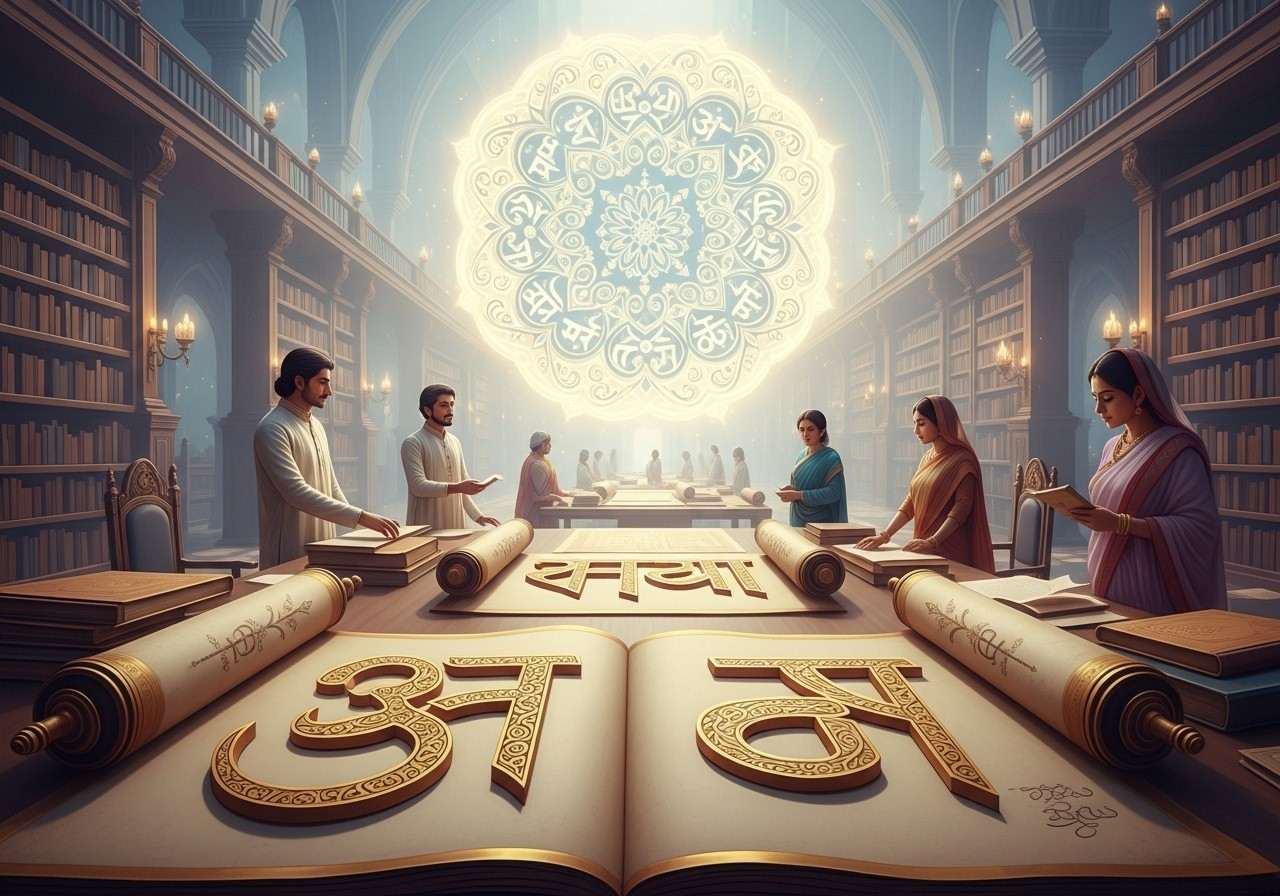
India’s linguistic heritage is deeply woven into the fabric of our everyday lives and spiritual practices. For generations, the profound alphabets of Bengali, Hindi, and Sanskrit have served as much more than mere writing systems. They are the sacred vessels of our cultural identity, carrying the weight of our ancestral wisdom, mantras, and timeless literature. By exploring the deep-rooted connections between these magnificent scripts, we can truly appreciate the breathtaking journey of Indian civilization and its enduring traditions.
Tracing the Roots: The Journey from Brahmi to Modern Alphabets
The story of our indigenous alphabets is an awe-inspiring saga of evolution and devotion. The Bengali, Hindi, and Sanskrit alphabets all proudly share a common, majestic ancestor: the ancient Brahmi script. Emerging in the Indian subcontinent several centuries before the Common Era, Brahmi stands as one of the oldest and most influential writing systems in our history. While some scholars whisper of its potential ties to the enigmatic Indus Valley civilization, the mists of time still obscure definitive proof.
Sanskrit, the eternal and classical language of our scriptures, was initially passed down from guru to shishya through oral parampara (tradition) before being lovingly inscribed in various Brahmic scripts. Eventually, Devanagari—which beautifully translates to the ‘script of the gods’—took shape around the 11th century and became the definitive voice for both Sanskrit and Hindi. During the medieval era, slight variations of Devanagari also embraced Marathi, Awadhi, and Braj Bhasha. Meanwhile, the modern Bengali alphabet gracefully blossomed from the northern branches of the Brahmi family, nearing its complete and elegant form by the 12th century. Interestingly, this script also shares a profound kinship with Assamese, reflecting the shared cultural soul of eastern India.
A Harmonious Dance of Letters: Comparing Bengali and Hindi Scripts
While a casual glance might suggest that Bengali and Hindi scripts are distinct and unrelated, looking a little closer reveals a beautiful, shared structural melody.
- The Graceful Abugida System: Both the Bengali and Devanagari scripts operate as ‘abugidas’. This means that their consonants carry an inherent vowel, and other vowels are represented by delicate diacritic marks (matras) dancing around the main character. This sophisticated system allows for the precise pronunciation required in our sacred chants and classical poetry.
- Visual Unity Through the Shirorekha: Whether you are losing yourself in a Hindi doha or a Bengali ghazal, you will notice that both scripts flow elegantly from left to right. Perhaps the most striking visual similarity is the horizontal line resting gracefully atop the characters, known lovingly in Devanagari as the shirorekha. This line quite literally binds the letters—and our cultures—together.
- The Beauty of a Unicameral System: Unlike English, which separates capital and lowercase letters, both Bengali and Devanagari are proud unicameral scripts. Every letter holds an equal, distinguished presence on the page, beautifully reflecting a sense of harmony and balance in our written languages.
- Adapting Phonetics to Regional Soul: While they share deep linguistic roots, these scripts have naturally evolved to capture the unique phonetic essence of their respective regions. A wonderful example is the Bengali script, which beautifully adapts to its spoken dialect by seamlessly using the ‘b’ sound where a distinct ‘v’ or ‘w’ character might exist in Hindi. It is a testament to how our ancestors molded language to fit their lives.
Sanskrit: The Eternal Mother of Our Vocabulary
Sanskrit is not merely a language of the past; it is the beating heart of modern Indian linguistics. The profound influence of Sanskrit permeates the everyday vocabulary and foundational grammar of both Bengali and Hindi. So many of the pure, auspicious words (tatsama) we use during our daily prayers and festive celebrations are direct gifts from Sanskrit. Its meticulously structured phonetics have been flawlessly integrated into our modern scripts, ensuring that the divine vibrations of the past continue to resonate in our homes today.
To truly understand this heritage is to bring it into your everyday life. Immersing yourself in ancient texts is a wonderful way to honor this lineage. You can gently begin this journey by exploring our carefully curated collection of authentic books and scriptures at poojn.in, offering you a sacred gateway to understand the very roots of our linguistic parampara.
Preserving Our Parampara Through Everyday Rituals
The magnificent alphabets of Bengali, Hindi, and Sanskrit do far more than preserve our cultural identity—they actively breathe life into our vibrant literature, devotional music, and breathtaking art. In every puja, yagna, and festive gathering, these scripts remain integral to honoring our deities and upholding our cherished rituals.
In today’s fast-paced digital age, it is more important than ever to surround ourselves and our children with reminders of our heritage. We can lovingly embrace these ancient scripts by incorporating them into our homes. At Poojn.in, we understand this deep emotional connection. Whether you desire beautifully crafted writing materials to practice these scripts or elegant items to adorn your home, our traditional stationery at poojn.in and exquisite cultural decor available on poojn.in bring the soulful beauty of these alphabets directly to your sacred spaces.
Bridging Traditions: Understanding Our Alphabets
How do the alphabets of Bengali and Hindi mirror each other?
Because both alphabets spring from the venerable Brahmi script, they share profound structural similarities. Their vowel and consonant families align beautifully, which often brings a comforting sense of familiarity when speakers of one language gently explore the other.
Is it easy for a Bengali speaker to read the Hindi writing system?
While the visual shapes of the characters differ significantly, making immediate reading a bit of a challenge, the underlying phonetic logic is incredibly similar. Embracing the roots of Sanskrit often acts as a beautiful bridge, making the transition much smoother for eager learners.
Why is Sanskrit considered vital for understanding these modern scripts?
Sanskrit is essentially the spiritual and structural foundation of countless Indian languages. By diving into Sanskrit, one uncovers the historical evolution and the deeply embedded cultural context that gave life to both the Bengali and Hindi alphabets.
What are the main differences between the Hindi and Bengali scripts?
While Hindi relies on the divine curves of the Devanagari script, Bengali utilizes its own distinct, flowing script. They may share similar phonetic sounds and a unified structural logic, but their written expressions are uniquely tailored to beautifully reflect their respective regional identities.
How can I lovingly learn Bengali and Hindi alphabets simultaneously?
A wonderful approach is to focus on their common phonetic sounds and practice writing both scripts side-by-side. Using resources that showcase their shared Brahmi ancestry makes the learning process feel less like memorization and more like discovering a lost family tree.
Is there a way to convert Sanskrit text to the Bengali alphabet?
Yes, numerous online dictionaries and digital tools exist today that can seamlessly convert Sanskrit verses into the Bengali script. This technological harmony perfectly highlights the deeply shared roots and spiritual connections between the two systems.
What role does tradition play in learning these sacred alphabets?
Tradition provides the very soul of these languages. It emphasizes their cultural significance and historical context. Understanding how these letters are used in mantras, literature, and art helps you appreciate the immense depth and vibrant heritage they represent.
Are these ancient alphabets still used in modern rituals?
Absolutely. Both the Bengali and Hindi alphabets, alongside classical Sanskrit, are the very breath of our religious ceremonies, pujas, and cultural rituals. They carry the weight of devotion and the warmth of tradition, keeping our heritage alive in every sacred moment.
As we continue to celebrate and explore our rich linguistic diversity, we ensure that our timeless traditions remain vibrant for generations to come. Let us cherish the legacy of our Indian alphabets, enriching our daily lives with their profound wisdom. For all your cultural needs and authentic puja essentials, we welcome you to visit poojn.in, where tradition meets modern convenience.