

Our beautiful motherland, Bharat, is deeply enriched with stories of incredible valor, unyielding devotion, and profound spiritual wisdom. Whenever we reflect upon our rich cultural roots, certain names naturally fill our hearts with immense pride. Bappa Rawal is one such legendary historical icon whose life perfectly exemplifies the highest ideals of courage and dharma. By exploring his extraordinary journey, we can truly appreciate the deep-rooted cultural values that built the magnificent heritage of Rajasthan, a region globally celebrated for its breathtaking architecture and unbreakable spirit.
The Early Life and Cultural Roots of Kalbhoj
Before earning his legendary title, this great ruler was known by his birth name, Kalbhoj. According to the revered 15th-century text, the Ekalinga Mahatmya, he was the ninth proud descendant of Guhadatta, the original founder of the Guhila Rajput lineage. His early childhood was marked by a heartbreaking tragedy that would have broken an ordinary soul. Traditional historical accounts reveal that his brave father, Nagaditya, along with other male members of his family, attained martyrdom in a fierce battle against the Bhils of Idar.
To protect the young prince, Bappa was raised in complete disguise by a kind-hearted Brahmin lady in the serene village of Nagda. Far from the royal comforts of a palace, he spent his formative years living a remarkably humble life, gently tending to cows. This simple, deeply grounded upbringing in the vibrant socio-political landscape of early Rajasthan taught him invaluable lessons in humility, resilience, and the true essence of our ancient heritage.
Divine Mentorship and Spiritual Awakening
In our Indian tradition, a guru is often the guiding light who transforms destiny. For young Kalbhoj, this guiding light came in the form of Harit Rishi, a highly revered and enlightened sage of the Mewar region. Recognizing the divine spark and boundless potential within the young cowherd, the sage profoundly blessed him with the boon of future kingship.
Harit Rishi became a powerful mentor, formally initiating his beloved disciple into the sacred Shaivite order. He entrusted him with a monumental spiritual task: to construct the glorious Eklingji Temple at Nagda. Under the sage’s strict yet compassionate guidance, the future king was rigorously trained in the art of warfare, deep meditation, self-discipline, and the intricate knowledge of politics and righteous duty (dharma). This perfect blend of martial prowess and spiritual grounding prepared him for the monumental tasks ahead.
Establishing the Unshakable Mewar Kingdom
The rise of this remarkable warrior was never simply about acquiring power; it was a righteous quest to reclaim lost honor and protect the motherland. After successfully completing his intensive spiritual and martial training, he valiantly defeated his father’s killers and began laying the groundwork for a new era. In the momentous year of 728 CE, he firmly established the foundations of the Mewar Kingdom.
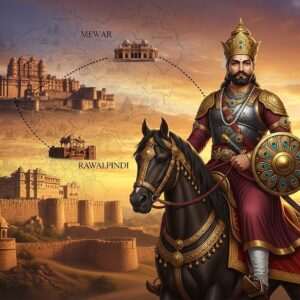
His defining triumph arrived in 734 CE when, with sheer strategic brilliance, he seized the impregnable fort of Chittor from Maan Mori. It was this historic victory that truly birthed the illustrious Mewar Dynasty, earning the brave Kalbhoj the eternal, respectful title of ‘Bappa Rawal’.
Extraordinary Military Achievements and Defense of Dharma
During a critical period in history when north-western India faced relentless foreign aggression, Bappa Rawal emerged as an invincible shield for our culture. He played an incredibly vital role in the Battle of Rajasthan, demonstrating exceptional diplomatic and leadership skills by uniting various smaller states into a formidable force against Muslim invasions.
With unmatched battlefield ferocity, he decisively defeated the invading Arabs, successfully pushing them back to the far western banks of the Sindhu river. Some compelling historical narratives even suggest that he served as a brilliant commander in the Mori army, where he fiercely defeated and pursued the infamous Bin Qasim straight through the territories of Saurashtra. His military genius ensured that our sacred lands remained safe from foreign dominance for generations to come.
A Legacy of Devotion and Custodianship
What truly sets the Sisodiya dynasty apart from other royal lineages is their incredibly humble approach to governance. Bappa Rawal established a foundational political and spiritual theology that completely redefined leadership. The Guhila rulers never arrogantly claimed absolute sovereignty over their realm. Instead, they chose to rule as devoted Diwans (custodians or prime ministers) who merely managed the state on behalf of the ultimate sovereign, Lord Eklingnath ji.
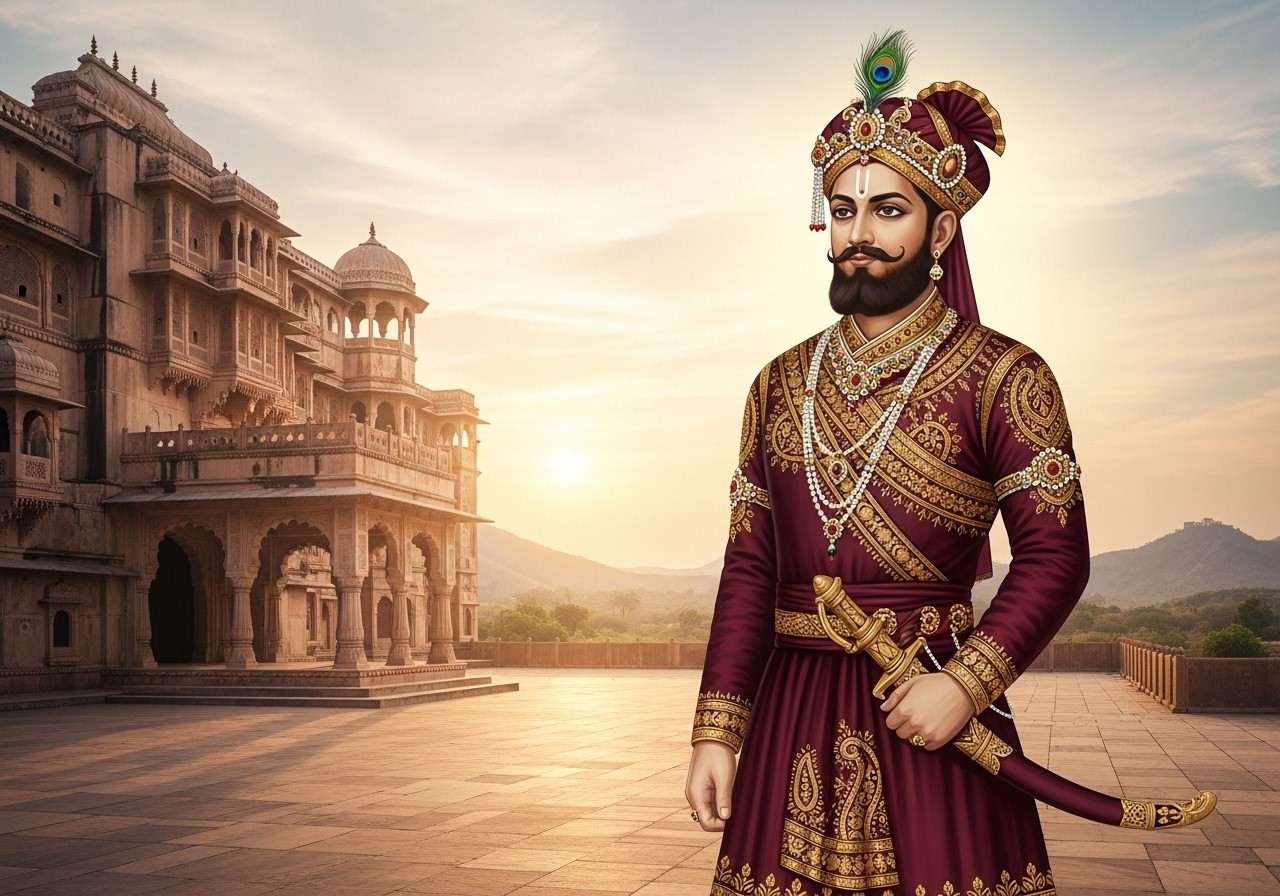
He is beautifully remembered today not just as a fierce king, but as a warrior-saint and the ultimate protector of the land. After ruling with immense wisdom and justice for nearly two decades, he gracefully abdicated his royal throne in favor of his son. Renouncing all worldly attachments, he spent the remainder of his life as an ascetic, deeply immersed in the devoted worship of Lord Shiva. His remarkable life story illustrates the absolute depth of India’s cultural identity—where supreme power eventually bows to supreme devotion.
Embracing Our Sacred Heritage with Poojn.in
The magnificent tales of our ancestors remind us of the immense importance of keeping our traditions alive within our own homes. Establishing a spiritual connection with figures like the founder of Mewar brings a profound sense of peace and cultural pride to our modern lives. At Poojn.in, we are deeply committed to helping you effortlessly preserve these timeless Indian traditions by providing the purest, most authentic ritual items right to your doorstep.
- Traditional Puja Kits: Our carefully curated puja kits contain every essential, high-quality ingredient you need to perform authentic daily rituals at home. Bringing these comprehensive kits into your sacred space is a wonderful, hassle-free way to stay deeply connected to our age-old parampara and spiritual practices.
- Exquisite Brass Idols and Statues: Bring home an aura of divine positivity with our magnificent collection of brass idols, beautifully crafted by highly skilled traditional artisans. Setting up your home mandir with these elegant murtis helps create a spiritually charged environment that beautifully honors our revered historical and divine figures.
- Aromatic Incense Sticks and Dhoop: Elevate your daily prayers and meditation sessions with our premium, natural range of incense sticks and fragrant dhoop. The soothing, earthy aromas are specially formulated to purify your home’s surroundings, creating an atmosphere of absolute tranquility and uninterrupted spiritual connection.
By consciously choosing Poojn.in, you have the comforting assurance of receiving absolutely genuine, culturally respectful products that beautifully celebrate the soul of India. We are always here to serve your spiritual needs with the utmost dedication. For more information or to place your valuable order, please feel free to contact us at 03369029784 or simply WhatsApp us at 9476142738.
Reflecting on a Timeless Era
When we sit back and truly absorb the life journey of this great ascetic-warrior, we realize it is far more than just a chapter in a history book. It is a stunning tapestry meticulously woven with threads of raw courage, profound wisdom, and deep-rooted spirituality. His remarkable transformation from a disguised cowherd in Nagda to the revered patriarch of a mighty dynasty teaches us everything we need to know about resilience and unwavering dedication to one’s dharma. By remembering his monumental contributions, we continuously honor the rich, vibrant heritage he protected, which still inspires countless Indian families to uphold the glorious values of honor, duty, and spiritual pride.
Frequently Asked Questions About the Founder of the Mewar Dynasty
Who exactly was this legendary Indian ruler?
He was a magnificent warrior-saint and the esteemed founder of the illustrious Mewar Dynasty in Rajasthan. Throughout Indian history, he is passionately celebrated for his unmatched leadership, spiritual depth, and extraordinary bravery in protecting our motherland.
What is the inspiring history behind his remarkable rise?
His historical journey is filled with awe-inspiring tales of courage and tactical brilliance. Born into the Guhila Rajput dynasty, he overcame early childhood tragedy to firmly establish the Mewar Kingdom around 728 CE, ensuring the preservation of our sacred dharma.
What was the original birth name of this great king?
Before achieving historical immortality, his real birth name was Kalbhoj. He was lovingly and respectfully bestowed with the grand title “Bappa Rawal” after his monumental victory in capturing Chittor in 734 CE.
Why does his legacy remain so crucial to Indian history today?
His significance lies in the fact that he laid an unbreakable foundation for the Sisodiya dynasty and successfully united various regional states to repel massive foreign invasions. His unwavering leadership shielded north-western India, allowing our native culture and arts to flourish safely.
How did he manage to become the sovereign ruler of Mewar?
With the powerful spiritual blessings and intense training provided by his guru, Harit Rishi, he combined his profound martial skills with strategic alliances. By defeating the enemies of his family and successfully conquering the Chittor fort from Maan Mori, he established absolute control over the region.
Are there any famous traditional legends associated with his life?
Absolutely. Our local folklore and historical texts like the Ekalinga Mahatmya are richly filled with captivating legends about his life. From his early days secretly tending to cows in Nagda to his relentless pursuit of foreign invaders back to the Sindhu river, his stories have been proudly passed down through generations.
How is his profound legacy celebrated in modern times?
Today, his enduring legacy is vibrantly alive in the rich, traditional culture of the Rajasthan region. His monumental contributions to defending the nation and his unique concept of ruling merely as a custodian of Lord Shiva are still celebrated in various traditional festivals, deeply inspiring the modern Rajput ethos.
Did he contribute to the construction of any significant monuments?
Yes, beyond his military conquests, he was a deeply spiritual builder. Under the specific instructions of his guru, he is famously credited with initiating the construction of the highly revered Eklingji Temple at Nagda, which remains a monumental center of faith and architectural beauty to this very day.