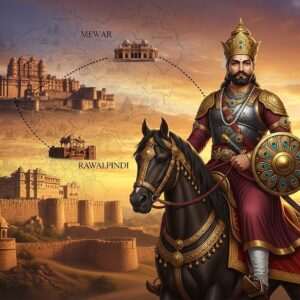


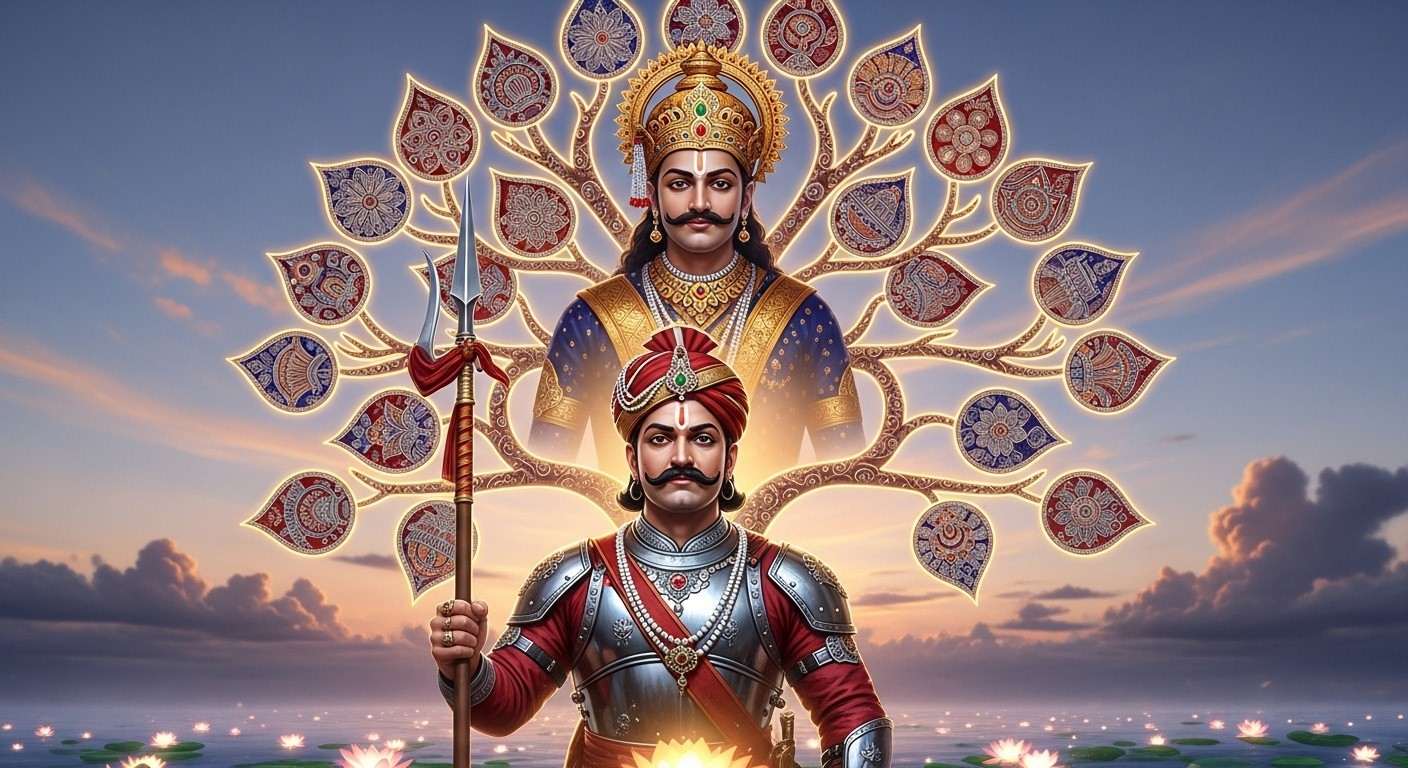
When we speak of bravery, sacrifice, and deep-rooted cultural pride, the history of Rajasthan naturally comes to mind. At the very heart of this rich historical tapestry lies a remarkable royal lineage that has shaped the cultural heartbeat of India. The Sisodia dynasty is a revered Rajput clan that ruled the Kingdom of Mewar in Rajasthan, standing as a timeless symbol of unwavering courage. Tracing their origins to the ancient Suryavamsha, or the Solar dynasty, these rulers have left an everlasting legacy that continues to inspire us today.
For those of us who cherish our Indian traditions, understanding the roots of such legendary families brings us closer to our own heritage. The name itself is echoed in history with profound respect, often written with beautiful variations like Sesodia, Shishodia, Sishodia, Shishodya, Sisodya, or Sisodiya. Let us take a heartfelt journey through the annals of time to explore the majestic lineage from its foundational roots to the legendary Maharana Pratap.
Origins and Early History: The Birth of a Royal Clan
Every great legacy has a humble yet powerful beginning. The story of this noble family is deeply intertwined with the sacred soil of Rajasthan and their unyielding devotion to their tutelary deity, Lord Eklingji. The Sisodia dynasty proudly traces its ancestry back to Rahapa, an illustrious son of the 12th-century Guhila King Ranasimha. It was Rahapa who laid the physical and spiritual foundation for his descendants.
Rahapa founded the picturesque village of Shisoda, located in modern-day Rajsamand district, making it his early capital. It is from this very village that his descendants lovingly took the name ‘Sisodias’. However, the path of dharma is rarely without obstacles. In the year 1303, the dominant Khalji dynasty defeated the main branch of the Guhila dynasty, bringing a dark cloud over the region.
But the spirit of Mewar could never be truly extinguished. Rising like a phoenix from the ashes, Rana Hammir of the Sisodiya branch took charge in 1326. Through sheer determination, Rana Hammir reclaimed control of the region, re-established the dynasty, and officially became the founding father of the Sisodia dynasty clan. Under his visionary leadership, the family triumphantly regained control of Chittor, the former glorious capital of the Guhilas.
Bappa Rawal: The Foundational Pillar of Mewar’s Pride
While discussing the extended lineage, one cannot overlook the monumental figure of Bappa Rawal. As an 8th-century originator linked to the broader Guhila ancestry from which the Sisodias blossomed, his life was deeply blessed by the divine grace of the goddess and Lord Eklingji. His visionary military conquests and strategic alliances expanded the kingdom’s borders while firmly rooting its cultural and religious identity.
Bappa Rawal laid the spiritual and authoritative groundwork that would fuel the family’s future prominence. His deep-seated values of protecting dharma and serving the motherland became the guiding light for every ruler who took the throne after him.
A History of Conflicts: Upholding Dharma and Independence
The journey of the Mewar royals was not paved with ease; it was forged in the fires of constant struggle to protect their independence. The Sisodiyas fought countless valiant battles against the Sultans of Malwa, Nagor, Gujarat, and Delhi. By standing as a formidable wall of resistance, they significantly contributed to the weakening of adjacent sultanates, including the powerful Delhi Sultanate.
The mighty fort of Chittorgarh witnessed both glorious victories and heartbreaking sacrifices. It faced a devastating siege in 1535 by Bahadur Shah of Gujarat and was later conquered in 1567 by the Mughal emperor Akbar. These frequent and intense conflicts with the Mughals gradually reduced the physical size of their kingdom and their overall political power, but it never broke their spirit.
Eventually, changing times required diplomatic adaptation. The Sisodias were the very last Rajput dynasty to ally with the Mughals. Some members even served with distinction in the Mughal army. Yet, they fiercely guarded their cultural purity and dignity; unlike other prominent Rajput clans, the Sisodias strictly refused to intermarry with the Mughal imperial family.
Maharana Pratap: The Epitome of Rajput Valor
No conversation about Indian valor is complete without bowing our heads in respect to Maharana Pratap. Connected to Bappa Rawal through a direct, unbroken lineage of values and traditions, he is celebrated worldwide for his legendary resistance against foreign invaders. Maharana Pratap is a deeply revered figure who stood fiercely against the Mughal Emperor Akbar, symbolizing the ultimate Rajput spirit of independence.
He overcame tremendous political and personal challenges to ascend the throne. His extraordinary bravery during the iconic Battle of Haldighati is etched into the very soul of our nation. Even during times of immense hardship, wandering the forests and eating bread made of grass, his commitment to his people and his culture never wavered. Maharana Pratap’s leadership perfectly illustrates how the historical narratives of bravery passed down from his ancestors manifested in a single, indomitable soul.
The Everlasting Legacy of the Mewar Royals
The broader impact of these heroic rulers on Indian history is profound and incredibly inspiring. Their dedication to preserving our indigenous traditions, spiritual values, and cultural integrity remains an enduring part of our modern Indian heritage.
Even as times changed, the dynasty gracefully continued into the modern era. After India’s independence, they maintained their historical dignity under the policy of privy purses, with Bhagwat Singh recognized as their last known king. Fascinatingly, the royal bloodline’s influence stretches far beyond Rajasthan. The legendary Bhonsle clan, to which the great Maratha empire’s founder Chhatrapati Shivaji belonged, proudly claimed descent from a branch of the royal Sisodia family. Similarly, the Rana dynasty of Nepal also traces its roots back to the illustrious Ranas of Mewar.
Connecting with Our Roots Through Poojn.in
Holding on to such a magnificent heritage brings a sense of deep pride to our everyday lives. At India’s most trusted cultural goods store, we believe in keeping the divine flame of our traditions burning bright in every Indian household. Embracing our history enriches our present, and bringing authentic spiritual practices into our homes is a wonderful way to honor the legacy of our ancestors.
Whether you are deeply inspired by the devotion of the Mewar kings to Lord Eklingji, or you simply wish to maintain the sanctity of your daily prayers, poojn.in is here to support your spiritual journey. Here is how our carefully curated offerings can bring a touch of that historic sanctity into your living space:
- Sacred Pooja Essentials for Daily Worship: Discover our extensive range of high-quality pooja items that are absolutely integral to traditional Indian ceremonies. Using authentic materials for your daily rituals helps you build a profound spiritual connection, mirroring the deep devotion that ancient Indian royals held for their family deities.
- Authentic Traditional Artifacts: Our online store provides beautifully crafted traditional artifacts that reflect the rich artistic culture of India. These exquisite items serve as perfect additions to your home altar or living room, carrying the weight of our shared cultural legacy and making excellent, meaningful gifts for your loved ones who appreciate history.
- Literature on Dharma and Heritage: We offer a wonderful collection of books and scriptures that delve into our glorious past, sacred traditions, and timeless values. Reading about our cultural heritage provides invaluable wisdom and helps instill a deep sense of pride and understanding in the younger generations of your family.
For more authentic cultural goods and beautifully crafted spiritual items, please visit us at https://www.poojn.in. Let us help you celebrate your faith with the utmost convenience and purity.
Frequently Asked Questions About the Historic Lineage
Who exactly was Bappa Rawal in the context of Rajasthan’s history?
Bappa Rawal was a legendary and highly revered king of Mewar from the 8th century. He is deeply celebrated for establishing the kingdom’s independence, expanding its territories, and laying the spiritual and cultural foundation from which the future royal clans of Mewar would eventually rise.
How are the early founders connected to the great Maharana Pratap?
The legendary early kings and Maharana Pratap are connected through a direct and proud lineage. Maharana Pratap belongs to the same illustrious royal family tree, inheriting the unwavering values, immense courage, and deep devotion to the motherland that were established by his noble ancestors centuries before him.
What is the historical significance of the founding fathers in this family tree?
The founders are of paramount significance because they successfully laid the foundational stones of independence and dharma for the region. By establishing strong martial traditions and deep religious devotion, they shaped a resilient lineage that would go on to produce some of India’s most notable and fearless figures.
Who succeeded the great Bappa Rawal to continue his mission?
Following his monumental reign, his son Khuman Singh gracefully took the throne. Khuman Singh carried forward the heavy responsibilities of the kingdom, ensuring that the legacy of bravery, spiritual devotion, and cultural preservation continued seamlessly into the next generation.
What was Maharana Pratap’s specific role in shaping the dynasty’s historical reputation?
Maharana Pratap played an incredibly crucial role as a legendary warrior-king who refused to bow down to foreign rule. His unwavering resistance against the Mughal emperor Akbar, despite facing overwhelming odds, cemented the family’s reputation as the ultimate defenders of Rajput honor and Indian independence.
How can history enthusiasts explore this royal family tree today?
You can explore this fascinating lineage by studying authentic historical records, reading scholarly books on Rajput history, and visiting the magnificent heritage sites and ancient forts in Mewar. Surrounding yourself with traditional artifacts and literature can also bring this history to life in your own home.
Why is this royal family tree so important to India’s overall history?
This lineage is profoundly important because it stands as a shining testament to India’s spirit of resistance. It showcases a continuous line of brave rulers who fiercely defended their kingdom, upheld their sacred traditions, and refused to compromise their cultural identity even in the face of massive empires.