

India, or Bharat, has always been a land where history and spirituality embrace each other. It is a place where traditions from across the seas have often landed, only to become an integral part of our cultural fabric. One of the most fascinating, yet often overlooked, chapters of our Itihas (history) is the connection between a powerful king, Gondophares, and one of the twelve apostles of Jesus, St. Thomas. This story is not just about a meeting; it is a testament to India’s age-old spirit of acceptance and the deep roots of Christianity in India.
For those of us who cherish our heritage, understanding these ancient connections helps us appreciate the diverse spiritual tapestry that makes India so unique. Let us journey back in time to the 1st century CE and uncover this historical gem.
Who Was King Gondophares?
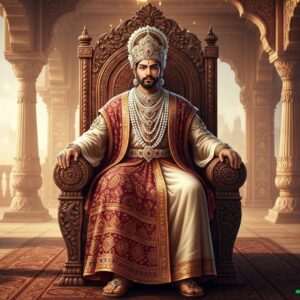
Long before modern borders were drawn, the northwestern part of the Indian subcontinent (covering parts of modern-day Pakistan, Afghanistan, and Northwest India) was ruled by the Indo-Parthian Kingdom. The founder and most prominent ruler of this dynasty was Gondophares I, who reigned approximately between 19 and 46 CE. His capital was the legendary city of Taxila, a bustling hub of learning and trade.
Historically, the name “Gondophares” is a Greek transliteration of the original name “Gudnaphar” or “Vindafarnah,” which means “May he find glory.” For a long time, Western historians thought he was merely a mythical figure mentioned in religious texts. However, the discovery of ancient coins and the famous Takht-i-Bahi inscription changed everything. These artifacts proved that a King named Gondophares truly existed and ruled exactly when St. Thomas is said to have visited India.
If you are fascinated by how ancient kings and foreign cultures interacted in India, you might also enjoy reading about the Heliodorus Pillar and its connection to the Shunga dynasty, which showcases another incredible instance of cross-cultural spiritual exchange.
The Arrival of the Apostle: St. Thomas and the Merchant Habban
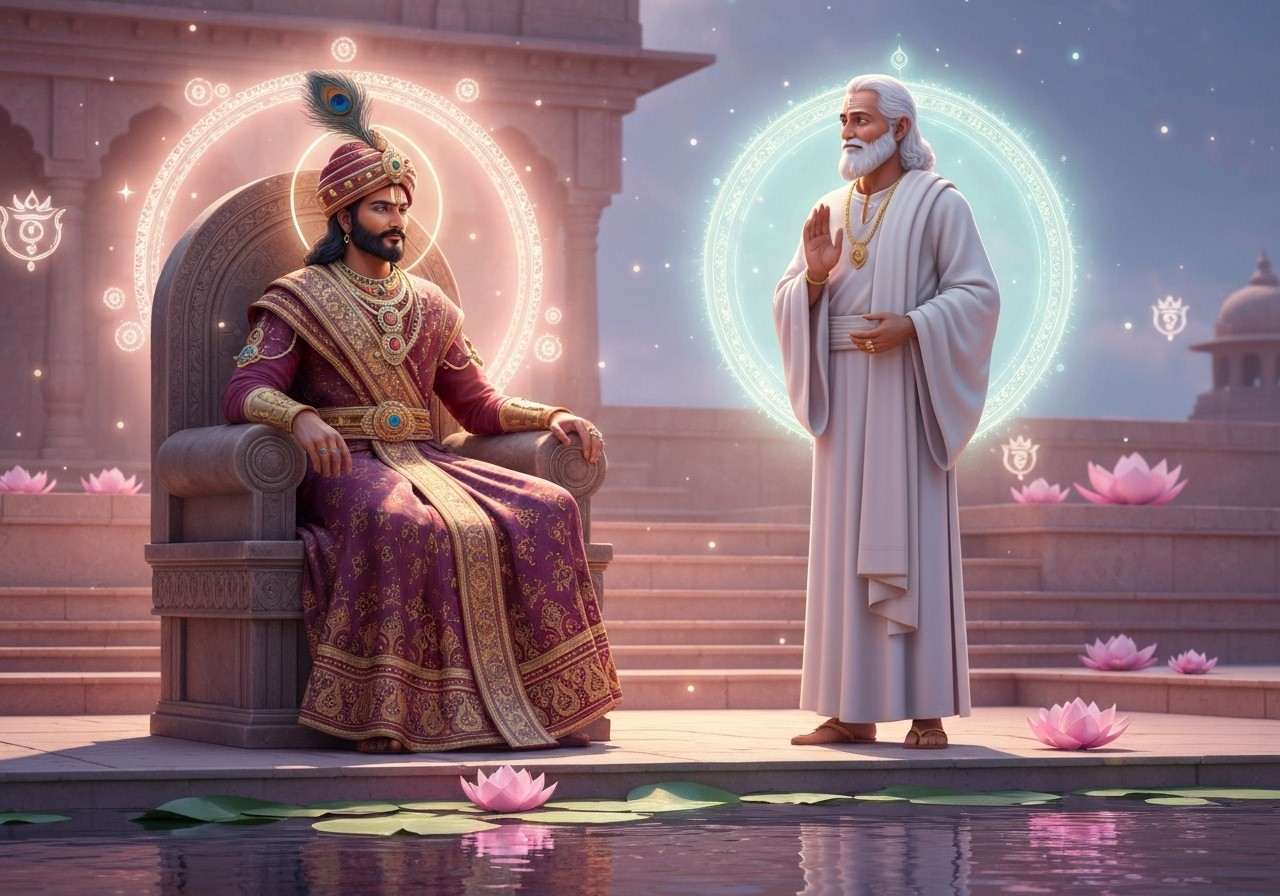
The story of how St. Thomas reached the court of Gondophares is recorded primarily in the Acts of Thomas, a text from the 3rd century CE. While not part of the standard Bible, this text holds a revered place in history. It tells us that St. Thomas was reluctant to travel to India. However, fate had other plans. He was sold into service to an Indian merchant named Habban, who was looking for a skilled carpenter to build a palace for King Gondophares.
They traveled by sea, eventually reaching the king’s court in the north. This narrative aligns with historical trade routes of the time. Just as Buddhism traveled outward from India, travelers came inward. You can read more about these ancient exchanges in our blog on The Sacred Silk Road and Buddhism.
The Legend of the Spiritual Palace
This is where the story touches the heart of Indian values—Dharma and charity. King Gondophares gave St. Thomas a large sum of gold to build a magnificent royal palace. However, Thomas, moved by the plight of the poor, distributed all the wealth to the needy. He believed he was building a palace for the King in heaven through these acts of charity, rather than a structure of brick and stone on earth.
When the King returned and saw no palace, he was furious and imprisoned Thomas. The story takes a miraculous turn when the King’s brother, Gad, passed away. In a vision after death, Gad saw the beautiful heavenly palace Thomas had built through his good deeds. Miraculously restored to life, Gad told the King what he saw. Overwhelmed and humbled, Gondophares converted to Christianity, acknowledging the spiritual wisdom of the Apostle.
This narrative suggests that St. Thomas’s journey likely began in North India at the court of Gondophares, after which he traveled down the Indus River and sailed to Muziris (Kerala) around 52 CE. For a deeper dive into this journey, we recommend reading our detailed article on Christianity in India: A Historical Overview from Apostle Thomas.
Why This Matters Today
The meeting of Gondophares and St. Thomas is not just a story; it is evidence of India’s long-standing openness to different faiths. The coins found with the name Gondophares bear images that blend Parthian, Greek, and Indian styles, symbolizing a time of great cultural fusion. This historical connection reminds us that our spiritual landscape has always been diverse and welcoming.
At Poojn.in, we celebrate this rich heritage. While kings and kingdoms rise and fall, the traditions of prayer and ritual remain constant in Indian homes. Whether you are following ancient traditions or seeking to bring positive energy into your home, maintaining the sanctity of your prayer space is vital.
For those who value the purity of tradition in their daily rituals, we offer the Maha Tirtha Gold Sindoor, a symbol of auspiciousness that has been part of Indian households for centuries, transcending the changes of history.
Common Questions About Gondophares and St. Thomas
Was King Gondophares a real person or just a myth?
He was very much real. For centuries, he was thought to be a legend, but the discovery of coins and the Takht-i-Bahi inscription (dating to his 26th regnal year) confirmed his existence. He ruled the Indo-Parthian Kingdom between 19 and 46 CE.
Did St. Thomas really build a physical palace for the King?
According to the Acts of Thomas, he did not build a physical structure. Instead, he used the King’s money to help the poor and needy. The text explains that this act of charity built a “spiritual palace” in heaven for the King, which led to the King’s eventual understanding and conversion.
How is this story connected to South India?
Historical analysis suggests that St. Thomas first visited the Indo-Parthian kingdom in the North (modern-day Pakistan/North India) during the reign of Gondophares. Later, he is believed to have traveled south, landing in Kerala around 52 CE, where he established the Saint Thomas Christian communities that thrive to this day.
Is there archaeological proof of their meeting?
While we have hard archaeological proof of Gondophares’ reign (coins and inscriptions) and strong oral traditions of St. Thomas’s visit, there is no direct physical evidence of their specific meeting. However, the timelines match perfectly. The reign of Gondophares coincides exactly with the time St. Thomas would have begun his missionary journeys after the Crucifixion (c. 30 AD).
At Poojn.in, we take pride in India’s glorious past and its vibrant spiritual present. We are India’s biggest cultural goods store, dedicated to bringing you authentic ritual items. Please note that we do not offer travel packages or VIP darshan services; our focus is solely on providing you with the best cultural goods delivered to your doorstep.