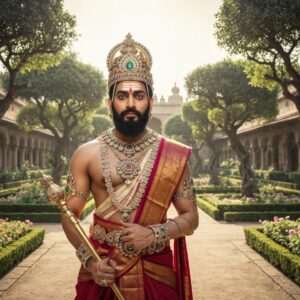

There is a special thrill in holding a piece of history—a feeling that takes you back to an era where kings, warriors, and sages walked the land. When we talk about Gondophares, the illustrious founder of the Indo-Parthian Kingdom, we are looking at a ruler whose legacy isn’t just written in books but etched onto silver and stone. Reigning roughly between 20–46 CE, his influence stretched across modern-day Afghanistan, Pakistan, and northwestern India. For those of us who cherish our ancient roots, understanding his story offers a fascinating glimpse into a time when Indian culture was beautifully blending with Parthian and Greek influences.
At Poojn.in, we understand the deep emotional connection you have with our shared heritage. As India’s biggest cultural goods & services store, we are dedicated to keeping these traditions alive. While we don’t sell antique coins, we offer the finest collection of ritual items that help you preserve the sanctity of your daily worship. Visit poojn.in today to bring home authentic spiritual essentials.
Gondophares’ Coins: Silver Whispers from the Past
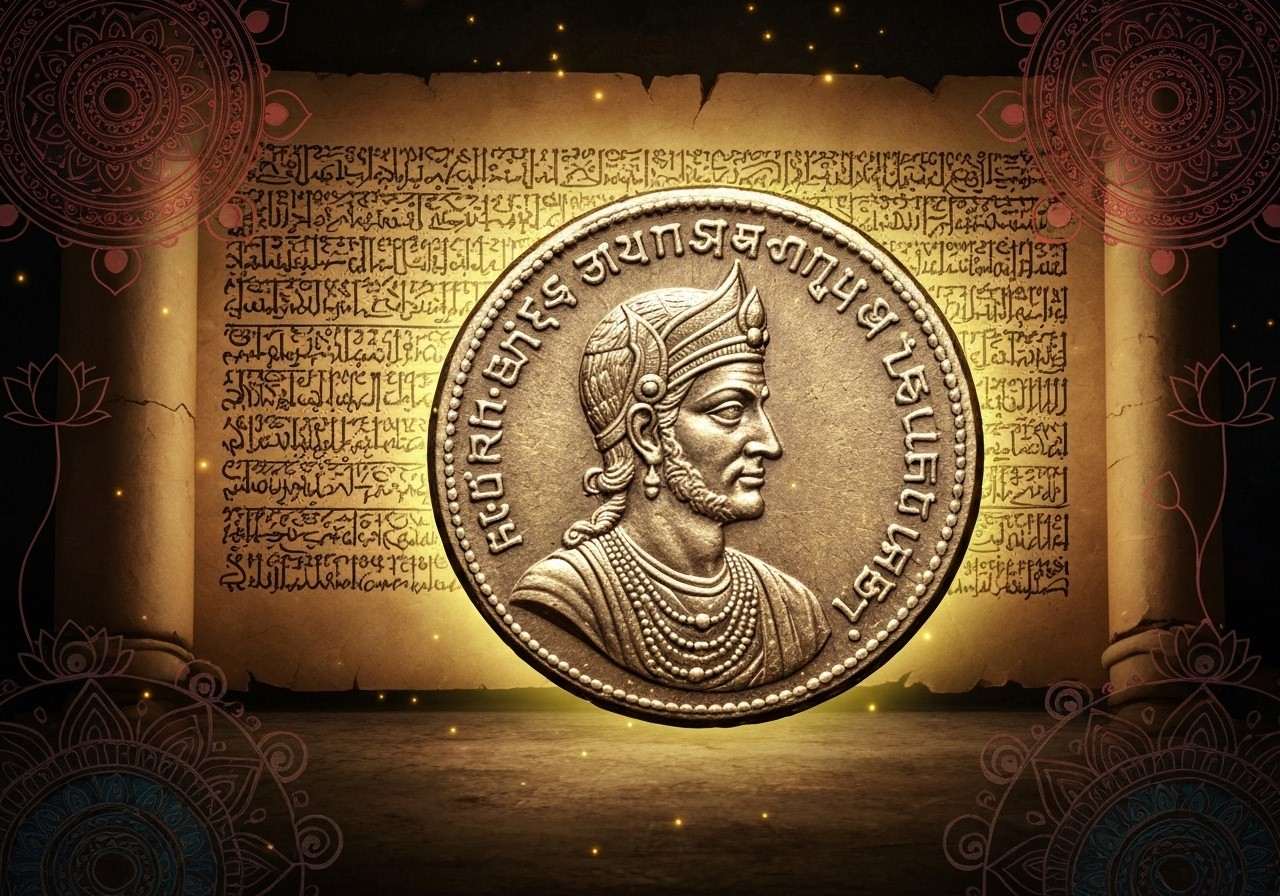
Imagine holding a small metal disc that has traveled through two thousand years to tell a story. The coinage of Gondophares is the primary source of information about his reign, acting as a tangible proof of his power. These coins, minted in silver and copper, do not just serve as currency; they are artistic statements of authority. They bear his proud title, “Great King of Kings,” asserting his independence from the Parthian overlords and his dominance over former Indo-Scythian territories.
What makes these coins truly special for any history lover is the cultural syncretism they display. They are not purely Indian, nor are they purely Greek or Parthian; they are a harmonious blend of all three. Here is what makes them unique:
-
A Blend of Divine Imagery:
The coins often feature royal portraits that look Parthian in style, but they are surrounded by deities that show a meeting of worlds. You might see Zeus, the Greek god, on one side, and on others, you find clear depictions of Shiva holding a trident. This suggests that Gondophares respected local Indian traditions and sought to integrate them into his rule, creating a diverse religious landscape. -
Bilingual Legends for a Diverse Kingdom:
To communicate with his vast and varied subjects, the legends on these coins were struck in two scripts: Greek and Kharosthi. This duality wasn’t just for show; it was a practical necessity for trade along the Silk Road, ensuring that merchants from different lands could recognize the currency and trust its value. -
The Network of Subordinates:
History is rarely made by one man alone. Gondophares’ coins often mention the names of his trusted subordinates and family members, such as Gadana and Sasan. This gives us a rare insight into the administrative structure of his kingdom, showing us that he ruled through a network of loyal governors who helped maintain order across his expansive territories.
If you are fascinated by how ancient coinage reveals the secrets of governance and trade, you might find our article on Western Kshatrapa Coins deeply engaging. Much like Gondophares, the Western Kshatrapas left behind a rich numismatic legacy that tells us about the economic pulse of ancient India.
Unraveling the Truth: The Takht-i-Bahi Inscription
While coins give us the “what” and “where,” inscriptions often give us the “when.” The most significant piece of evidence for dating Gondophares’ rule comes from the famous Takht-i-Bahi inscription. Discovered in the Mardan District (present-day Pakistan), this stone carving is a chronological anchor that helps historians fix the timeline of the Indo-Parthian dynasty.
The inscription is dated to the 26th year of Gondophares’ rule, which corresponds to the year 103 of a specific regnal era. By calculating backwards, scholars have determined that his reign ended around 46 CE. The text was erected under a subordinate ruler named Erjhuna Kapa, further highlighting the decentralized yet organized nature of his kingdom. Written in the Kharoṣṭhi script, it identifies the king with the majestic title maharayasa Guduvharasa.
Understanding these inscriptions requires patience and a love for the past, much like the study of other great Indian dynasties. For instance, the epigraphic records of the Gupta period offer similar insights. You can explore this parallel in our detailed post on Chandragupta II’s Coinage and Inscriptions, which delves into how inscriptions serve as historical milestones.
Archaeology and The Modern Connection
Recent archaeological discoveries continue to reshape our view of Gondophares. Excavations have unearthed coins bearing the distinct “Gondophares symbol,” used by his partisans to show allegiance. These findings confirm that his economic policies included standardized minting, which greatly facilitated trade along the bustling routes connecting India to the West.
For those interested in the broader context of this era, the Kushan dynasty rose to power shortly after, often overlapping in territories and influence. To understand the flow of history from the Indo-Parthians to the Kushans, we recommend reading our guide on Kushan Coinage.
While we look back at history with awe, we must also live in the present with devotion. At Poojn.in, we help you stay connected to your spiritual roots. For those who appreciate traditional craftsmanship in their ritual items, we recommend the Ananda Kosha Kushi. Made of pure copper, it reflects the same metallurgical heritage that ancient artisans used to mint the coins of Gondophares. You can browse more authentic products in our Culturally Significant Items category.
Common Questions About Gondophares and His Legacy
Why are Gondophares’ coins considered historically significant?
These coins are vital because they are often the only contemporary evidence of his reign. They provide concrete proof of his title “Great King of Kings,” his religious tolerance through the depiction of Shiva and Zeus, and the extent of his territory. Without these silver and copper artifacts, much of the Indo-Parthian history would be lost to time.
What does the Takht-i-Bahi inscription tell us?
The Takht-i-Bahi inscription is crucial because it provides a specific date—the 26th year of his reign (Year 103 of the era). This helps historians pinpoint the end of his rule to approximately 46 CE. It also confirms his title in the local dialect as maharayasa Guduvharasa, linking him firmly to the region’s history.
How do we know about his religious beliefs from artifacts?
The imagery on his coins suggests a policy of religious syncretism. By featuring the Greek god Zeus and the Indian deity Shiva, Gondophares acknowledged the diverse beliefs of his subjects. This indicates a ruler who understood the importance of cultural harmony in a multi-ethnic kingdom.
Where can we see the influence of his reign today?
While the kingdom is long gone, the influence is seen in the archaeological layers of the subcontinent. The blend of Greek and Indian art styles (Gandhara art) flourished during and after his time. Furthermore, the trade routes he secured laid the groundwork for future economic exchanges that enriched Indian culture.
Is it possible to buy these ancient coins online?
Authentic ancient coins are usually sold by specialized numismatic dealers or auction houses and require proper certification. However, at Poojn.in, we focus on providing you with new, culturally authentic goods for your home and worship needs, ensuring you can practice your traditions with pride.
Gondophares was more than just a name in a textbook; he was a bridge between East and West. His coins and inscriptions remind us that India has always been a land where cultures meet, mix, and create something beautiful. Let us cherish this rich virasat (heritage) and keep our traditions alive in our own homes.