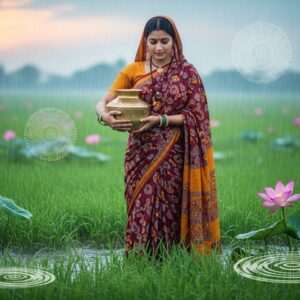



When the first drop of rain hits the parched Indian soil, it brings a scent—petrichor—that awakens something deep within our souls. The Indian monsoon, or Varsha Ritu, usually gracing us from June to September, is far more than just a seasonal change. It is a time of renewal, spiritual awakening, and bountiful abundance. Across our diverse land, the rains dictate not just the agricultural calendar but also the rhythm of our festivals, our daily diets, and our offerings to the Divine.
At Poojn.in, we understand that this season is deeply intertwined with culture. It is a time when the earth replenishes itself, offering us specific sacred foods, fruits, and flowers that hold immense power in Ayurveda and Hindu rituals. Let us take a journey through the monsoon’s bounty and understand how these gifts of nature connect us to our traditions.
The Spiritual Essence of Monsoon Fruits
In our tradition, food is not just sustenance; it is Prasad—a blessed offering. Fruits, in particular, hold a sacred place in Indian worship, offered to deities and ancestors as symbols of pure devotion. The monsoon season blesses us with indigenous fruits that are not only delicious but also packed with the immunity-boosting power needed during the rains.
One cannot speak of the monsoon without mentioning Jamun (Indian Blackberry). With its deep purple hue and sweet-tart flavor, it is a favorite of Lord Krishna and is rich in antioxidants. Then there is the Indian Gooseberry (Amla), a cornerstone of Ayurvedic medicine, revered for its high Vitamin C content which is vital for building immunity against seasonal ailments. We also see an abundance of Lychee, Sapodilla (Chikoo), and Figs (Anjeer), all of which provide natural energy and digestion support.
For those looking to understand the deeper meaning behind these offerings, you might find our article on the significance of flowers and fruits in Hindu rituals particularly enlightening. When offering these fruits, using the right traditional vessels enhances the spiritual experience. Poojn.in offers a beautiful collection of authentic puja thalis and brassware that are perfect for presenting these sacred offerings to your deities.
Nourishing the Body: Sacred Foods and Immunity
The transition from the scorching summer to the humid monsoon requires a shift in diet, a concept deeply rooted in Sattvic cuisine. Our ancestors knew that digestion slows down during the rains, which is why monsoon food traditions focus on warmth and immunity.
Imagine the comfort of a hot cup of Masala Chai, brewed with ginger, cloves, and cardamom, while watching the rain fall. It is an emotion shared by millions. Paired with hot Pakoras (fritters made of gram flour and vegetables like spinach or onion), it becomes a celebration of the season. However, on a more spiritual level, regions like Kerala observe Karkidakam, a time dedicated to physical and spiritual rejuvenation.
A central dish during this time is the Karkidaka Kanji, a medicinal rice porridge infused with herbs to cleanse the body and boost gut health. To dive deeper into these regional traditions, read our blog on Kerala’s sacred foods and temple rituals. For those who wish to incorporate healthy, traditional elements into their diet, our Holy Food collection at Poojn.in features high-quality dry fruits and sacred edibles ideal for the season.
Blossoms of Devotion: Monsoon Flowers
The rains breathe life into the landscape, painting it with vibrant wildflowers and ornamental plants. Among them, certain flowers hold a status of high reverence. The Lotus (Nelumbo nucifera), symbolizing purity and detachment, blooms majestically in rain-filled ponds. It is the favorite flower of Goddess Lakshmi and represents beauty emerging from the mud, a powerful metaphor for spiritual growth.
High in the Himalayas, the rare and mystical Brahma Kamal blooms specifically during the monsoon, offered in sacred hill temples. In our home gardens, we see the blossoming of Jasmine, Hibiscus, and the Rain Lily. These are not just for decoration; they are essential for daily pujas. Using fresh, seasonal flowers attracts positive vibrations to your home altar.
While we do not sell fresh flowers, Poojn.in is the premier destination for all other puja essentials, including incense holders and flower baskets that complement your floral offerings perfectly. To understand how the monsoon impacts spirituality in different regions, explore our insights on the spiritual perspective of the monsoon in Southwest India.
A Season of Festivals and Togetherness
The abundance of rain leads to an abundance of joy. The monsoon calendar is dotted with vibrant festivals like Janmashtami, celebrating the birth of Lord Krishna, where unique dishes like ‘Alvati’ are prepared. Festivals like Teej celebrate the union of Shiva and Parvati, symbolizing fertility and marital bliss.
The rains are responsible for 70-90% of India’s annual rainfall, vital for crops like rice, maize, and turmeric. This agricultural prosperity translates into economic stability and cultural gratitude. When we celebrate, we are essentially thanking nature for its generosity.
Common Questions About Monsoon Traditions
Many of our customers often ask us about the specifics of monsoon rituals. A frequent query revolves around which fruits are best for offerings during this season. As mentioned, Jamun, Pomegranate, and seasonal Mangoes are ideal as they represent devotion and the breaking of ego. Another common area of interest is regarding dietary precautions for spiritual purity. It is widely recommended to consume light, fresh, and warm foods—avoiding leafy greens that may carry moisture-borne bacteria is a common traditional practice, replaced often by gourds and corn.
People also wonder about the significance of lighting lamps during the dark, cloudy days of the monsoon. Lighting a diya creates a protective and positive aura, dispelling gloom. If you are looking to enhance your home temple for the season, explore the unique collection of cultural goods at Poojn.in. We ensure that you have access to authentic spiritual items without stepping out into the rain.
The monsoon is a time to slow down, reflect, and express gratitude. Whether you are sipping chai, offering a Lotus to your deity, or simply enjoying the smell of wet earth, remember that you are participating in a timeless Indian tradition. Let poojn.in be your trusted companion in this spiritual journey, bringing the essence of our culture right to your doorstep.