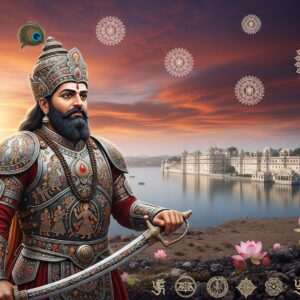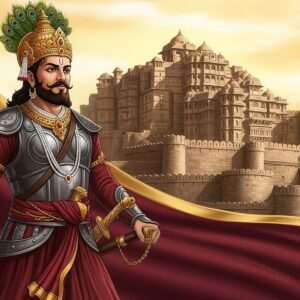


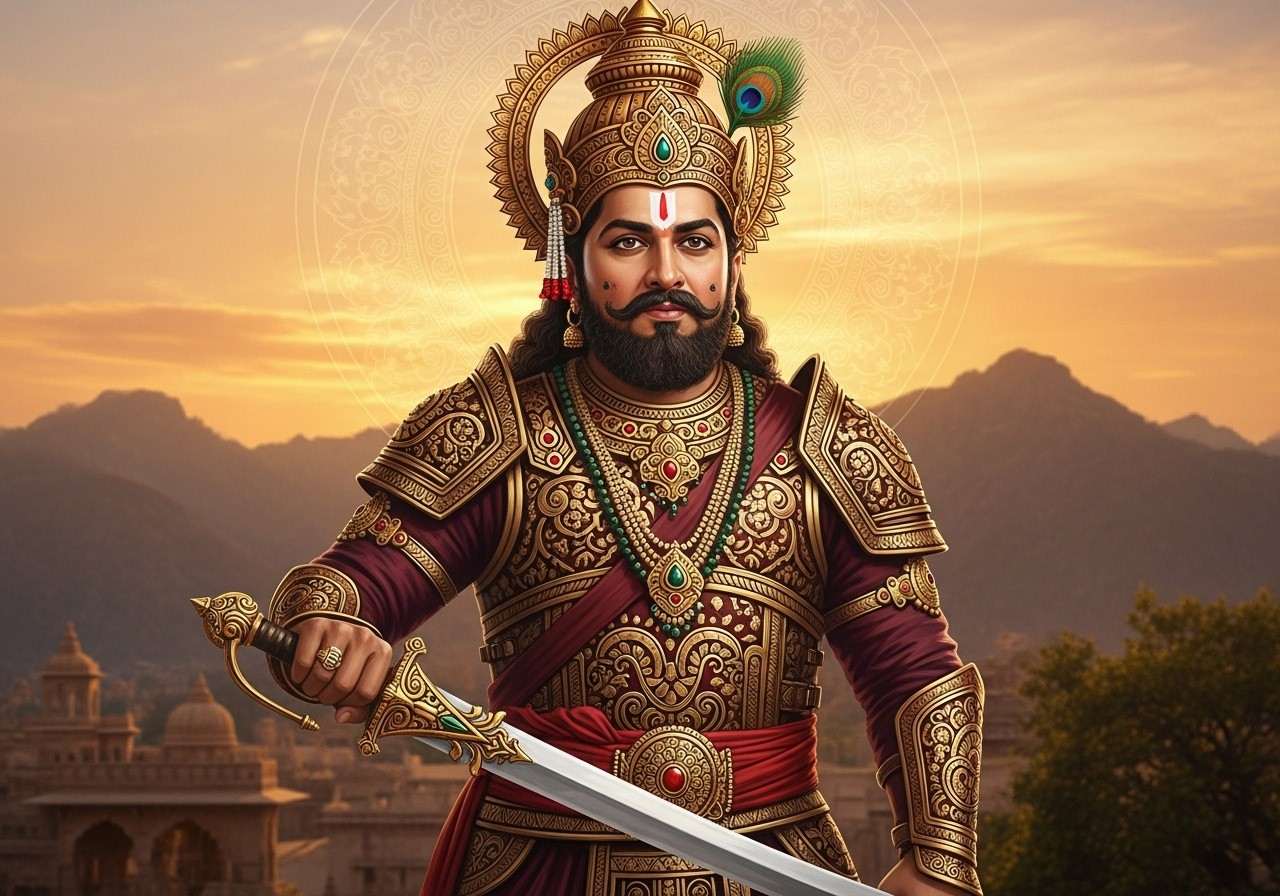
In the rich tapestry of Indian history, few names evoke as much pride and reverence as Bappa Rawal. He was not merely a king; he was a phenomenon—a guardian of Dharma and the indomitable spirit behind the Mewar Dynasty. For those of us who cherish our roots, the story of Bappa Rawal is more than a history lesson; it is a reminder of courage, resilience, and the divine connection that our ancestors maintained with the land. At Poojn.in, we understand that culture is kept alive through these stories and the traditions we practice daily.
Let us take you on a journey back to the 8th century, a time of turmoil that called for a hero, and how one man rose to define the identity of Rajasthan.
The Origins: From Cowherd to King
The early life of Bappa Rawal, also known as Kalbhoj, reads like a divine script. Born into the noble Guhila Rajput dynasty, his childhood was anything but royal in comfort. Legends tell us that his father, Rawal Mahendra II, and other male family members were tragically killed in a battle with the Bhils of Idar. To protect the young prince, he was raised in disguise by a Brahmin lady in the town of Nagda. Imagine the future king of Kings, tending to cows in the lush Aravalli hills, unaware that destiny had etched a glorious path for him.
It was during these humble beginnings that he met the sage Harit Rishi. The sage, recognizing the latent fire in the young boy, initiated him into the Shaivite order. It is said that through deep Tapasya (spiritual austerity) and the sage’s blessings, Bappa was granted the boon of kingship. This spiritual foundation is what makes his legacy so unique—he was a ruler who governed not just with a sword, but with the blessings of Lord Shiva.
For a deeper understanding of how this dynasty evolved over centuries, you can read our detailed guide on the Mewar Kingdom: A History of Its Rise and Fall.
The Establishment of the Mewar Dynasty
In 728 CE, Bappa Rawal did the unthinkable. He defeated the killers of his father and established the Mewar Kingdom, a state that would stand tall for over 1,300 years. Unlike others who might have continued the old family name, he forged a new identity, marking the beginning of the Mewar Dynasty. He is considered the first major ruler of this lineage, and later chronicles describe him as the 80th descendant of Lord Rama, linking his reign to the divine Solar Dynasty (Suryavansha).
His bloodline produced some of India’s greatest heroes, including Maharana Sanga and the legendary Maharana Pratap. They all carried the torch lit by Bappa Rawal, upholding the values of independence and self-respect.
To understand the geographical spread and the strategic importance of the capitals he and his successors built, explore our article on Mewar Legacy Explored: Capital, Map, and Flag Guide.
Defender of the Faith: Military Prowess
Bappa Rawal is perhaps best celebrated as the Military Hero who stood as a wall against foreign invasions. During a time when Arab incursions were threatening the fabric of North-West India, Bappa Rawal united smaller states and repelled the invaders with ferocious bravery. He didn’t just stop them; historical accounts suggest he pursued the Arab armies all the way back to the banks of the Sindhu River.
Some historical records and legends even claim that he marched as far as Ghazni, defeating its ruler and expanding the boundaries of his kingdom. It is widely believed that he established a military outpost which eventually evolved into the city of Rawalpindi in present-day Pakistan—a name that still echoes his legacy.
The Spiritual Architect: Eklingji Temple
A king’s legacy is often measured by the monuments he leaves behind. For Bappa Rawal, his greatest construction was spiritual rather than political. Following the guidance of Harit Rishi, he built the magnificent Eklingji Temple at Nagda. Lord Eklingji (a form of Shiva) became the ruling deity of Mewar, and the kings thereafter ruled merely as ‘Dewans’ or prime ministers of the Lord. This unique concept of divine kingship kept the rulers humble and the people united in faith.
If you are interested in the religious significance of this region, we highly recommend reading about Mewar’s Legacy: A Spiritual Journey Through Udaipur’s Historical Sites.
Why Bappa Rawal Matters Today
In the hustle of modern life, we often look for symbols of strength and integrity. Bappa Rawal, known by titles such as “Sun of the Hindus” and “Purana Purusha,” embodies these virtues. He was a Warrior-Saint who, according to some accounts, abdicated his throne later in life to become a Yogi, proving that true power lies in detachment and spiritual growth. His life story is a beacon of cultural pride, reminding us that protecting our heritage is a noble duty.
Bring the Essence of Tradition Home with Poojn.in
At Poojn.in, we believe that connecting with our history enriches our daily lives. While we cannot take you back to the 8th century, we can help you bring the sanctity of Indian tradition into your home. As India’s premier destination for cultural goods, poojn.in offers a unique collection of ritual items that are hard to find elsewhere. Whether you are setting up your home temple or looking for authentic puja essentials, our store bridges the gap between ancient tradition and modern convenience. Visit us today to explore our exclusive range.
Common Questions About Bappa Rawal
Many of our visitors often ask us about the specifics of Bappa Rawal’s life. It is frequently asked who exactly Bappa Rawal was in the context of Indian history. Simply put, he was the legendary founder of the Mewar dynasty in Rajasthan, celebrated for his valor and for establishing a kingdom that resisted foreign rule for centuries.
There is also curiosity regarding how he ascended the throne. His rise was not inherited but earned; through the blessings of Sage Harit Rishi and his own military genius, he defeated his enemies to claim his rightful place. People also wonder about the legends surrounding him. Beyond historical facts, folklore speaks of his divine sword and his ability to single-handedly turn the tide of battle, cementing his status as a near-mythical figure in Rajput history.
Lastly, the modern relevance of his legacy is significant. His construction of the Eklingji temple and his defense of the land serve as lasting symbols of Hindu culture and resistance, influencing the identity of Mewar to this day.
Key Takeaways from His Life
- Divine Blessings and Leadership: Bappa Rawal’s journey from a cowherd to a King highlights that true leadership is often a mix of personal grit and spiritual grace. His bond with Harit Rishi emphasizes the importance of gurus in Indian culture.
- Unmatched Military Strategy: He was one of the few Indian rulers to take the offensive against invaders, securing the frontiers of India for centuries. The establishment of Rawalpindi stands as a geographical testament to his reach.
- Cultural Preservation: By building the Eklingji Temple and ruling as a servant of God, he ensured that the culture of Mewar was rooted in Dharma, a tradition that kept the kingdom strong against external cultural aggression.
Bappa Rawal’s life was a blend of martial strength and spiritual depth. He remains a timeless icon of Indian resistance and cultural pride.