

There is a certain magic in the air of Amritsar, a feeling of profound peace that descends the moment you step into the complex of Harmandir Sahib. Known to the world as the Golden Temple, this shrine is not merely a structure made of marble and gold; it is the beating heart of Sikhism and a symbol of universal brotherhood. For us Indians, visiting this holy shrine is often a lifelong dream, a journey to find solace and reconnect with the divine. Whether you are a devotee or an admirer of art, the architectural brilliance and the shimmering gold of the temple leave an impression that lasts a lifetime.
At poojn.in, we understand how deeply culture and spirituality run in our veins. While we do not offer travel packages or VIP darshan services, we are dedicated to bringing the essence of these sacred traditions into your homes through our curated collection of cultural goods.
The Foundation: A History of Resilience and Faith
To truly appreciate the beauty of the Golden Temple, one must look back at its storied past. The foundation was not laid by a king, but by the fifth Sikh Guru, Guru Arjan Dev Ji, in 1581. In a beautiful gesture that defines the inclusive nature of Sikhism, it is widely believed that a Muslim saint, Mian Mir, was invited to lay the foundation stone. Unlike many ancient structures that are built on a raised platform, the temple was built at a lower level than the surrounding land, signifying humility before God.
The construction of the sacred pool, the Amrit Sarovar (Pool of Nectar), was completed earlier in 1577 by Guru Ram Das Ji. Over the centuries, the temple faced numerous attacks by Mughal and Afghan invaders, yet it stood resilient, rising from the ashes each time. It was in the early 19th century that Maharaja Ranjit Singh, the Lion of Punjab, rebuilt the temple in marble and copper, eventually overlaying the sanctum with gold leaf in 1830, giving us the iconic structure we revere today.
A Unique Blend: The Architecture of Harmandir Sahib
The architecture of the Golden Temple is a fascinating subject for art lovers. It is a distinctive blend that borrows the best elements from Indo-Islamic Mughal and Hindu Rajput styles, creating what is known as the Sikh school of architecture. While it shares some structural philosophies with broader traditions, such as those discussed in our guide on Hindu temple architecture significance and symbolism, Harmandir Sahib has unique features that set it apart.
Here are some of the defining architectural elements:
- The Four Entrances: Unlike traditional temples that often have a single entry, the Golden Temple has four entrances—one on each side. This is a powerful symbol of openness and equality, welcoming people from all four corners of the world, regardless of caste, creed, or religion.
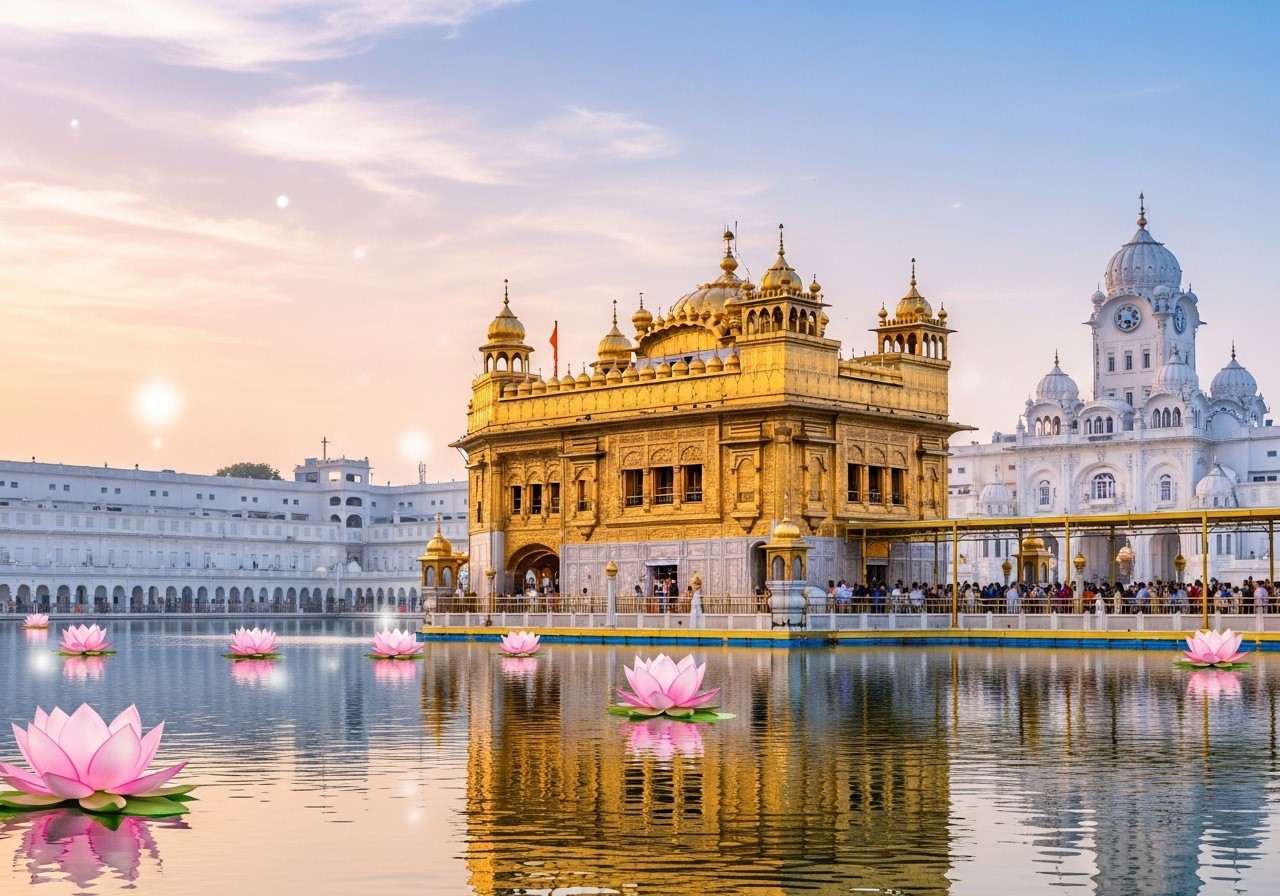
- The Central Sanctum and Pool: The two-story sanctum stands in the center of the Amrit Sarovar, connected by a marble causeway. This placement symbolizes a lotus flower floating in water, representing a soul that lives in the world yet remains untouched by worldly attachments.
- Mughal and Rajput Influences: The structure heavily features arches and chhatris (domed pavilions) on the parapets, which are classic Rajput elements. Meanwhile, the floral designs on the marble panels utilize the Arabesque style, showcasing intricate craftsmanship similar to Mughal artistry.
- Jharokhas and Domes: The façade is adorned with Jharokhas (overhanging enclosed balconies), adding a royal touch. The fluted domes, covered in gilded copper, create a silhouette that is instantly recognizable against the Amritsar skyline.
The intricate detailing found here can be compared to the complexity found in other regional styles, such as the Madhur Temple architecture, yet the Golden Temple maintains a simplicity in its grandeur that is uniquely its own.
The Golden Glory: Significance of the Gold
The name “Golden Temple” is literal. The upper floors and the dome are covered in sheets of pure gold. It is estimated that nearly 500 to 750 kilograms of pure gold were used during the time of Maharaja Ranjit Singh to embellish the exterior. This gold is not merely for decoration; it represents spiritual enlightenment and the reflection of divine light.
The sight of the gilded dome shimmering in the sunlight or glowing under the moonlight creates an atmosphere of timeless serenity. It reminds devotees of the purity required in spiritual life. Just as the gold withstands time and elements, faith, too, remains unwavering.
If you wish to bring a fragment of this divine aesthetic into your own prayer room, consider our Pure Brass Golden Arch for Pooja and Idols. While it is a humble representation compared to the great temple, this beautifully crafted arch adds a touch of traditional grandeur and sanctity to your home altar, perfect for framing your beloved idols.
Spiritual Experience and Community
Beyond the architecture and gold, the true beauty of the Golden Temple lies in its atmosphere. The continuous recitation of Gurbani (hymns) creates a vibration that calms the restless mind. The Langar (community kitchen), which serves free meals to thousands of people daily, is the practical manifestation of the teachings of equality and service (Seva).
Similar to the historical depth explored in the Govindaraja Temple history, the Golden Temple stands as a testament to centuries of devotion. However, the experience of performing ‘Seva’—whether washing dishes or serving food—is something that transforms the visitor, making them feel part of a larger, compassionate humanity.
Common Questions About the Golden Temple
Understanding the Sanctity and Logistics
Many visitors often wonder about the specifics of the temple’s construction and etiquette. A common curiosity surrounds the quantity of gold used. While estimates vary, historical records suggest that Maharaja Ranjit Singh utilized approximately 750 kilograms of gold to cover the upper stories and the dome, a feat that transformed the shrine into the visual marvel it is today.
People also frequently ask about who can visit the temple. In line with the Sikh philosophy of universal brotherhood, the Golden Temple is open to absolutely everyone. Whether you are Hindu, Muslim, Christian, or of no faith, you are welcome. The only requirement is that you cover your head, remove your shoes, and wash your feet before entering, as a sign of respect for the holy space.
Another point of interest is the architectural style. It is not strictly Hindu or Islamic but a harmonious fusion. The use of marble, copper, and gold leaf, combined with the technique of pietra dura (inlay work), showcases the artistic zenith of 19th-century Punjab. The four entrances specifically emphasize that God is omnipresent and not confined to a single direction or community.
For those interested in the best time to visit, while the temple is open 24 hours, the early morning (Amrit Vela) or the evening during the Palki Sahib ceremony offers the most ethereal experience. The reflection of the golden dome in the Amrit Sarovar at night is a sight that truly soothes the soul.
At Poojn.in, we celebrate the rich tapestry of Indian culture and spirituality. While we cannot take you to Amritsar physically, we can help you adorn your home with items that reflect these values. Explore our vast collection of cultural goods and find something that speaks to your heart. Visit us at www.poojn.in for all your puja and traditional needs.