


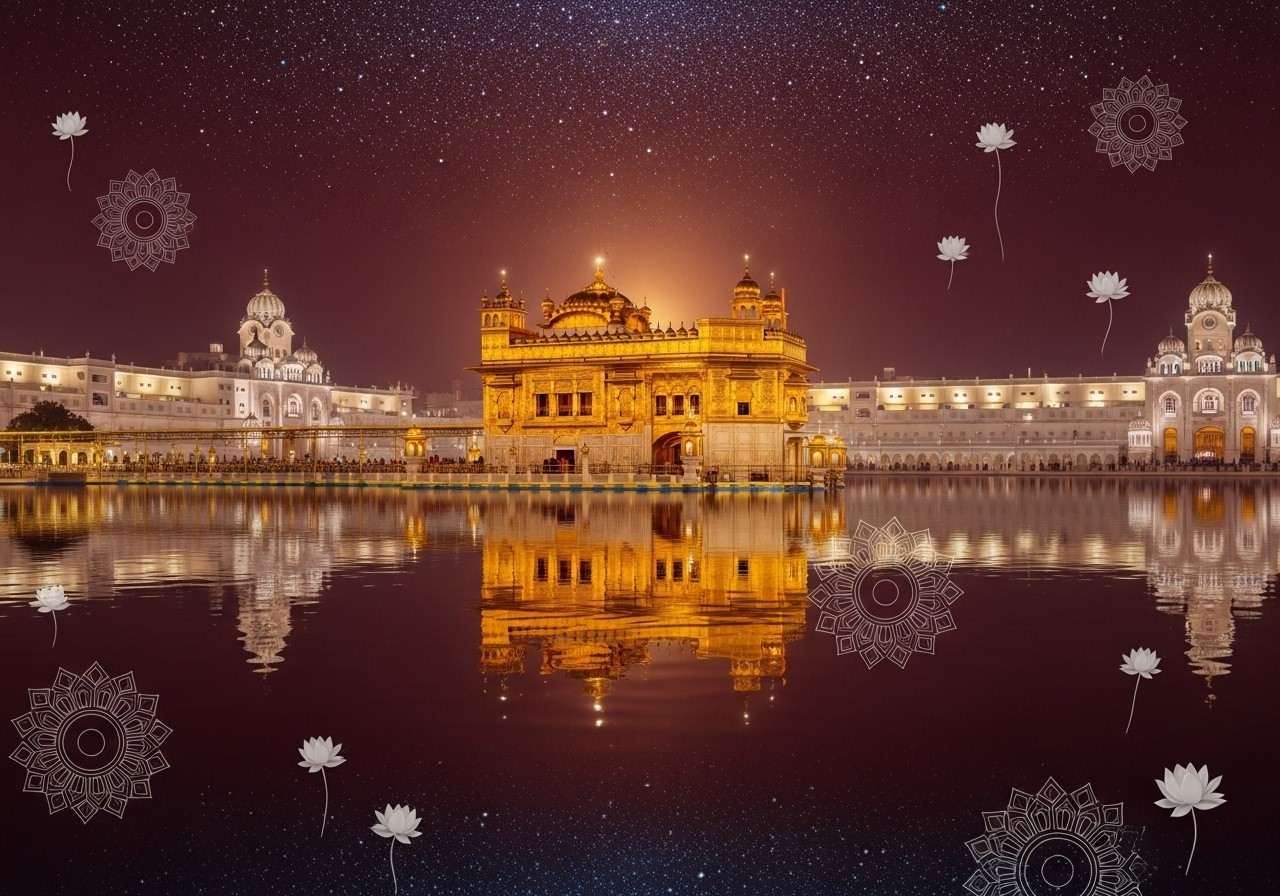
Imagine standing before a shimmering pool of nectar, where the golden reflection of a sanctum soothes your soul instantly. This is the magic of Sri Harmandir Sahib, popularly known as the Golden Temple, in Amritsar, Punjab. It is not just a monument; it is the beating heart of Sikhism and a symbol of spiritual enlightenment that welcomes every human being, regardless of caste, creed, or religion. Every day, over 150,000 devotees walk through its doors, seeking peace and blessings.
In this blog, we take a devotional journey through the history, architecture, and enduring legacy of this divine marvel, helping you understand why it holds such a special place in the hearts of millions.
The Divine Vision: Roots of the Sanctum
The story of the Golden Temple begins with a vision of inclusivity and grace. The fourth Sikh Guru, Guru Ram Das Ji, envisioned a central place where the community could gather to sing the praise of the Almighty. Following the instructions of Guru Amar Das Ji, Guru Ram Das Ji founded the city of Amritsar.
Historical records tell us that Guru Ram Das Ji purchased the land for the temple in 1574 for Rs. 700. In 1577, he initiated the excavation of the holy tank, the Amrit Sarovar (Pool of Nectar), which surrounds the main shrine today. This Sarovar is believed to have healing properties and offers a sense of calm to anyone who sits by its banks. For a deeper dive into the life of the founder, you can read about Guru Ram Das and Amritsar’s founding history.
Construction: A Testament to Humility and Unity
The actual construction of the Gurdwara was overseen by the fifth Guru, Guru Arjan Dev Ji. Unlike traditional structures of that time which were built on raised platforms, Guru Arjan Dev Ji consciously designed the Harmandir Sahib to be built at a lower level than the surrounding city. This architectural choice was a profound lesson in humility—teaching us that to gain God’s grace, one must be humble and down-to-earth.
- The Cornerstone of Unity: In a beautiful gesture of interfaith harmony, Guru Arjan Dev Ji invited a renowned Muslim saint from Lahore, Hazrat Mian Mir Ji, to lay the foundation stone of the temple in December 1588. This act cemented the temple’s philosophy that God belongs to everyone.
- Four Doors for All: The temple was designed with entrances on all four sides. This symbolizes that the doors of the Golden Temple are open to people from all four directions and all walks of life, breaking the barriers of caste and exclusion.
The construction work was completed in August/September 1604. Following this, Guru Arjan Dev Ji installed the Adi Granth (the holy scripture) inside the sanctum, establishing it as the spiritual throne of the Sikhs. To understand the broader context of this era, explore our guide on Sikhism in India and its complete history.
Resilience Through the Ages: Destruction and Glory
The Golden Temple is a survivor. It stands as a powerful symbol of Sikh resilience (Chardi Kala). Throughout the 18th century, the temple faced brutal attacks by Afghan invaders, including Ahmad Shah Durrani, who aimed to crush the spirit of the community by destroying their holiest site. Yet, each time the temple was damaged, the community came together to rebuild it with even greater devotion.
The glimmering look we adore today came much later. In the early 19th century, the legendary Maharaja Ranjit Singh undertook the seva (service) of beautifying the shrine. By 1830, he had the upper floors covered in copper and overlaid with pure gold foil, earning it the name “Golden Temple.”
The temple also witnessed modern turbulence, most notably the 1984 military operation involving Indian Prime Minister Indira Gandhi. While this event resulted in damage and casualties, the sanctity of the place has healed the wounds of time, and it remains a beacon of peace.
Interestingly, the spirit of resilience is shared across other historical Sikh sites. For instance, the Gurudwara Data Bandi Chhor in Gwalior also shares a profound history of standing against oppression.
Bring the Spiritual Aura Home with Poojn.in
While visiting the Golden Temple is a life-changing experience, we at poojn.in believe that spirituality should also flourish within your own home. We understand that for many of you, maintaining a connection to your roots is vital.
Poojn.in is India’s most trusted online store for authentic cultural and ritual goods. Whether you are setting up a small prayer corner or looking for sacred accessories to keep your faith close to your heart, we are here to serve you.
We invite you to explore our exclusive collection of Holy Jewellery. These beautifully crafted pieces are not just ornaments; they are keepsakes of faith that remind you of the divine blessings of the Gurus in your daily life. From Kadas to spiritual pendants, every item is sourced with respect for tradition.
Please note: Poojn.in is strictly a store for cultural goods. We do not offer travel packages, hotel bookings, or VIP darshan services for any temples.
Langar: The Kitchen that Never Sleeps
One of the most touching aspects of the Golden Temple is the Guru Ka Langar (community kitchen). Initiated by the founder of Sikhism, Guru Nanak Dev Ji, this tradition ensures that no one goes to sleep hungry.
Here, everyone sits in rows on the floor—kings and commoners alike—to share a simple, vegetarian meal. It serves as a daily lesson in equality and seva (selfless service). The kitchen is run almost entirely by volunteers who cook, serve, and clean with a smile, embodying the true essence of humanity.
Common Questions About Sri Harmandir Sahib
Who was the architect of the Golden Temple?
The conceptualization and design were primarily the vision of Guru Arjan Dev Ji, the fifth Sikh Guru. He wanted the structure to reflect the theological principles of Sikhism—humility and inclusivity. Instead of building it high to dominate the skyline, he built it lower than the ground level to signify that one must bow down to reach God.
What makes the water in the Sarovar holy?
The Amrit Sarovar, or Pool of Nectar, was excavated by Guru Ram Das Ji. Devotees believe that dipping in this water purifies the soul and washes away heavy burdens. It is not just water; it is a fluid manifestation of the prayers and chants that have echoed here for over four centuries.
Why is gold used on the temple exterior?
The gold plating was not part of the original construction. It was added in the 19th century by Maharaja Ranjit Singh as an offering of devotion. The gold symbolizes the eternal and pure nature of the Guru’s word. It serves as a protective layer for the marble structure beneath and gives the temple its distinct, heavenly appearance.
Can anyone visit the Golden Temple?
Absolutely. The Golden Temple is open to people of all faiths, castes, and backgrounds. The only requirements are that visitors must cover their heads, remove their shoes, and wash their feet before entering, as a sign of respect for the sanctity of the place. It is a home for all of humanity.
The Golden Temple is more than a destination; it is an emotion. It reminds us that despite our differences, we are all one in the eyes of the Divine. At poojn.in, we strive to keep this flame of tradition alive in your homes through our carefully curated cultural products. Visit us today to find items that speak to your soul.