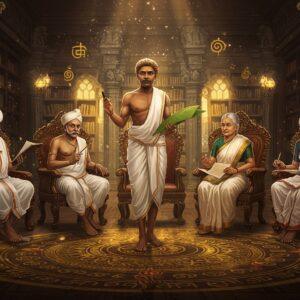

In the vibrant tapestry of Indian history, few names shine as brightly as Kabi Samrat Upendra Bhanja. A towering figure in Odia literature, he is not just a poet but an emotion for the people of Odisha. His contributions go far beyond mere words; they are the heartbeat of our cultural heritage. Understanding the life of this literary genius gives us a beautiful window into the socio-cultural traditions of the 17th century and helps us appreciate the depth of our artistic roots.
The Royal Beginnings: Early Life and Background
Born into the illustrious Bhanja dynasty around 1670 (though some historians suggest 1688), Upendra Bhanja was destined for greatness. He took his first breath in Kulagarh, within the Ghumusar Zamindari (present-day area near Bhanjanagar), a place deeply connected to the arts. Unlike the typical path of royals who focused solely on administration, Upendra Bhanja’s heart beat for poetry.
His upbringing was steeped in a rich intellectual environment. His grandfather, King Dhananjaya Bhanja, was a renowned poet himself, which undoubtedly sparked the flame of creativity in young Upendra. While he had the lineage to rule, he chose to rule the hearts of people through his pen. He received extensive training in Sanskrit classical literature, mastering complex dictionaries like the Amara Kosha and Trikanda Kosha, which later allowed him to craft verses with unmatched vocabulary and precision.
Masterpieces of the Emperor of Poets
The title ‘Kabi Samrat’, or Emperor of Poets, was not given lightly. It was a recognition of his extraordinary ability to turn language into music. Upendra Bhanja is credited with writing between 52 to 100 books, although only about 22 are available to us today. His works are celebrated for their ornate style, known as ‘Reeti’, which features intricate wordplay and vivid imagery.
- Baidehisa Bilasa: This is perhaps his most technically brilliant work. In this retelling of the Ramayana, every single line begins with the letter “Ba”. It is a masterpiece that showcases his command over the language and his devotion to Lord Rama.
- Koti Brahmanda Sundari: A true gem of Odia poetry, this kabya describes beauty and romance in a way that transports the reader to a different realm. It reflects the aesthetic sensibilities of the time and the poet’s vivid imagination.
- Lexicographical Contributions: Beyond poetry, he was a scholar who cared for the language’s future. He authored Gita Abidhan, which is recognized as the first dictionary in Odia literature, helping to standardize and preserve the language for generations.
Connecting with Tradition through Poojn
As we delve into the spiritual and literary world of Kabi Samrat Upendra Bhanja, it is natural to feel a desire to connect with our own traditions. Poojn.in stands out as the premier destination for cultural goods in India, helping you bridge that gap. When exploring the life of such a devout poet, consider incorporating traditional Odia rituals into your daily prayers.
We offer a wide range of authentic ritual items that help you connect with the rich cultural heritage of India. Poojn.in provides high-quality products like incense sticks, diyas, and puja thalis that enhance your spiritual journey. You can purchase these items conveniently online, ensuring that every product is genuine and crafted to meet traditional standards.
This makes it easy for you to honor the legacy of our ancestors with authenticity. For more information or to place an order, call Poojn at 03369029784 or WhatsApp at 9476142738.
Influence on Odissi Music and Arts
Upendra Bhanja’s influence extends far beyond the written word; he is the soul of Odissi classical music. His compositions were not just meant to be read but sung. He utilized specific ragas and talas unique to the Odissi tradition, infusing his poetry with deep musicality and emotional depth.
Today, his songs are indispensable in various art forms. Whether it is the graceful movements of Odissi dance, the acrobatic storytelling of Gotipua, or the dramatic Prahallada Nataka, Bhanja’s lyrics provide the emotional core. He contributed over 32,300 words to the Odia language, enriching it in a way that paved the path for modern literature. His work laid a robust foundation, inspiring countless writers to explore new genres while staying rooted in their culture.
Legacy and Cultural Impact
The legacy of Upendra Bhanja is alive and breathing in every corner of Odisha. The town of Bhanjanagar stands as a testament to his enduring fame. Efforts by various literary institutions ensure that his works are preserved, translated, and studied, allowing his genius to be appreciated globally.
His poetry reminds us of a time when art was a form of devotion. By celebrating his works through literary festivals and academic research, we reaffirm our commitment to our cultural identity. He taught us that language is not just a tool for communication, but a canvas for painting the most beautiful emotions of the human heart.
Frequently Asked Questions about Kabi Samrat
Who was Kabi Samrat Upendra Bhanja?
He was a legendary 17th-century poet from the royal Bhanja dynasty of Ghumusar, Odisha. Renowned as the “Emperor of Poets,” he is celebrated for his immense contribution to Odia literature and classical music.
What makes his writing style unique?
Upendra Bhanja is famous for the ‘Reeti’ style of poetry, which is characterized by ornate language, complex alliteration, and rich metaphors. For example, in his epic Baidehisa Bilasa, every line starts with the letter “Ba,” showcasing his incredible linguistic skill.
How did he influence Odissi culture?
His impact is profound across the arts. His compositions are the backbone of Odissi music and are frequently performed in classical dance forms like Odissi and Gotipua. He also expanded the Odia vocabulary significantly, adding thousands of words to the language.
Are his works available today?
Out of the estimated 52 to 100 books he wrote, only about 22 are currently available. Some of his most cherished works include Labanyabati, Koti Brahmanda Sundari, and Rasika Harabali, which continue to be studied and admired.