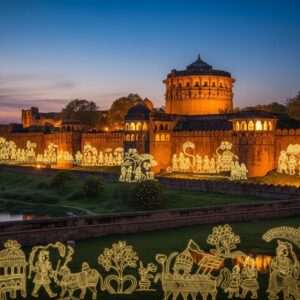


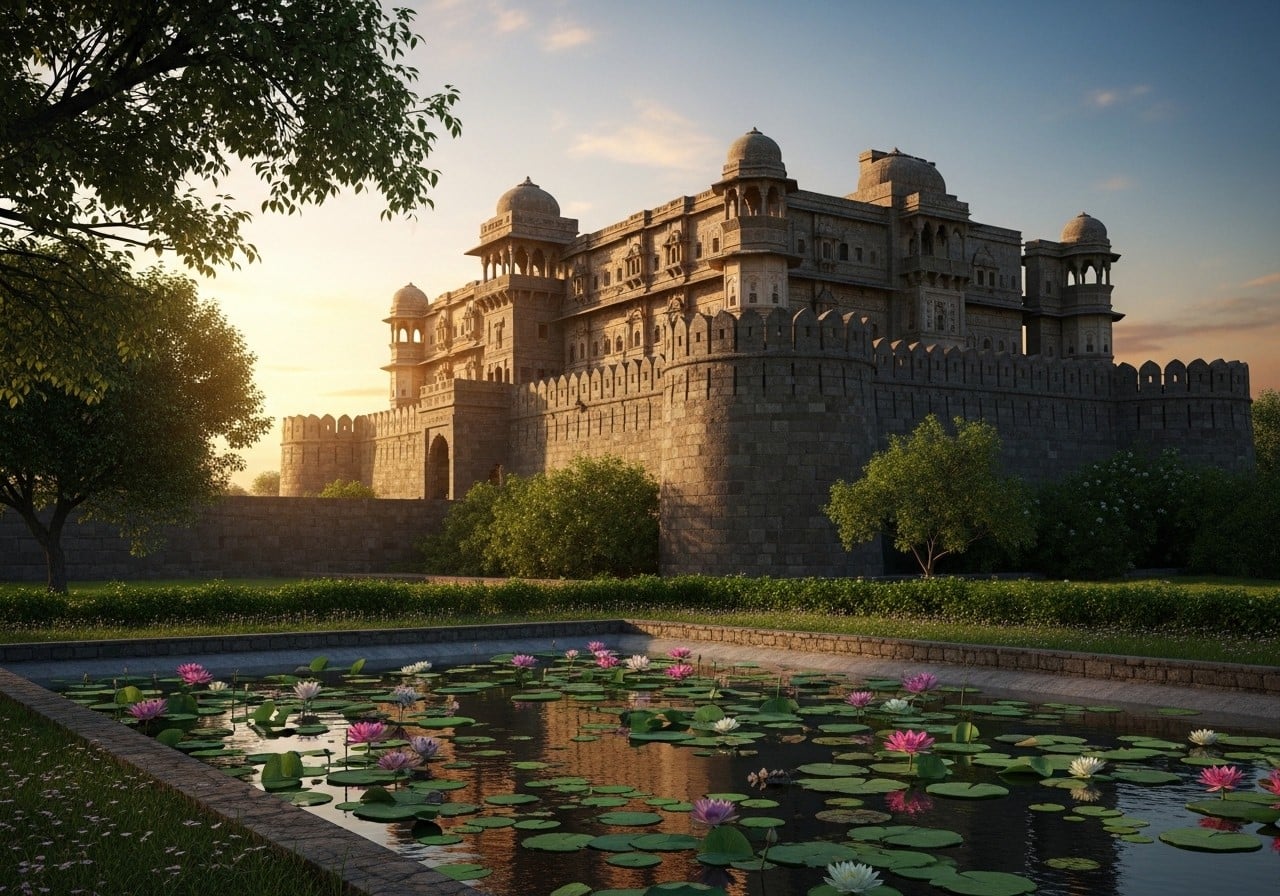
Namaste, fellow heritage lovers! Embarking on a historical journey through the heart of Maharashtra allows us to connect profoundly with our motherland’s rich medieval past. This historic citadel, located near the serene Sina River, stands as a profound testament to India’s glorious heritage and unyielding spirit. This grand structure holds immense significance in our shared history, gracefully showcasing its architectural beauty while reminding us of its vital role in shaping our cultural roots. Initially conceptualized in the 15th century, the Deccan stronghold remains a powerful symbol of strategic brilliance and a storied past that resonates deeply with every proud Indian family.
The Sacred Foundations and Royal Influences
Let us lovingly delve into the origins of this grand edifice. The foundations of this historic marvel were laid during a time of immense political turbulence in the Deccan region, making a formidable defense absolutely essential for survival. The architectural aesthetics beautifully blend the elegant Persian influences brought by the Nizam Shahi dynasty with our indigenous, time-honored Indian craftsmanship. Strategically perched near the gentle banks of the Sina River, the stronghold served as a vital administrative hub and a deeply protective sanctuary for its people. It began its journey as a royal capital and remained a centerpiece of political maneuvering for centuries, seamlessly transitioning through the hands of various mighty empires while retaining its majestic aura.
A Timeless Journey: The Historical Timeline
To truly appreciate the deep-rooted legacy of this medieval monument, here is a fascinating historical timeline based on verified historical references:
- 1427: The humble foundation of a legendary fortress. The original structure was initially erected by Malik Ahmad Nizam Shah I, who founded the Nizam Shahi dynasty, as a humble mud fort. His primary goal was to shield the newly named city from foreign invaders, marking the beginning of a rich, enduring legacy.
- 1559: A grand vision for strength and resilience. Realizing the vital need for a stronger defense, major fortifications began under the dedicated reign of Hussain Nizam Shah. This ambitious project aimed to transform the basic mud base into an impenetrable stone fortress that could withstand the fiercest of sieges.
- 1563: The successful completion of a medieval marvel. The meticulous fortification work finally concluded, bestowing the citadel with its legendary strength and imposing physical presence. This architectural upgrade proved absolutely crucial in navigating the turbulent political climate of the Deccan region.
- 1596: A courageous queen’s unmatched bravery and strategic brilliance. The valiant queen regent, Chand Bibi, successfully thwarted a massive Mughal invasion against all odds. Her remarkable and inspiring victory proudly cemented the stronghold’s legendary status as a symbol of fierce regional resistance.
- 1600: A pivotal shift in the region’s power dynamics. Following a relentless attack by Emperor Akbar, the majestic gates finally yielded to the overwhelming Mughal forces. The monument subsequently came under the vast umbrella of Mughal control, significantly altering the local political landscape.
- 1707: An emperor’s final days in the Deccan. The great Mughal ruler Aurangzeb spent his twilight years extensively campaigning in the region and eventually passed away near these very fortress walls. This monumental event marked the beginning of the inevitable decline of Mughal dominance in the south.
- 1724 to 1759: The transitional era of the Nizams and the brave Marathas. The stronghold passed safely into the hands of the Nizams in 1724 as regional powers shifted dynamically. Later, our valiant Maratha warriors proudly claimed it in 1759, successfully incorporating it into their rapidly expanding empire.
- 1790 to 1797: A time of internal political maneuvers and captivity. The Scindias successfully took control of the citadel in 1790 during a period of transition. By 1797, intense political intrigue led to Daulatrao Shinde imprisoning the brilliant Peshwa diplomat, Nana Phadnis, within these ancient stone walls.
- 1803: The encroaching shadows of British colonial rule. During the fiercely fought Second Anglo-Maratha War, General Arthur Wellesley defeated the local Maratha forces. Consequently, the British East India Company seized possession, utilizing it as an important military and strategic supply base.
- 1942 to 1945: A sacred emblem of our beloved struggle for freedom. During the fervent Quit India Movement, British forces converted the monument into a high-security political prison. Prominent national heroes like Jawaharlal Nehru, Sardar Vallabhbhai Patel, and Maulana Abul Kalam Azad were incarcerated here, where Pandit Nehru famously penned his masterpiece, The Discovery of India.
- Currently: Preserved with honor by the nation’s brave guardians. Today, the storied structure rests safely under the vigilant and honorable administration of the Armored Corps of the Indian Army. It stands tall not just as a military facility, but as a heavily guarded and deeply respected national treasure.
Architectural Marvels of the Deccan
The architectural brilliance of this Maharashtra landmark is truly awe-inspiring. Built primarily as an irregular quadrangle, its design seamlessly merges practical functionality with enduring, traditional beauty. The brilliant builders showcased incredible engineering prowess through their extensive use of solid granite and massive bastions, which were meticulously crafted to endure brutal attacks. As you wander near the grand entrances like the Delhi Gate and the imposing Bhadkal Gate, you will undoubtedly be captivated by the exquisite carvings and profound inscriptions that decorate the ancient stone, reflecting a time of great artistic devotion.
The monument’s defensive strategies were incredibly advanced for their time, featuring robust double-wall fortifications and a deeply excavated moat that speaks volumes of the era’s military genius. Beyond its formidable military might, the inner chambers once proudly housed beautiful royal palaces, serene lush gardens, and highly sophisticated water management systems. These thoughtful additions beautifully reflect the refined lifestyle, incredible prosperity, and deep cultural appreciation of its noble rulers.
Embracing Our Heritage in Everyday Life
As we deeply admire the spiritual and cultural legacy left behind by our ancestors, many of us seek to bring that same sense of traditional sanctity into our daily lives. Bringing home authentic cultural items allows us to stay firmly rooted in our rich heritage, especially when navigating the hustle of modern life. If you are looking to enrich your home’s spiritual ambiance, Poojn.in stands as India’s most trusted online store for traditional goods. Our extensive collection features meticulously crafted ritual items and authentic cultural goods that resonate beautifully with our deeply held Indian values. Please note, we do not offer travel packages, heritage tours, or VIP temple darshan services; our sole, unwavering devotion is providing you with the finest spiritual and cultural products right at your doorstep. By choosing to shop at poojn.in, you ensure that every household prayer and timeless tradition is honored with the purest ingredients and beautifully crafted artifacts. For personalized assistance in selecting the perfect ritual items, our dedicated team is always happy to help. You can comfortably reach out to us at 03369029784 or simply drop a heartfelt ‘Namaste’ on WhatsApp at 9476142738.
Uncovering the Curiosities: A Journey Through Time
For heritage lovers seeking to deepen their understanding, uncovering the hidden facts about this historic landmark is always a fascinating endeavor. People often wonder what exactly this monument represents in the grand tapestry of our nation. It is, at its core, a monumental historic fortress in Maharashtra, celebrated for its awe-inspiring architecture and pivotal role in our national story. Those curious about its very origins will be fascinated to know that Malik Ahmed Shah laid its first foundations back in 1427, proudly acting as the pioneering founder of the Nizam Shahi dynasty.
You might also ponder why this majestic Deccan stronghold remains so incredibly famous today. Its widespread renown largely comes from its central role during the glorious Maratha era and its direct association with historical heavyweights, spanning from Emperor Aurangzeb to our beloved freedom fighters like Jawaharlal Nehru. Regarding its timeless design, visitors are consistently amazed by its strong double fortifications, sheer massive walls, and the intricate stonework that beautifully reflects the unparalleled architectural genius of our ancestors.
If you are planning a meaningful family journey and wondering whether the public can explore these sacred grounds today, the answer is a warm and welcoming yes. While it is gracefully administered by the Indian Army, significant portions are open to history enthusiasts, offering a profound glimpse into a bygone era. Over the centuries, these very grounds have absorbed the energy of numerous critical events, including fierce, honor-bound battles and highly strategic political negotiations under both Maratha and British rule.
Perhaps the most touching aspect for every Indian is how this monument connects to our sacred struggle for independence. The complex holds a deeply emotional place in our collective hearts because it served as a high-security prison for our beloved leaders during the Quit India Movement. Finally, for a truly immersive and educational experience, guided tours are widely available on-site, ready to provide you and your family with incredibly detailed insights into its timeless significance, ancient secrets, and enduring legacy.