

Welcome to a deeply enriching journey back in time, where the warm sands of Rajasthan hold the precious whispers of our ancestors. Situated peacefully on the banks of the sacred, now-dry Ghaggar River, this ancient settlement is a crowning jewel of the Indus Valley Civilization. The very name Kalibangan translates beautifully to “black bangles,” a simple yet powerful reminder of the elegance, rich craftsmanship, and deeply rooted traditions of our forebears. For those of us who value our roots, learning about this place feels like reconnecting with our own family history.
The Unveiling of an Ancient Civilization
Every time we look back at our heritage, we find incredible stories of resilience and brilliance. It is truly remarkable to learn how this magnificent city was brought to light. Luigi Tessitori, a dedicated Italian Indologist, was the very first to sense the prehistoric pulse of this sacred ground. Decades later, our own Archaeological Survey of India proudly confirmed its authentic Harappan roots in the year 1952.
Between 1960 and 1969, monumental excavation efforts were lovingly guided by esteemed experts B.B. Lal and B.K. Thapar. Through their hard work, they uncovered a timeline that stretches wonderfully from the proto-Harappan era (around 3500 BC to 2500 BC) all the way to the mature Harappan age (2500 BC to 1750 BC). Remarkably, it was around 2900 BC that this region blossomed into a highly planned and organized city, becoming a major provincial capital of its time.
Architectural Brilliance and Sacred Spaces
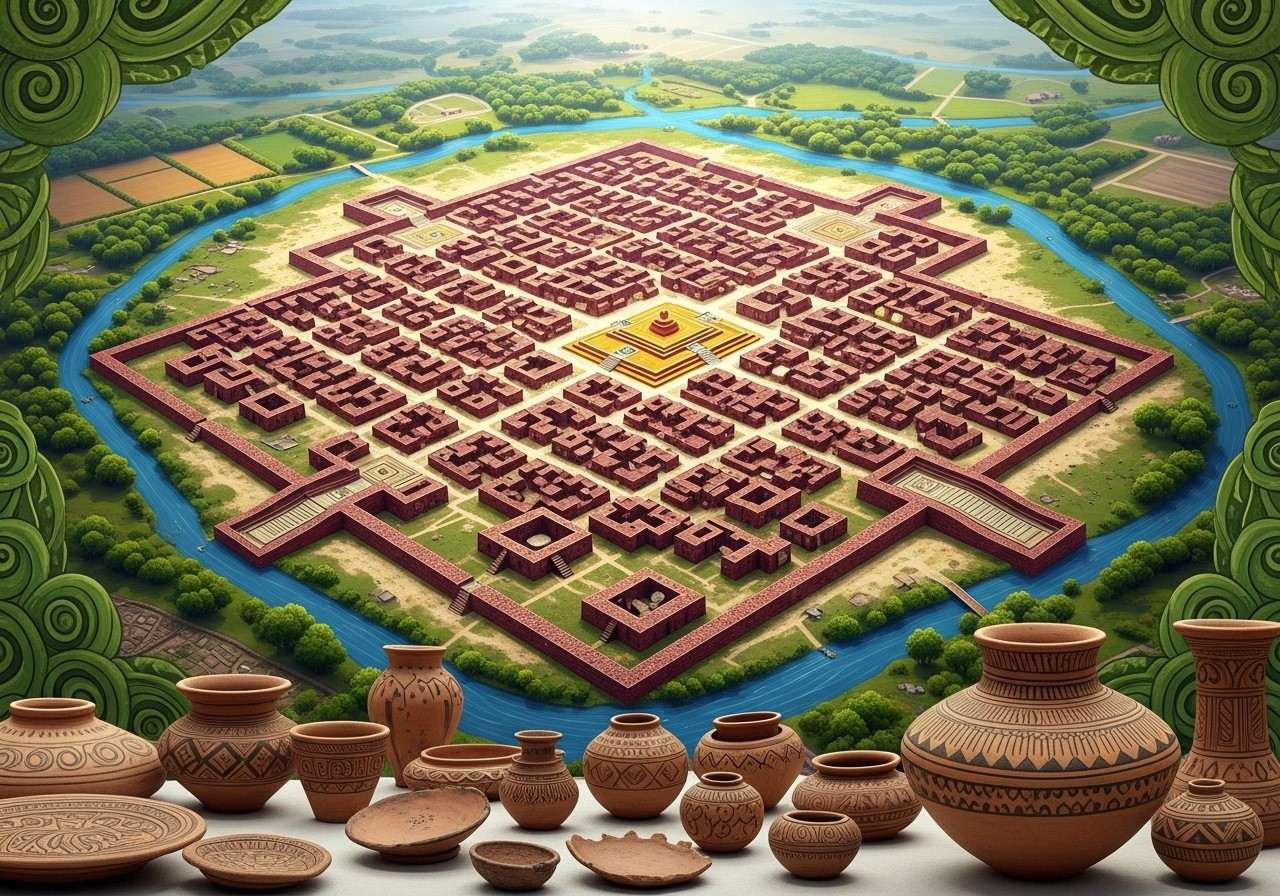
When you explore the memories of this provincial capital, you cannot help but marvel at the immense wisdom of our ancestors. The settlement was brilliantly divided into a fortified citadel and a bustling lower town, which vividly showcases their mastery over advanced urban planning and social structure.
Perhaps the most awe-inspiring discovery here is the presence of the world’s earliest attested ploughed field. This extraordinary agricultural marvel features a precise grid pattern, with furrows thoughtfully running both east-west and north-south. It is a profound reflection of the agrarian roots that continue to feed our nation today.
Furthermore, the site perfectly captures the transition between two distinct eras, housing both pre-Harappan and Harappan remains. Our early ancestors worked skillfully with copper and created beautiful pottery long before they developed a writing system or the baked bricks seen in later years. They also built unique fire altars, which strongly suggest that the sacred practice of fire worship—a ritual we still hold dear in our daily pujas—was an integral part of their spiritual life.
Understanding the Social Fabric of Early India
The social hierarchy and governance structure of this historic marvel offer a beautiful mirror into a highly civilized society. Trade connections with other ancient centers flourished, as evidenced by the unearthing of distinct seals and standard weights. Their advanced water management networks, complete with meticulously designed wells and drainage, reflect an astonishing grasp of early engineering.
While the exact reasons for the decline of this vibrant center remain a subject of deep study, historians believe that shifting river courses and natural climatic changes played a significant role. Yet, the spirit of its people lived on. Their metallurgy and craft production fueled a thriving economy, leaving behind intricately designed tools and ornaments. Although the script found on their seals remains a captivating mystery, it speaks volumes about their sophisticated administration and desire to communicate.
How Poojn.in Can Help You Connect with Our Heritage
This incredible site from our ancient past is known for its rich history and profound cultural significance. While exploring the stories of this lost city and feeling the echoes of antiquity, you can deepen your spiritual connection to our shared heritage with authentic ritual items from Poojn.in.
Authentic Ritual Items for Your Home
At Poojn.in, we offer a wide range of cultural goods that can effortlessly enhance your understanding and appreciation of ancient Indian traditions. Our carefully curated products include:
- Traditional Puja Kits: These comprehensive kits contain all the necessary, high-quality items for performing your daily and special rituals. They are thoughtfully put together to help you seamlessly connect with the spiritual practices and deep devotion of our ancestors, ensuring you have everything required for a complete, peaceful, and uninterrupted prayer experience.
- Handcrafted Diyas: Light these beautifully made, traditional diyas in your sacred space to sincerely honor our ancient customs and invite positive energy into your life. Their radiant and steady flames will undoubtedly bring a warm, inviting, and highly auspicious glow to your home and beloved family during every special occasion or daily aarti.
- Aromatic Incense Sticks: Use our premium, ethically sourced incense sticks to create a serene, divine, and calming ambiance inside your home. The deeply soothing fragrances are carefully designed to be reminiscent of historical rituals, helping you meditate, relax, and effortlessly find inner peace amidst the hustle and bustle of your busy everyday life.
Convenient Online Shopping for Your Cultural Needs
Our online store makes it remarkably easy for you to browse and purchase these traditional cultural goods from the absolute comfort of your living room. We are deeply committed to ensuring quality and authenticity in every single product, so you can always trust that you are receiving genuine items that beautifully reflect India’s rich and vibrant heritage.
For any guidance or heartfelt assistance with your orders, please feel free to call us at 03369029784 or WhatsApp us directly at 9476142738. We warmly invite you to visit https://www.poojn.in today to joyfully explore our collection and bring a cherished piece of our glorious history into your home.
Carrying Forward a Timeless Legacy
This majestic jewel of the ancient world provides us with an invaluable window into the daily lives, customs, and deep-rooted values of our forefathers. As we reflect on these fascinating ruins and breathtaking artifacts, we feel a heartfelt connection to a world that thrived on true innovation and cultural richness. The inspiring stories of dedicated farmers, skilled urban planners, and highly talented artisans strike a deep chord within us. They gently remind us of the timeless Indian values of community, hard work, and enduring tradition.
Preserving this historical treasure is much more than merely protecting the past; it is a sincere way of honoring our ancestors. By supporting continuous research and archaeological conservation, we ensure that our children and grandchildren can learn from and cherish this remarkable heritage. This ancient wonder stands tall as a lasting symbol of human resilience and ingenuity, warmly inviting us to celebrate our history while embracing the profound lessons it offers for our future.
Common Curiosities About This Ancient Marvel
Many history enthusiasts often wonder about the true nature of this archaeological marvel. Kalibangan is a prominent ancient settlement nestled in Rajasthan, India, and is a vital part of the Indus Valley Civilization. Its historical significance is immense, primarily because of its distinct structural features, such as sacred fire altars and protective fortifications, which shed brilliant light on the rich cultural practices of that era. When tracing its timeline, researchers found that the settlement thrived immensely; its proto-Harappan phase existed from 3500 BC to 2500 BC, seamlessly transitioning into the mature Harappan age from 2500 BC to 1750 BC.
People often express curiosity regarding its most unique characteristics. Interestingly, it is celebrated for its highly organized grid-patterned streets, robust brick architecture, and profound evidence of early agriculture—most notably yielding the world’s earliest attested ploughed field. Geographically, it is beautifully located in the Hanumangarh district, peacefully resting along the banks of the Ghaggar River.
During extensive explorations, experts made incredible discoveries, uncovering intricately designed pottery, early tools, and elements indicating a society steeped in advanced craftsmanship and deeply rooted religious faith. For those feeling a pull toward our ancient roots, the site remains accessible today, allowing eager visitors to respectfully walk through the ruins and intimately connect with the lifestyle, social structure, and grand urban planning of the Indus Valley Civilization.