


India’s Majestic Mountain Heritage: The Spiritual and Geological Tapestry of the Aravalli, Himalaya, and Vindhya Ranges
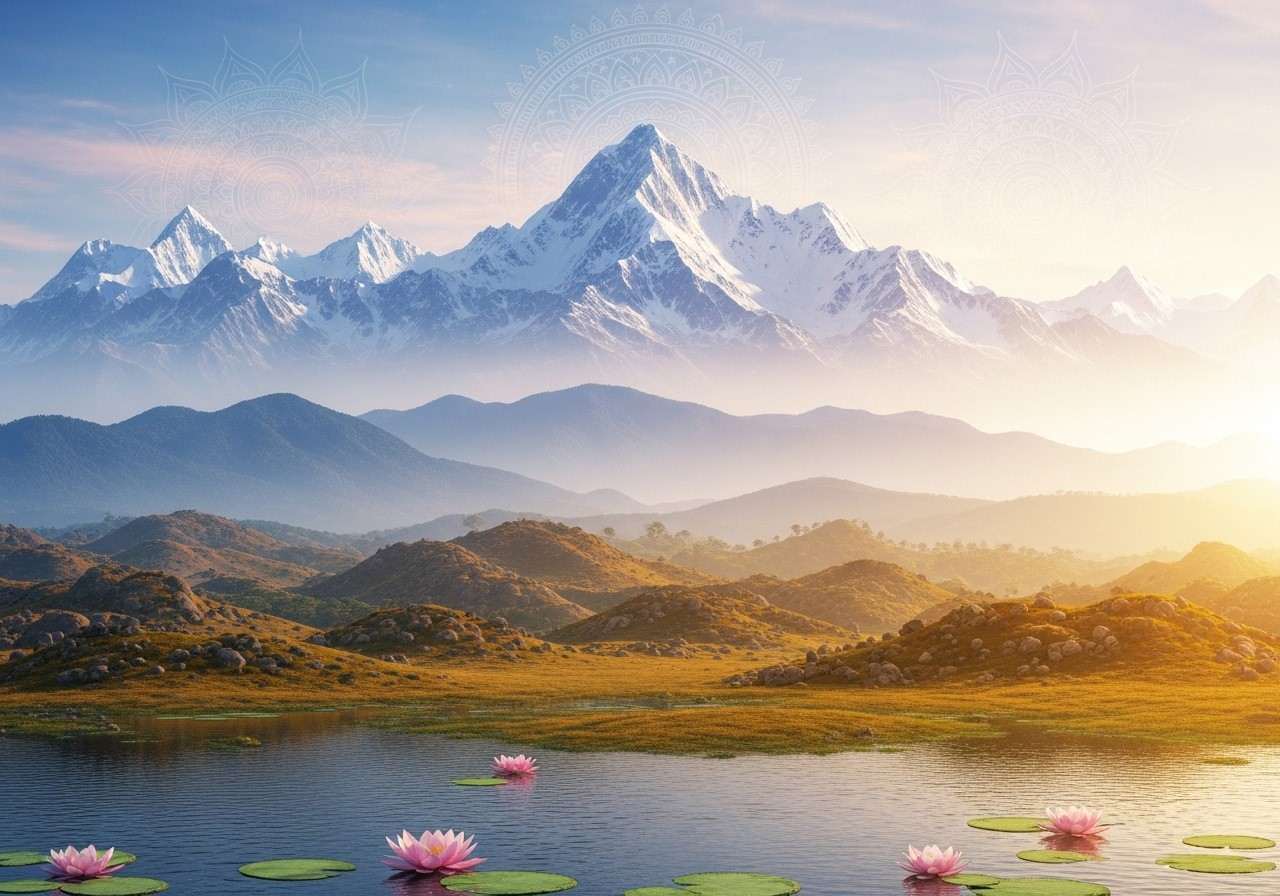
In our beloved land of Bharat, mountains are never merely rock and soil; they are the ancient, silent guardians of our history, deeply woven into our daily prayers and cultural ethos. From the sacred peaks where the divine is believed to reside, to the steadfast hills that have nurtured early civilizations, our mountain systems hold a deeply revered place in the Indian heart. When we trace the geography of our nation, three distinct sentinels stand out, each telling its own timeless story: the ancient Aravallis, the towering Himalayas, and the culturally rich Vindhyas. By understanding their incredible geological formations and historical importance, we find yet another reason to bow our heads in respect to Mother Nature.
The Geological Formations: A Journey Through Time
The story of our mountains is a magnificent chapter of the Earth’s history, spanning billions of years and incredible tectonic shifts. Each range possesses unique characteristics that profoundly shape our nation’s landscape.
- The Ancient Aravalli Range: Stretching approximately 670 kilometers across Gujarat, Rajasthan, Haryana, and Delhi, this is proudly recognized as the oldest fold mountain range in India. Dating all the way back to the Paleoproterozoic era, these hills were formed by historic tectonic plate collisions within the Aravalli-Delhi orogenic belt. Today, its highest peak, Guru Shikhar at Mount Abu, stands at 1,722 meters. Characterized by incredibly rocky terrain that is rich in natural minerals, it acts as a vital shield preventing the harsh Thar Desert from swallowing fertile lands, while seamlessly influencing monsoon winds and helping to recharge our groundwater.
- The Mighty Himalayan Range: Spanning an astonishing 2,400 kilometers across India’s northeastern frontier and beyond, these are the youngest, yet most formidable mountains on the globe. Formed by the dramatic collision of the Indian tectonic plate with the Eurasian Plate, this range boasts over 110 peaks rising above 7,300 meters, with Kangchenjunga serving as the highest Indian peak at 8,598 meters. It functions as the world’s third-largest deposit of snow and ice, harboring roughly 15,000 glaciers. More importantly, it is the divine source for our most sacred rivers, including the Ganges, Indus, and Brahmaputra, effectively managing air and water circulation for the entire subcontinent.
- The Historical Vindhya Range: Traversing about 1,086 kilometers right through the heart of central India, this very ancient mountain system covers parts of Gujarat, Madhya Pradesh, Rajasthan, Uttar Pradesh, and Bihar. Rather than tectonic folding, these non-tectonic mountains were primarily generated by the downhill faulting of the Narmada Rift Valley, resulting in a complex system of sedimentary rocks, discontinuous ridges, and plateau escarpments. With its highest point at Sad-bhawna Shikhar (752 meters), it gives birth to the main southern tributaries of the Ganges-Yamuna system, like the Chambal and Betwa rivers, making it a critical lifeline for central India.
Ecological Wealth: The Flora and Fauna of Our Sacred Highlands
Beyond their physical grandeur, these geographical marvels are flourishing cradles of biodiversity. Each mountain system has developed its own highly specialized ecosystem, nurturing life forms that have adapted wonderfully to their specific environments.
- Life in the Arid Aravallis: Do not let the dry climate fool you; this range is a significant ecological hotspot teeming with resilience. Despite the arid to semi-arid conditions of the central and southern parts, these ancient hills provide a safe haven for unique and elusive wildlife, such as the Indian leopard and the striped hyena. The regional flora consists of hardy, drought-resistant dry deciduous forests that miraculously thrive on minimal rainfall, highlighting nature’s incredible adaptability.
- The Himalayan Biodiversity Heaven: The varying, extreme altitudes of the snowy north create a diverse wonderland of ecosystems. From lush, green valleys at the foothills to dense alpine forests higher up, the region offers crucial habitats for globally treasured species like the magnificent snow leopard and the charming red panda. The sheer scale of its glacial environments and dense woodlands makes it an absolute priority for international ecological conservation efforts.
- The Richness of the Vindhya Woodlands: Central India’s geographic divider is cloaked in vibrant, dry deciduous forests that pulse with life. These relatively lower-elevation woodlands offer vital shelter and sustenance for majestic animals, including the royal Bengal tiger and the reclusive sloth bear. Though perhaps less internationally famed than the northern peaks, the Vindhya ecosystem is an irreplaceable treasure chest of biodiversity that requires our utmost protection and respect.
Spiritual Resonance and Cultural Significance
To an Indian soul, these mountains are much more than tourist destinations; they are the epicenters of our faith and the backdrops of our greatest epics. They are the sacred grounds where sages meditated, where ancient civilizations left their enduring marks, and where modern devotees continue to find absolute peace.
The Aravalli hills whisper tales of magnificent archaeological wonders, beautifully preserved in structures like the intricately carved Dilwara Temples. Moving to the north, the Himalayas hold the ultimate spiritual throne; sacred pilgrimages to sites like Amarnath and Kailash Mansarovar are the lifelong dreams of countless Hindu and Buddhist devotees seeking moksha. Meanwhile, the Vindhya Range historically and culturally serves as the traditional boundary separating North and South India, featuring prominently in our ancient texts and Puranic legends as a deeply revered landmark.
Upholding Our Heritage with Poojn.in
At https://www.poojn.in, we are profoundly inspired by the rich cultural and spiritual legacy of our nation’s majestic ranges. Please note that while we do not provide travel packages, pilgrimage guidance, or VIP temple darshan services, we are fully dedicated to bringing the sanctity of these holy landscapes directly to your home through our authentic cultural goods.
If you are conducting a sacred ritual inspired by the high Himalayan shrines, or simply performing your daily aarti invoking the blessings of the ancient Aravallis and Vindhyas, we have exactly what you need. We exclusively sell premium cultural goods through our online store, ensuring that your devotional practices remain pure and uninterrupted. Enhance your home temple with our authentic Ganga Jal, spiritually charged Rudraksha beads, traditional brass diyas, fragrant incense sticks, and pure kumkum.
Embrace the absolute convenience of modern online shopping without ever compromising on your deeply rooted traditions. To explore our extensive collection of ritual items, visit https://www.poojn.in today. For any assistance, feel free to contact our dedicated team at 03369029784, or drop us a message on WhatsApp at 9476142738.
Frequently Asked Questions Regarding India’s Mountain Heritage
How do the Aravalli and Himalayan ranges differ fundamentally?
The core difference lies in their age and physical evolution. The Aravalli Range is known as the oldest fold mountain system in India, worn down over billions of years into lower, rockier hills. In stark contrast, the Himalayas are the youngest mountain range in the world, renowned globally for their continuously rising, towering, and snow-capped peaks.
What is the geological age comparison between the Aravalli and Vindhya systems?
The Aravalli mountains are significantly older, tracing their origins all the way back to the Paleoproterozoic era. The Vindhyas, while also considered very ancient and steeped in history, were formed in a later geological period, making the Aravalli system the true elder of the Indian landscape.
What classification of mountain is the Aravalli Range?
Geologically, it is classified as a fold mountain range. This indicates that the hills were historically formed through the intense folding of the Earth’s crust caused by tectonic plate collisions millions of years ago, before facing extensive natural weathering.
What are the prominent geographical features of the Vindhyas?
Unlike the towering snowy peaks of the north, the Vindhya Range is distinguished by its complex network of sandstone hills, plateau escarpments, and discontinuous mountain ridges. It maintains a modest elevation, acting as a natural and traditional boundary between the Indo-Gangetic plains and the southern Deccan Plateau.
How do the natural habitats of the Aravalli and Himalayan regions contrast?
Because they span vastly different climatic zones, their plant and animal life differ immensely. The Aravallis primarily support dry deciduous forests and species adapted to arid, rugged terrain, whereas the Himalayas harbor a rich variety of ecosystems—from tropical bases to freezing alpine forests—supporting a wide array of wildlife due to varying extreme altitudes.
Why is the Aravalli Range considered crucial for northwestern India?
This ancient range acts as a mighty natural barricade that halts the eastward expansion of the Thar Desert. Furthermore, it is incredibly rich in valuable minerals, plays a significant role in redirecting monsoon winds, prevents harsh westerly winds, and is vital for regional groundwater replenishment.
What specific roles do these mountain systems play in shaping India’s climate?
Mountains act as our subcontinent’s natural weather regulators. The towering Himalayas are essential for blocking freezing winds from Central Asia and directing the life-giving monsoon rains. At the same time, the Aravallis influence localized weather patterns, creating essential rain shadow zones and impacting humidity levels across northwestern states.
Is there a significant cultural connection tied to these three Indian ranges?
Absolutely; the cultural and spiritual fabric of India is inextricably woven into these mountains. They are celebrated in our ancient scriptures, epics, and folklore. Hosting countless temples, sacred caves, and pilgrimage routes, these ranges are revered as divine entities that continue to inspire deep faith and devotion in millions of hearts every single day.