

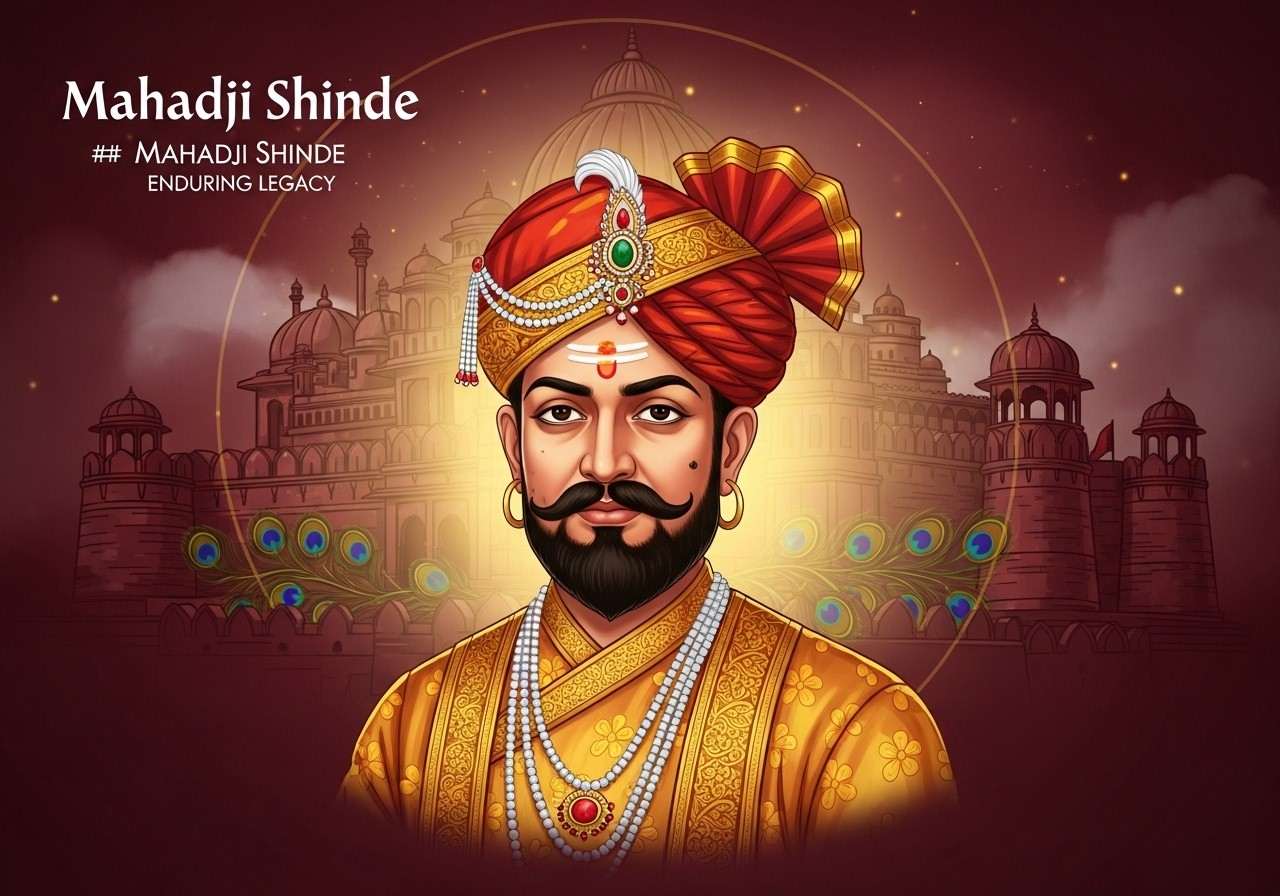
Every time we look back at the glorious tapestry of Indian history, we find tales of extraordinary courage and vision that make our hearts swell with pride. Exploring the life of Mahadji Shinde (also known as Mahadji Scindia) offers a magnificent window into the vibrant history of the 18th-century Maratha Empire. As an instrumental figure in preserving our rich heritage, his influence continues to be celebrated by those of us who deeply value tradition, culture, and our ancestral roots. His remarkable journey is a testament to the resilience of our civilization, perfectly reflecting the socio-political landscape of a time marked by formidable challenges and breathtaking triumphs.
Early Roots and the Making of a Statesman
Born in 1730 into the illustrious Shinde family, this great visionary grew up surrounded by the deeply ingrained values of the Maratha Confederacy. His upbringing in such a politically and culturally active environment perfectly groomed him for future leadership. Back then, the decentralized governance of the empire relied heavily on the loyalty and strength of prominent families like his. The early experiences and values instilled in him during his youth profoundly molded his unique leadership style and sharp strategic thinking. Understanding this familial foundation is essential to fully appreciating how he later rose to become one of the most brilliant strategic minds of his era.
Military Brilliance and Masterful Alliances
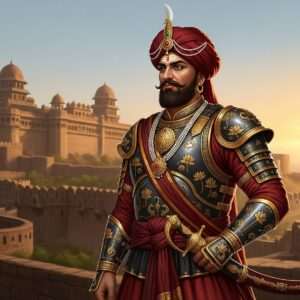
There is no denying that he was a military commander of unmatched caliber. Throughout his lifetime, his strategic genius led him to fight and win around 50 crucial battles. His awe-inspiring military achievements include decisively defeating the Nizam of Hyderabad and completely dismantling the power of the Jats of Mathura. Furthermore, he successfully destroyed the dominance of the Rohillas in Rohilkhand, capturing Najibabad, and proudly seized Gwalior from the Jat king Chatar Singh of Gohad in 1765. His glorious victories in the Battle of Patan and the Battle of Merta only served to immortalize his reputation as an invincible warrior.
Beyond the battlefield, his diplomatic alliances were just as masterful. Skillfully navigating the complex political landscape of 18th-century India, he successfully restored Mughal Emperor Shah Alam II to the throne in Delhi in 1771, subsequently becoming the deputy regent of the empire. Recognizing his immense power, the Mughals bestowed upon him the prestigious title of Amir-ul-Umara (head of the amirs) in 1784. His crucial involvement in the First Anglo-Maratha War, where he famously defeated the British in the Battle of Wadgaon, resulted in the historic Treaty of Wadgaon. He further showcased his diplomatic brilliance by mediating between the Peshwa and the British, ultimately paving the way for the Treaty of Salbai in 1782.
The Great Resurrection of Maratha Power
The devastating aftermath of the Third Battle of Panipat in 1761 left a deep wound on the Indian subcontinent, but it was here that his true greatness shone. He became one of the three foundational pillars of the Maratha Resurrection, standing shoulder to shoulder with Peshwa Madhav Rao I and Nana Fadnavis. Through meticulous administrative reforms and the strategic consolidation of lost territories, he single-handedly breathed new life into a fractured confederacy.
Re-establishing absolute control over North India was perhaps one of the most significant geopolitical achievements of his career. He understood the changing times and wisely modernized his army under the guidance of European adventurers like Benoît de Boigne. This critical modernization of his armed forces was the definitive move that guaranteed absolute Maratha dominance across North India for decades to come.
Devotion to Dharma: Cultural and Architectural Contributions
For us Indians, true greatness is never just about military might; it is also about deep devotion to one’s culture and faith. His legacy extended beautifully into the realm of cultural preservation and spiritual patronage. He played a vital role in the construction and loving reconstruction of ancient temples across Mathura, Gwalior, and several other holy sites.
One of his most emotionally resonant and spiritually significant acts was his dedication to Lord Shiva. He successfully brought back the sacred silver gates of the Somnath Temple, which had been tragically looted centuries earlier by Mahmud Gaznavi, and respectfully installed them at his own capital in Ujjain. Such actions highlight his unwavering dedication to protecting and celebrating our timeless spiritual heritage.
An Enduring Legacy That Still Inspires
During his glorious reign, he established a remarkably powerful, semi-independent kingdom centered at Gwalior. This flourishing state became the leading power in the Maratha Confederacy and stood strong for over 150 years. Sadly, the great leader breathed his last on February 12, 1794, at his military camp near Pune. As he had no male heir, his grand-nephew, Daulat Rao Scindia, stepped up to continue his monumental legacy. Today, the breathtaking Shinde Chhatri memorial, located in Wanawadi, Pune, stands as a peaceful, awe-inspiring tribute to his life and sacrifices.
Embrace Our Glorious Heritage with Poojn.in
In our modern lives, staying connected to such profound historical and spiritual roots brings peace and harmony to our households. Poojn.in is India’s biggest cultural goods store, completely dedicated to helping you honor the timeless traditions upheld by visionary leaders of our past. We offer a wide, authentic range of cultural items that make it incredibly easy to invite the spirit of our rich heritage directly into your daily life. Whether you are performing a daily aarti or setting up a festive altar, our online store ensures you get exactly what you need without stepping out of your home.
Carefully Curated Products to Honor Tradition:
- Authentic Traditional Puja Kits: Our beautifully assembled kits contain every single essential item required for performing sacred rituals and daily prayers at home. They are designed with utmost purity in mind, allowing your family to pay sincere homage to our deities and honor the spiritual path laid down by our ancestors.
- Inspiring Heritage-Themed Decor: Elevate the spiritual ambiance of your living space with our exquisite wall hangings, brass diyas, and traditional statues that perfectly reflect our magnificent culture. These high-quality decor pieces are absolutely ideal for families who wish to celebrate and proudly display our great Indian legacy right in their living rooms.
- Insightful Books on Indian History: We offer a meticulously chosen selection of culturally rich books that provide deep, engaging insights into the incredible lives, sacrifices, and eras of our greatest rulers and saints. Reading these stories with your children is a wonderful way to pass down our glorious sanskar (values) to the next generation.
By bringing these authentic cultural products into your sacred space, you actively keep the traditional spirit of our great civilization alive. For more details on our beautiful collection, simply visit our website at https://www.poojn.in. If you need any assistance with your order, please feel warmly invited to contact us directly at 03369029784 or message us on WhatsApp at 9476142738. We are always here to serve your cultural needs.
Celebrating a Timeless Vision
The remarkable journey of this 18th-century titan—as a fierce military commander, an astute diplomat, and a devout patron of our culture—continues to be profoundly influential. His life is a living testament to the sheer strength, resilience, and spiritual depth of the Indian spirit. By rescuing his people from despair, forging powerful alliances, and safeguarding our sacred temples, his monumental contributions are deeply treasured in our hearts today. As we reflect on his breathtaking achievements, we find ourselves deeply inspired by his unmatched vision. His story is far more than just a chapter in a textbook; it is a radiant, living inspiration for every single Indian who cherishes our beautiful, time-honored heritage.
Common Inquiries About This Great Visionary
Many history enthusiasts and cultural seekers frequently wonder about the true identity of this prominent Maratha ruler. He was, at his core, a legendary statesman and military genius whose unparalleled leadership skills guided his people through some of their darkest times. His primary legacy revolves around his monumental effort to successfully revive his confederacy following the tragic defeat at the Third Battle of Panipat.
When people look into his historical background, they find a relentless drive to restore sovereign power across northern India. He achieved this by expertly negotiating with rival states and the Mughal Empire, thereby firmly cementing his people’s influence across the subcontinent. His incredible achievements span from forging strategic diplomatic alliances to completely modernizing his armed forces, which made them a formidable power on the global stage.
His historical importance cannot be overstated. By rescuing his empire from the brink of collapse post-Panipat, his sharp diplomatic and military strategies provided a much-needed foundation of stability. Interestingly, his influence heavily impacted the Mughal Empire as well. By stepping in to restore Shah Alam II to the Delhi throne, he essentially became the protector and the most influential voice in the Mughal court.
His approach to governance was incredibly balanced. While he focused intensely on upgrading the military and streamlining administration, he equally prioritized strong diplomatic ties with the Rajputs, the Nizam of Hyderabad, and even European forces, ensuring supremacy through intellect rather than just warfare. For those wishing to dive deeper into his fascinating biography, there are numerous historical texts, chronicles, and culturally focused books that beautifully detail his life. These resources provide a heartwarming and deeply informative glimpse into his enduring legacy as a true protector of our land.