

Discover the deep historical roots and the illustrious descendants of the Mewar kingdom’s founding father.
A Journey into Our Glorious Past
When we look back at the vibrant history of Bharat, a few names shine with a brilliance that time cannot dim. Bappa Rawal, originally known as Kalbhoj, is undeniably one of these towering personalities. Tracing his ancestral roots is not just an exercise in reading history; it is a profound journey into the values, resilience, and spiritual traditions that have shaped our rich cultural heritage. Understanding this grand lineage helps us appreciate the sacrifices made by our ancestors to protect the lands and customs we hold dear today.
The Phenomenal Rise of a Visionary Ruler
Establishing the Mewar kingdom in 728 CE, this formidable leader expanded his territories with remarkable strategic brilliance and unmatched military prowess. According to the revered 15th-century historical text, the Ekalinga Mahatmya, he was proudly recognized as the ninth descendant of Guhadatta, the original ancestral founder of the Guhila dynasty. Deeply rooted in faith and duty, the Guhilot-Sisodia clan traced their sacred origins all the way back to the Ikshvaku Kshatriya line, honoring a divine connection as descendants of Lord Rama.
During his reign spanning from 728 to 764 CE, he did more than just win battles; he became a fierce defender of regional sovereignty against foreign invaders. His immense contributions to local religious traditions and cultural flourishing left a permanent mark on the socio-political landscape of medieval India. To this day, his tales of valor are sung in local folklore, filling the hearts of every listener with immense pride.
Tracing the Illustrious Ancestral Roots
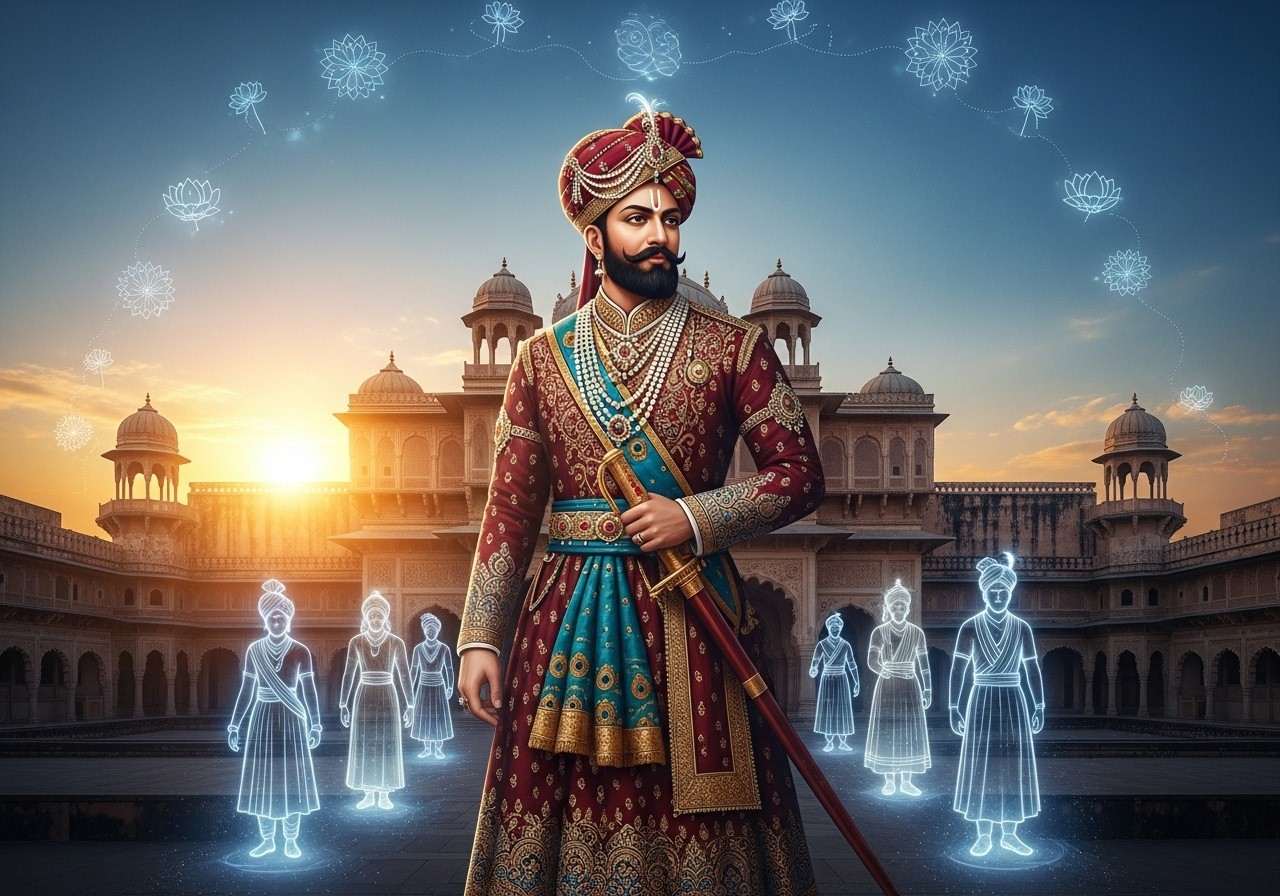
Mapping out this regal dynasty reveals a fascinating narrative of courage, strategic alliances, and unwavering commitment to Dharma. As leadership passed from one generation to the next, the rulers of Mewar continuously enriched the arts, architecture, and spiritual life of their people. Let us look closely at the simplified family tree that highlights the key figures of this legendary royal bloodline:
- Guhadatta (The Ancestral Founder): Widely celebrated as the patriarchal pioneer of the Guhila dynasty, he laid the crucial foundation for a kingdom that would stand the test of time. His early vision instilled a profound sense of regional identity and Kshatriya duty that would be carried forward for generations.
- Nagaditya: Serving as the critical bridge between the dynasty’s early origins and its golden era, he was the proud father of the mighty Kalbhoj. His guidance and protective upbringing ensured that his son was prepared to shoulder the immense responsibilities of kingship and spiritual guardianship.
- Bappa Rawal / Kalbhoj (728-764 CE): The magnificent founder of the Mewar kingdom, who institutionalized a legacy of bravery and deep devotion to Lord Shiva (Eklingji). His reign set the highest benchmark for kingly duties, combining unyielding strength with profound religious patronage.
- Rawal Khuman I (753-773 CE): Succeeding his father with equal ferocity, he became incredibly well-known for decisively defeating rival kings and protecting the kingdom’s borders. He upheld his father’s magnificent legacy, ensuring the ongoing prosperity and security of the Mewar people during his rule.
- Rawal Jaitra Singh (1213–1252 CE): A resilient and visionary leader, he steered his kingdom through an era filled with intense turbulence and external threats. His long reign is historically remembered for immense administrative stability and his unyielding bravery against frequent foreign incursions.
- Rawal Samar Singh (1273–1302 CE): He played a crucial role in maintaining the strategic importance of his territory while fostering cultural and economic growth. His era was marked by a careful balancing act of diplomacy and military readiness, fortifying the region against incoming storms.
- Rawal Ratan Singh (1302-1303 CE): Though his reign was brief, it remains one of the most emotionally resonant and widely remembered chapters in Indian history. He stood courageously against overwhelming odds during the historic siege of Chittorgarh, embodying the ultimate spirit of sacrifice.
- Maharana Hameer Singh I (1326–1364 CE): Often credited with the glorious resurgence of the dynasty, he reclaimed lost territories and restored the pride of his ancestors. His dynamic leadership breathed new life into the region, solidifying the Sisodia branch’s dominance for centuries to come.
The Cultural Impact of the Royal Bloodline
The legacy of these great kings goes far beyond the battlefields. The noble families of Mewar were some of the greatest patrons of our country’s art, literature, and architectural marvels. The traditions, rituals, and regional festivals they popularized are still actively celebrated today. By continuously sponsoring the construction of magnificent temples and the preservation of sacred texts, this regal family ensured that the spiritual heartbeat of Rajasthan remained incredibly strong.
Honoring Our Sacred Heritage Every Day
The royal families of the past spared no effort in their devotion, often conducting elaborate rituals with the purest ingredients to invoke divine blessings for their kingdom. Today, we may not live in grand palaces, but the desire to maintain our spiritual traditions remains deeply ingrained in our hearts. Bringing that same level of reverence and authenticity into our modern homes is essential for keeping our cultural identity alive.
If you are looking to uphold these timeless practices, Poojn.in is your trusted companion. As India’s leading destination for cultural goods, we deeply understand the emotion and devotion behind every prayer. We proudly offer carefully curated traditional puja kits that contain all the necessary, authentic elements required for your sacred ceremonies, ensuring you never have to compromise on purity.
To further elevate your spiritual space, you can explore our beautiful range of cultural decor items designed to bring an aura of traditional grandeur right into your living room. And because no ritual is complete without the perfect aromatic ambiance, our collection of premium incense and soothing fragrances will help you create a truly serene environment for meditation and prayer. Shopping for authentic cultural goods has never been more convenient. Should you need any assistance in selecting the right items for your daily rituals or special festivals, feel free to contact our warm and knowledgeable team at 03369029784, or send us a quick WhatsApp message at 9476142738.
How Modern Technology Bridges the Past and Present
In our fast-paced contemporary world, technology has surprisingly become a wonderful ally in preserving our ancestral heritage. Digital genealogy databases and online historical archives make it incredibly easy for families to trace their own roots and understand the grand narratives of figures like the founders of Mewar. Through engaging social media platforms and immersive virtual tours of historical forts, the younger generation is discovering a renewed sense of national pride. Furthermore, the convenience of online shopping allows us to access authentic ritual items effortlessly, perfectly bridging the gap between ancient traditions and modern convenience.
Frequently Asked Questions About the Mewar Lineage
Who exactly was the legendary founder of Mewar?
He was an extraordinary warrior and visionary leader who established the Mewar dynasty in Rajasthan back in 728 CE. Widely revered under the name Kalbhoj, he defended his kingdom with unmatched bravery and laid the foundation for a deeply spiritual and culturally rich empire.
What makes tracing this royal family tree so culturally significant?
Exploring this specific lineage is deeply significant because it beautifully chronicles the journey of a dynasty that preserved the territorial integrity and spiritual customs of India. These brave generations upheld regional pride, actively supporting the arts and maintaining ancient traditions that we still cherish today.
Did the founder of Mewar have a direct successor who continued his work?
Yes, he was succeeded by his capable son, Rawal Khuman I, who ruled from 753 to 773 CE. Khuman I not only continued the glorious legacy of his father but also successfully defeated rival kings to further secure and expand the kingdom’s influence.
Are there other famous historical personalities born into this ancestral line?
Absolutely. This incredibly valiant bloodline gave birth to some of India’s most celebrated heroes. Notable descendants include the brave Maharana Hameer Singh I, the culturally prolific Rana Kumbha, the fierce Rana Sanga, and the universally respected Maharana Pratap, all of whom are immortalized for their immense leadership and courage.
How can we explore and learn more about this grand heritage today?
History enthusiasts can dive into this rich past by reading trusted historical records like the Ekalinga Mahatmya, exploring digital genealogical studies, and visiting the majestic heritage forts of Rajasthan. Embracing regional literature and engaging with online cultural archives are also fantastic ways to connect with our roots.
Why does the legacy of these ancient rulers still matter in modern times?
This magnificent legacy matters today because it serves as a powerful reminder of our rich cultural resilience, unyielding bravery, and deep spiritual devotion. The stories of these descendants continue to inspire a profound sense of tradition and national pride, encouraging us to preserve our vibrant identity for future generations.
Embracing Our Living Heritage
The magnificent bloodline of the Guhila dynasty is far more than a chapter in a history book; it is a living, breathing testament to the strength and spiritual depth of Indian culture. Every story of valor, every temple built, and every tradition preserved by these descendants reminds us of who we are. By honoring our past and actively participating in the rituals that connect us to the divine, we ensure that the glorious legacy of our ancestors remains vibrant, inspiring countless generations to come.