


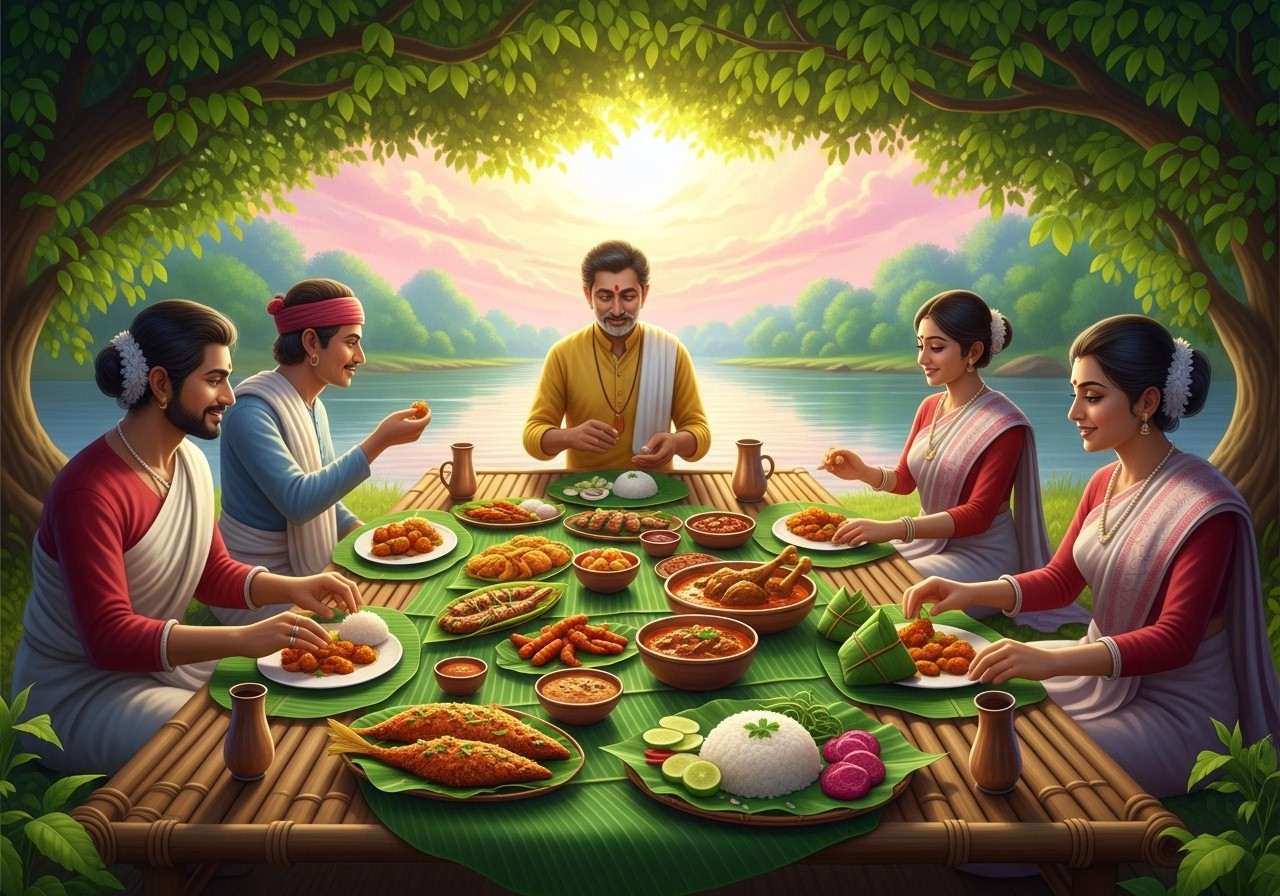
A heartfelt welcome to the rich culinary legacy of the Tai Ahoms. This influential dynasty, which graciously governed Assam for over six centuries, left an indelible mark on the region’s culture and kitchens. Exploring their dietary customs is akin to unearthing a beautiful time capsule that preserves the soulful connection between a vibrant community, their natural surroundings, and their glorious history. Over the years, these ancestral practices have evolved, deeply influenced by the lush environment and loving interactions with neighboring communities.
The Heart and Soul of Ahom Kitchens
Traditional Ahom dining revolves around unpretentious yet deeply aromatic ingredients, prioritizing holistic nourishment. Rice is undeniably the soul of their meals, serving not merely as sustenance but as a divine reflection of their enduring agricultural roots. Following the cherished customs of the broader Tai communities, many Ahoms, particularly in the rustic heartlands, embrace non-vegetarian delicacies as a cornerstone of their daily spread. Indigenous herbs, zesty ginger, robust garlic, and earthy bamboo shoots are woven into the recipes, bringing forth distinct, unforgettable flavors.
Signature Delicacies that Define a Legacy
Every dish prepared in a traditional Ahom home tells a story of patience, love, and respect for nature. Let us look at some of the most iconic preparations:
- Bora Saul and Sewadiya Bhat: Bora Saul is a cherished sticky rice that is often relished with fresh milk or pure jaggery, instantly transporting you to the warmth of an ancestral kitchen. Sewadiya Bhat, another steamed sticky Bora rice variant, is traditionally paired with Kumuradiya Hanhor Mangso, a divine ash gourd and duck meat curry that holds a special place in community gatherings.
- Tupula Bhat and Flavorful Sides: Lovingly wrapped and steamed in koupat (Pyrnium leaves), Tupula Bhat offers an earthy aroma that beautifully elevates the entire dining experience. It is wonderfully accompanied by rustic sides such as Mati Mahor dail (black gram dal), baby potato stir-fries, and the ever-popular, slow-cooked pork curry.
- Timeless Fish and Meat Preparations: Dishes like Kharisa Diya Jiya Maasor Torkari (fish curry with tender bamboo shoots) highlight their exceptional skill in balancing robust, natural flavors. Additionally, Kumuradiya Hanhor Mangso is a timeless duck and ash gourd delicacy that speaks volumes of their culinary inventiveness and deep respect for locally sourced produce.
Distinctive Techniques and the Magic of Fermentation
The traditional kitchen thrives on cooking techniques that honor nature’s purity and promote well-being. By leaning towards gentle steaming, boiling, and the use of minimal oil, their dishes remain incredibly wholesome and nourishing. The generous inclusion of fresh herbs and tender cane shoots, locally known as Betgaaj, brings these culinary practices remarkably close to ancient Southeast Asian cooking styles.
Fermentation is the absolute lifeblood of their complex flavor profiles. The legendary ‘Khar’, created from a unique alkaline extract of banana peel ash, is a masterpiece of Assamese cooking. Whether it is the classic Papaya Khar or hearty vegetable variations, these recipes are celebrated for their gut-friendly properties and refreshing, earthy tastes. Similarly, fermented delicacies like Kharoli act as piquant condiments that brighten up any festive feast.
Sacred Brews and Festive Gatherings
No cultural celebration is truly complete without the traditional beverages that bring people together. Luk-Lao or Nam-Lao, a revered rice beer crafted through the meticulous fermentation of rice, is far more than a simple drink. It is an essential element of cultural gatherings, embodying the spirit of hospitality and carrying the heartfelt blessings of the ancestors through generations.
Discover Authentic Cultural Heritage with Poojn
If reading about these traditional marvels inspires you to reconnect with your cultural roots, we are here to support your spiritual and traditional journey. Discover authentic ritual items and cultural goods with Poojn to honor your heritage right at home. Our online store features an exquisite selection of culturally significant products that are perfect for maintaining your family’s beloved traditions.
Please remember, our mission is exclusively focused on bringing you the finest authentic products; we specialize solely in selling premium cultural goods online and do not provide travel packages, VIP temple darshans, or tour guidance. Visit https://www.poojn.in to explore our catalog and bring home the essence of tradition today. For any assistance, we are always just a call away at 03369029784 or you can simply WhatsApp us at 9476142738. Experience the profound warmth of your heritage with quality products delivered securely to your doorstep.
Preserving the Legacy for Future Generations
To savor these historic delicacies is to partake in a beautiful, enduring legacy. It is a heartfelt tribute to the resilience, strength, and vibrant spirit of the Tai Ahom people. Every morsel reminds us of the profound bond they shared with the earth. By embracing these ancestral flavors, we ensure that their glorious past remains a living, breathing part of our modern lives, inspiring younger generations to take pride in their roots.
Understanding the Essence of Ahom Culinary Practices
Many culture enthusiasts often wonder about the core essence of this heritage diet. Traditional Ahom food is essentially a wholesome symphony of locally sourced vegetables, rice, fish, and meat, perfectly capturing the region’s agricultural richness. During festive occasions like Bihu and joyous family gatherings, the community lovingly prepares elaborate spreads featuring signature items like Khar, tangy Tenga, and rich meat curries, all centered around a generous serving of perfectly steamed rice.
You might also be curious about what sets this ancestral food apart from other regional Assamese dishes. Its true uniqueness lies in the masterful use of indigenous herbs, distinctive alkaline preparations, and a delicate balance of savory, sour, and mildly spicy profiles. Rice holds a sacred and central place in their daily habits because it is an abundant, versatile crop that forms the very foundation of their agrarian life and cultural identity.
For those seeking plant-based options, there is absolutely no shortage of vegetarian delights. The cuisine boasts incredible vegetable preparations, hearty pulses, and the iconic vegetarian Khar, ensuring everyone has a place at the feast. Fermentation also plays an instrumental role in elevating their dishes. It is an ancient method utilized not just for preserving food during varying seasons, but for drawing out intense, umami flavors, especially evident in their fermented fish and bamboo shoot recipes.
If you wish to experience these ancestral flavors today, you can either travel to the picturesque landscapes of Assam or embrace the profound joy of preparing these cherished recipes in your own kitchen using authentic, heritage-rich ingredients available to you.