
Our country’s history is beautifully woven with vibrant threads of devotion, artistry, and timeless traditions. Beyond the magnificent temples and ancient texts, our heritage lives on in the very homes we reside in, particularly through the sacred and everyday items we use. Among the most cherished of these traditions is the exquisite metal craftsmanship that has been nurtured by dedicated artisan communities for centuries. This legacy of shaping beautiful, functional pieces out of raw metal is perfect for those who deeply value our rich culture and seek authentic ritual items for their spiritual practices.
The Keepers of the Flame: Understanding the Artisan Origins
For generations, specific artisan families have held an indispensable role in Indian society. Historically connected to the Khatri caste, these craftsmen possess a hereditary skill in processing metals and creating essential household items from copper, brass, and kansa—a resonant bell metal alloy made of copper, zinc, and tin. Their craft is far more than a mere occupation; it profoundly defines their kinship structure, work ethic, and social standing within the community.
The roots of this remarkable craftsmanship trace back to the glorious Mughal era. A pivotal moment in their history occurred in 1727 when Maharaja Sawai Jai Singh II established Jaipur as his new capital. Seeking to build a thriving center of trade and culture, he invited skilled craftsmen and merchants to settle in the new city. Among them were these talented metalworkers, who migrated from Amber to Jaipur, setting up lively workshops that would echo with the rhythmic sounds of their hammers for centuries to come.
A Masterclass in Patience: The Intricate Crafting Process
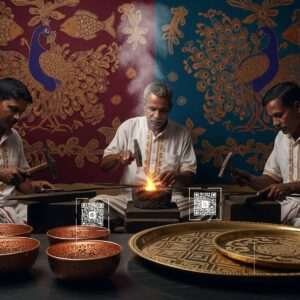
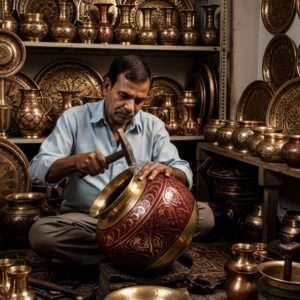
The creation of these traditional utensils is a labor of immense love and patience, involving meticulous techniques that have been faithfully handed down from generation to generation. Using pure materials celebrated for their durability and aesthetic appeal, the artisans employ processes such as intensive hand-hammering and annealing. Let us look closer at this fascinating journey of transformation:
- The Transformation of Raw Metal: The delicate process always begins with solid, cooled cakes of metal. These robust blocks are carefully flattened into very thin plates, laying the foundational canvas for the artisan’s vision.
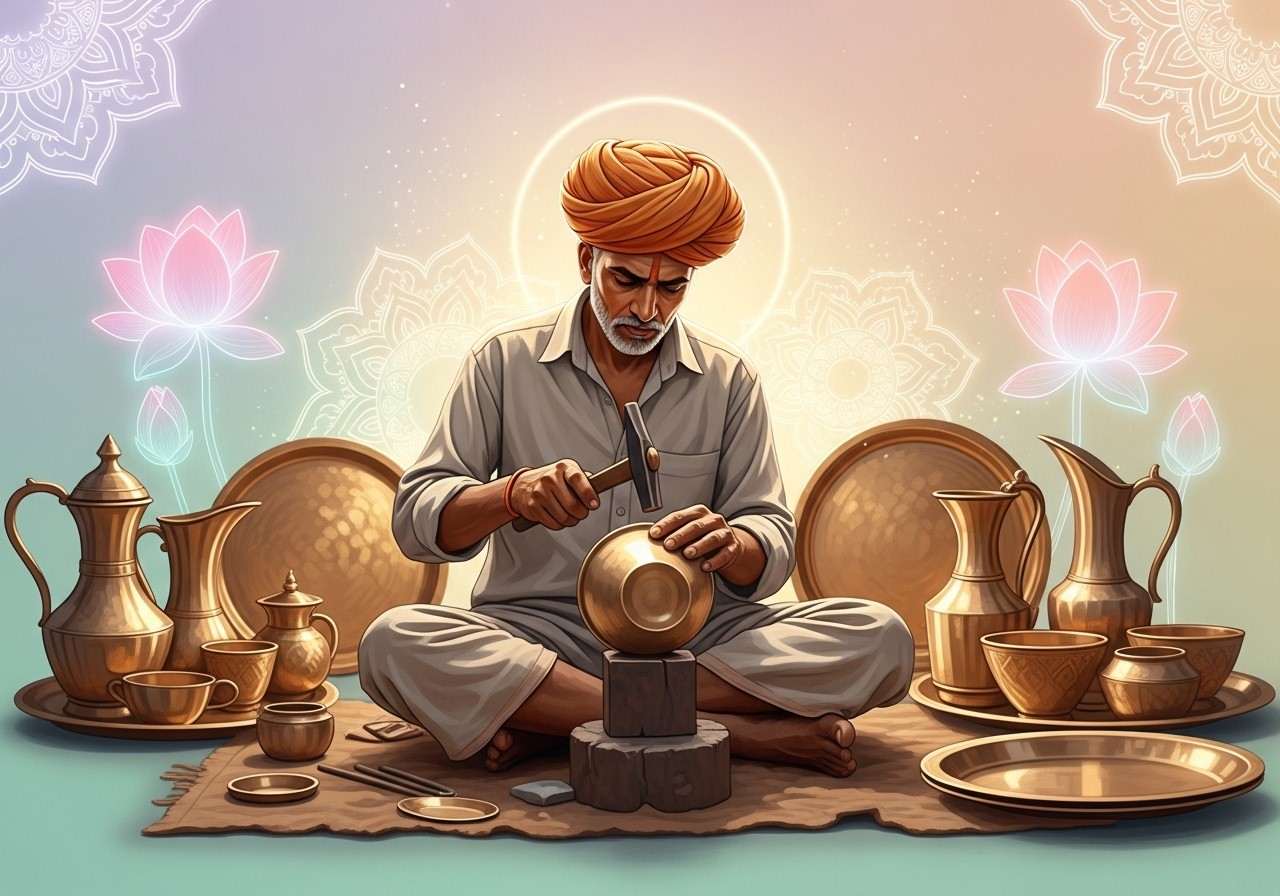
- Shaping Through Hand-Hammering: The flat plates are then skillfully hammered into elegantly curved shapes to create an array of items. From small offering bowls to rimmed plates, water pots, and large cooking vessels, every strike is deeply intentional.
- Mastering the Element of Fire: Heating the plates while hammering them requires profound expertise and precise temperature control. This delicate balance is achieved using small, traditional wood-fired stoves alongside hand-held bellows.
- The Final Flourish of Polish and Design: Once shaped, the utensils are meticulously finished by hand, being polished with natural elements like fine sand and tangy tamarind juice. Breathtaking designs are then formed by skillfully hammering tiny, rhythmic dents into the heated metal surface.
Vessels of Devotion: Products of Cultural Significance
These masterfully crafted utensils serve both profound ritualistic and practical culinary purposes. Items such as shining lotas, ornate pooja thalis, and large kalash pots hold immense cultural significance in our Indian households. Whether they are being used by individuals for daily prayers or by large communities during joyous weddings and temple ceremonies, these creations carry the very essence of our devotion. Furthermore, according to traditional Ayurvedic wisdom, the metals used—specifically pure copper, brass, and beneficial alloys—are believed to impart tremendous health benefits, making them highly desirable additions to our modern kitchens.
Honoring the Legacy: How Poojn.in Supports Traditional Craftsmanship
The incredible artisan groups of India are renowned for their exceptional metal craftsmanship, dedicating their lives to creating traditional items that anchor our spiritual practices. At Poojn.in, we offer a carefully curated range of authentic ritual items that beautifully reflect this rich heritage. Our diverse products include stunning brass pooja thalis, elegant copper kalash, and an array of other handcrafted items that are absolutely essential for your traditional rituals.
By choosing to shop with Poojn.in, you actively support the continuation of these extraordinary metalworking communities and their ancestral craftsmanship. We go to great lengths to ensure that our products are made with the highest quality materials and time-honored traditional techniques. This crucial support helps preserve the deep cultural significance of these sacred items while simultaneously offering you the modern convenience of secure online shopping. Explore our extensive collection today to find the perfect, spiritually resonant addition to your daily ritual practices. For any inquiries or personal assistance, please do not hesitate to contact us at 03369029784 or reach out via WhatsApp at 9476142738.
Weathering the Storm: Challenges, Triumphs, and Global Recognition
Despite the unparalleled beauty of their work, these heritage crafters face numerous modern challenges. Economic pressures, changing consumer habits, and fierce competition from cheap, mass-produced factory goods have led to a significant decrease in the number of practicing craftsmen. However, the unwavering spirit of the community continues to shine brightly against the odds.
In a moment of immense national pride, the unique craft of the metalworkers of Jandiala Guru in Amritsar was inscribed on UNESCO’s Representative List of the Intangible Cultural Heritage of Humanity in 2014. Remarkably, this was the very first traditional craft from India to receive such a prestigious global honor. Following this recognition, initiatives like Project Virasat—functioning under the Punjab Thathera Art Legacy (PTAL)—were passionately initiated to revive the fading craft. By successfully mobilizing artisans, providing them with access to organized credit, introducing contemporary designs, and creating better demand avenues, this noble project is breathing fresh life into an ancient art form.
Curious Minds Ask: Insights into Our Metalworking Heritage
Understanding the Artisan Community
Many wonder about the identity of these traditional metalworkers. They form an esteemed artisan group recognized for their generational brass and copper crafting skills, proudly passing these sophisticated techniques down through their close-knit family lineages.
The Uniqueness of Their Craftsmanship
People often ask what makes this particular style of craftsmanship so incredibly unique. The true beauty lies in the seamless blend of traditional, hand-beaten techniques with highly intricate, culturally significant designs. It is an art form that deeply emphasizes our shared heritage and artistic excellence, firmly setting it apart from ordinary, mass-produced items.
The Popularity of Traditional Utensils
There is a growing curiosity regarding why these traditional utensils remain so popular in modern times. Their lasting appeal comes down to exceptional durability, timeless designs, and the numerous wellness benefits traditionally associated with using natural brass and pure copper in daily life.
Preserving the Craft for the Future
Those concerned about our cultural legacy frequently inquire about how this ancient craft is being preserved today. Thankfully, it survives and adapts through dedicated community efforts, supportive government-backed initiatives, and a rapidly growing online presence, which allows these incredibly talented artisans to reach broader audiences across the nation.
Materials Used in the Art Form
A common point of interest centers around the specific materials utilized by these dedicated craftsmen. The artisans primarily rely on high-quality brass, pure copper, and resonant bell metal, all of which are celebrated for their stunning aesthetic appeal and well-documented wellness properties.
Significance in Indian Culture
It is profoundly important to understand why this artisan caste holds such massive significance in Indian culture. They play an absolutely vital role by single-handedly preserving our traditional metalworking techniques, thereby contributing immensely to the preservation of the country’s rich, intangible spiritual heritage.
Bringing Heritage Home Online
For those looking to bring this beautiful heritage into their own homes, figuring out how to buy these traditional utensils online is a common query. These sacred and utilitarian items can be conveniently purchased through specialty online stores that focus exclusively on authentic cultural goods, ensuring you receive genuine, handcrafted pieces.
Eco-Friendly Craftsmanship
Lastly, the thoughtful question of whether these traditional crafts are eco-friendly often comes up. We are happy to share that they are highly sustainable. The artisans exclusively use natural materials and time-honored, low-impact methods—like manual hammering and wood-fired heating—that minimize environmental harm, making them a beautifully conscious choice for any modern, mindful home.
Embracing Tradition and Celebrating Craftsmanship
As we reflect on the phenomenal dedication of these heritage crafters, their unyielding commitment to preserving our artistry and tradition is truly inspiring. Each handcrafted piece they produce is a magnificent blend of history, ancestral skill, and deep cultural significance. These artisans keep the spiritual essence of their ancestors alive, embodying a legacy that has gracefully stood the test of time. By actively supporting their work and welcoming these sacred items into our homes, we do not just value their unique craftsmanship; we wholeheartedly honor India’s rich, luminous heritage. Whether used for daily pujas, festive rituals, or everyday holistic living, these authentic metal items bring profound meaning and radiant blessings into our lives. Let us continue to celebrate and cherish this remarkable tradition, ensuring it continues to shine brightly for many generations to come.