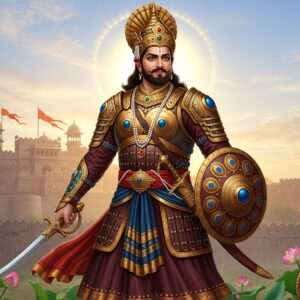


Our majestic motherland, India, is a beautiful tapestry woven with legendary tales where absolute valor meets deep-rooted spirituality. Among the most luminous historical figures is the great Kalbhoj, more universally revered and remembered as Bappa Rawal. As the visionary founder of the Guhila Rajput dynasty in the Mewar region, his extraordinary journey from a young prince hidden in the forests to a formidable sovereign is an enduring source of inspiration for everyone who cherishes our rich Indian heritage.
Early Life and Ascension: The Dawn of a Resilient Sovereign
The early life of this legendary Rajput warrior was marked by heartbreaking tragedy and immense resilience. Born around 713 AD, his childhood was drastically altered when his father, Rawal Mahendra, and several other male family members attained martyrdom in a fierce battle. To protect the young heir, he was raised in strict secrecy by his devoted mother, heavily supported by fiercely loyal Bhil attendants.
Growing up amidst nature, the indigenous Bhil community became his mentors, rigorously training him in survival and advanced military skills. This rugged upbringing molded him into an exceptionally brave and tactical leader. He laid the foundational roots of the Mewar Kingdom around 728 CE. Soon after, his undeniable courage culminated in a historic victory; at the young age of 21 in 734 AD, he defeated Man Mori to seize complete control of the impregnable Chittor Fort. From here, the golden era of his reign truly began.
Reign and Triumphs: Forging an Unshakable Kingdom
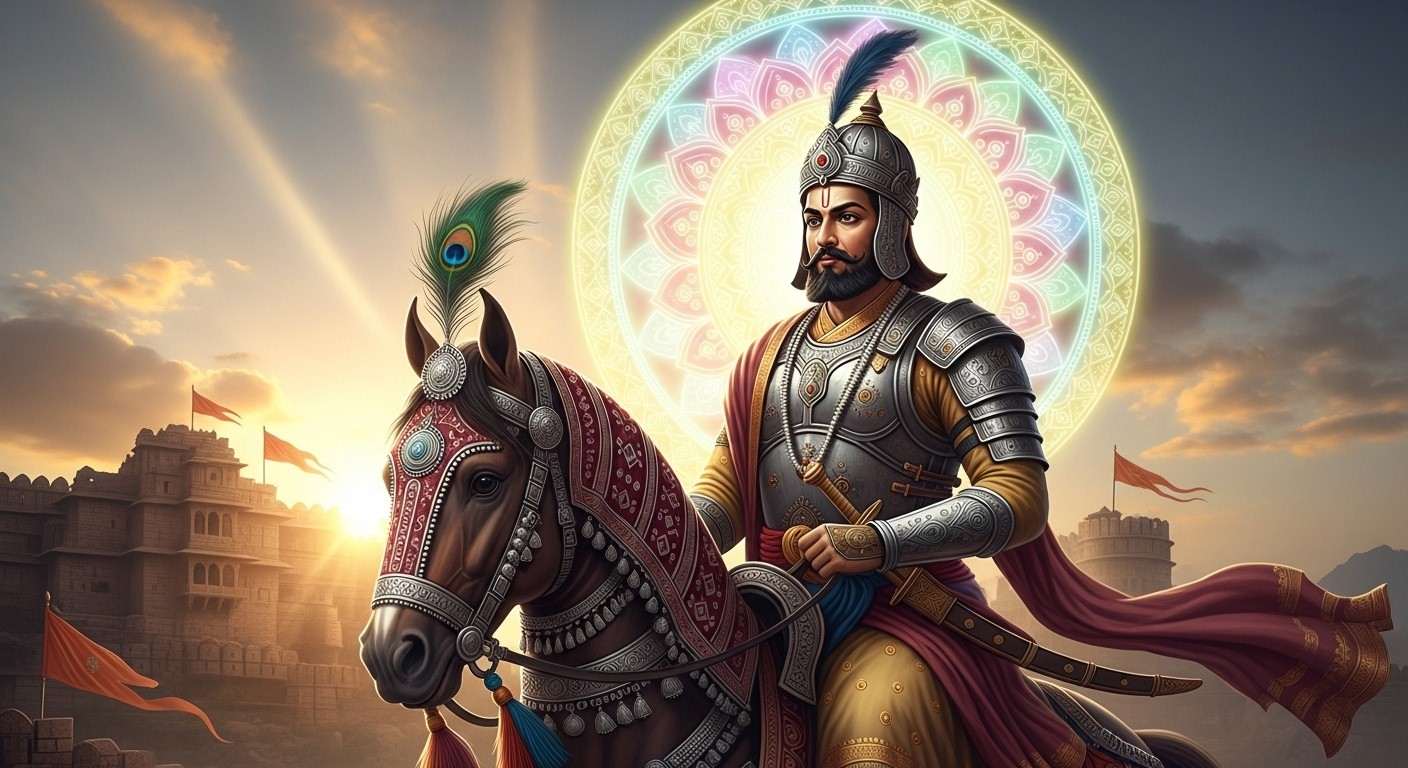
The reign of this mighty king was a spectacular blend of unparalleled bravery, strategic genius, and immense devotion. In the 8th century, when foreign threats loomed large over the subcontinent, he became the ultimate protector of our culture. He successfully united fragmented neighboring states, creating a massive, impenetrable bulwark against invading forces. History proudly remembers how he completely repelled the Arab invasions, famously chasing them far beyond Ghazni.
To secure the frontiers, he established a strategic military base, which eventually grew into the city we now know as Rawalpindi. His military brilliance was so overwhelming that it is said the invaders did not dare to cast an eye toward India for the next four centuries. But beyond his sword, his heart belonged to the divine. A profound devotee of Lord Shiva, he proudly built the glorious Eklingji Temple. Stripping away his royal ego, he ruled merely as the Diwan (Prime Minister) of Eklingji, firmly declaring that the supreme deity was the only true ruler of Mewar.
Legacy and Cultural Reverence: An Eternal Inspiration
The cultural and dynastic impact left behind by the Mewar founder is woven deeply into the very soul of Rajasthan. He is credited with establishing the illustrious Sisodia Rajput clan, a bloodline that later gifted our nation with immortal heroes like Maharana Sanga and Maharana Pratap. Today, his name is the ultimate synonym for honor, ethical leadership, and supreme courage.
He perfectly embodied the archetype of the true Rajput warrior—brave, devout, and fiercely unyielding. For modern Indian families, his story is not just a chapter in a history book; it is a vital cultural inheritance that teaches our younger generation the importance of protecting one’s Dharma and honoring the motherland.
The Final Years: A Path of Spiritual Awakening
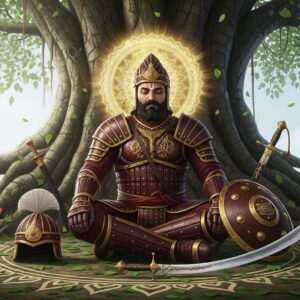
Perhaps the most beautiful and humbling aspect of his life was its twilight. Despite possessing unimaginable power and wealth, he gracefully abdicated the throne in 753 AD. Choosing the tranquil path of a spiritual seeker over the comforts of a royal palace, he dedicated his final years to divine contemplation. While historical texts and vibrant oral traditions vary, his revered Samadhi located in Rajasthan continues to attract profound respect, honoring a life perfectly balanced between royal duty and spiritual devotion.
Embracing Devotion at Home with Poojn.in
Reading about the immense spiritual dedication of such historical titans to Lord Shiva naturally inspires us to look inward and strengthen our own daily rituals. While we do not offer VIP temple darshans or travel packages to historical sites, we at Poojn.in deeply understand your heartfelt desire to honor your heritage through pure, uninterrupted devotion from the comfort of your home.
To help you create a serene, temple-like atmosphere in your daily life, we offer authentic cultural goods that beautifully complement your spiritual practices:
- Premium Incense Sticks and Cones: Bringing the pure essence of ancient temple rituals directly into your home, our naturally sourced incense sticks and cones effortlessly elevate your daily prayers. They are carefully prepared to fill your space with a calming fragrance, allowing you to focus your mind deeply and establish a truly divine connection without any distractions.
- Traditional Brass Diyas: Lighting a brilliantly polished brass diya during your morning or evening aarti is a beautiful way to symbolize the triumph of wisdom over ignorance and purity over darkness. The warm, golden, and unwavering glow from our heavy-duty diyas will instantly transform your puja room into a sacred sanctuary of peace and ancestral reverence.
- Elegantly Crafted Puja Thalis: Keep your sacred offerings perfectly organized and beautifully presented with our culturally authentic and highly durable puja thalis. Designed with deep respect for traditional Indian aesthetics, they make every single ritual feel profoundly special, helping you honor the divine exactly as our revered ancestors once did.
Our commitment is strictly to provide you with the finest items for your spiritual journey. For more details on enriching your home rituals, please explore our collection at Poojn.in, call us directly at 03369029784, or send us a quick message via WhatsApp at 9476142738.
Conclusion: Celebrating an Immortal Legacy
The life story of the great Mewar founder is a magnificent testament to what a human being can achieve through absolute dedication, spiritual grounding, and fearless patriotism. From the forested hills with his Bhil companions to the grand throne of Chittor, and finally to the quiet solace of a spiritual ascetic, his journey remains an extraordinary beacon of light. As we light our diyas and offer our prayers today, let us remember and celebrate the timeless heroes who preserved the spiritual and cultural wealth of our beloved country.
Frequently Asked Questions
What is the birth date of this revered Rajput leader?
He was born as Kalbhoj around 713 AD. His birth and subsequent rise to power are passionately celebrated as defining moments in the preservation of Indian culture, marking the dawn of a highly resilient and powerful era.
How did his reign ultimately come to an end?
Unlike many kings who fought for power until their last breath, he voluntarily stepped down. He gracefully abdicated his royal throne in 753 AD to embrace a peaceful, ascetic lifestyle, seeking higher spiritual truths in his final years.
Where is his sacred samadhi located?
His highly venerated samadhi is situated in Chittorgarh, Rajasthan. It remains a deeply significant and respected pilgrimage site for countless individuals who continue to admire his extraordinary contributions to our nation’s history.
Why is he considered such a vital figure in Indian history?
He stands out as a colossal historical figure because he successfully united various clans to create an impenetrable defense against 8th-century foreign invasions. Furthermore, by laying the foundation for the illustrious Mewar Dynasty, he ensured that indigenous traditions and values were fiercely protected for centuries to come.
What were his most notable historical achievements?
Beyond capturing the mighty Chittor Fort and establishing a lasting royal lineage, his greatest triumphs included decisively repelling Arab invaders, constructing the magnificent Eklingji Temple, and establishing the strategic city of Rawalpindi. His seamless blend of military genius and profound devotion to Lord Shiva makes his legacy truly unparalleled.
How do modern Indians honor his enduring legacy?
Today, people pay their deepest respects by visiting his samadhi, actively participating in vibrant Rajasthani cultural festivals, and passing down his heroic tales to the younger generation. Additionally, performing home rituals with deep reverence for our ancestors keeps the spiritual flame of his memory alive in our hearts.