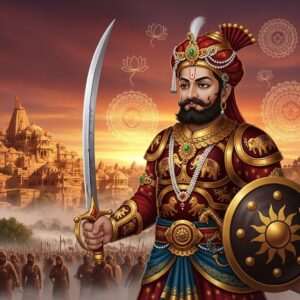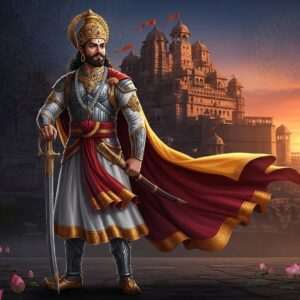


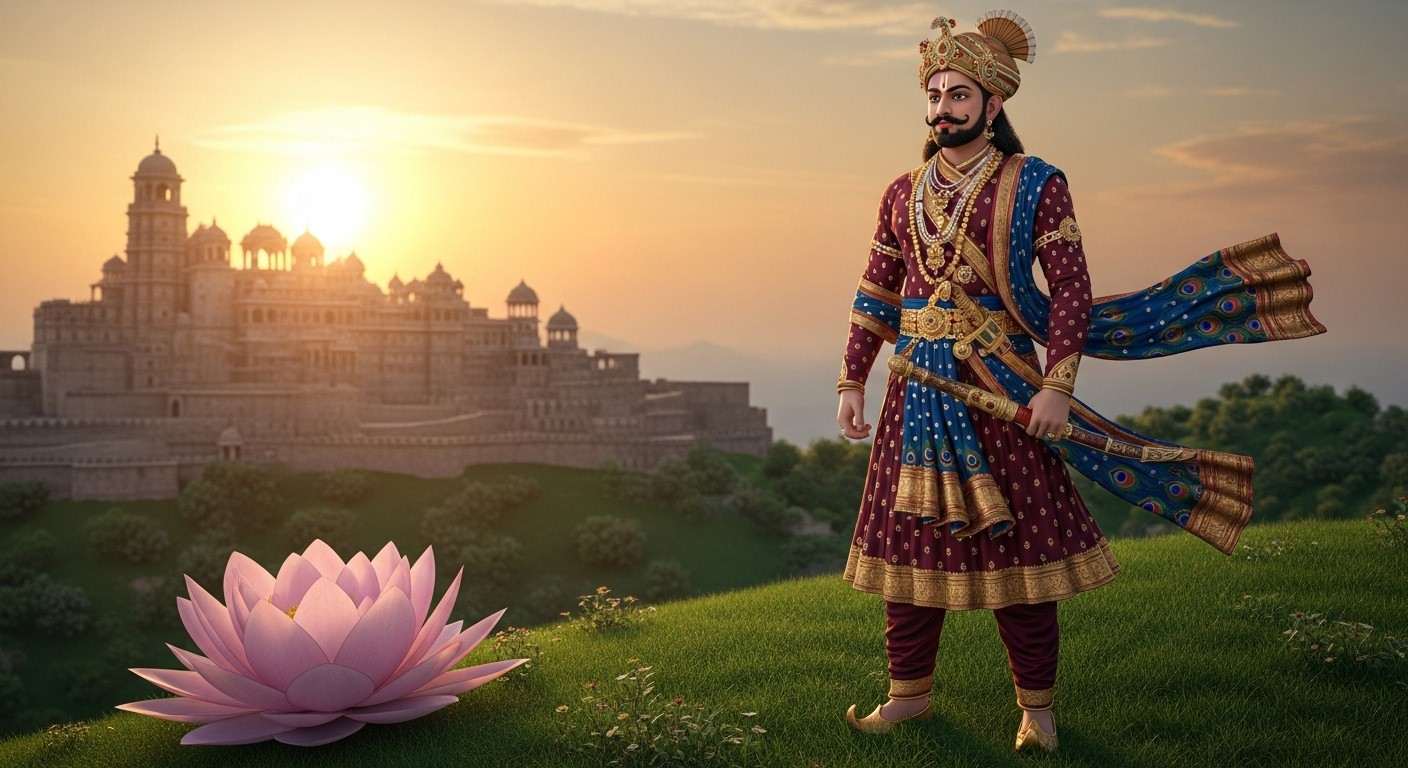
Our beautiful land of India is woven with stories of extraordinary valor, deep devotion, and an unyielding commitment to our sacred Dharma. Among these countless luminous stars, one name shines with exceptional brilliance in the heart of Rajasthan. The legendary founder of the Mewar dynasty, widely known as Kalbhoj, represents the very essence of Rajput chivalry and profound courage. His remarkable journey from a young boy facing severe adversity to a formidable king offers deep insights into our shared cultural heritage and the resilience of our ancestors.
The Humble Beginnings of a Great Warrior
Born in the early 8th century, around 713 AD, this iconic leader experienced profound tragedy very early in life. His father and many male relatives lost their lives during a fierce and heartbreaking conflict with the Bheels of Idar. This incident completely altered the destiny of the young prince, yet it also sowed the seeds of greatness.
- A Mother’s Resilience and Tribal Support: After the tragic loss of his father, his courageous mother sought immediate refuge, raising him with the deeply devoted assistance of loyal Bheel companions. These invaluable tribal allies not only provided a safe haven but also painstakingly trained the young prince in the rigorous arts of warfare and survival in the rugged Aravalli hills, instilling in him a deep respect and empathy for local communities.
- A Noble Ancestry Steeped in Myth: His lineage is deeply revered in our ancient traditions, with several esteemed historians identifying him as the eighth ruler of the illustrious Guhilot dynasty. Furthermore, deep-rooted cultural beliefs and spiritual texts often respectfully trace his royal bloodline all the way back as the 80th descendant of Maryada Purushottam Lord Rama, adding a beautiful, divine aura to his earthly struggles and his eventual majestic triumphs.
The Path to Establishing a Glorious Kingdom
As the young prince matured, so did his profound understanding of his royal dharma and responsibilities toward his people. By the time he was a young man, he achieved what many considered entirely impossible by seizing control of the magnificent Chittor fort. Taking over this strategic fort from Man Mori in the early 730s AD, he bravely laid the unshakable foundation of a kingdom that would stand the test of time. This was not merely a military conquest; it was the blessed birth of a unified Mewar that would fiercely protect Indian traditions for centuries to come.
Defending the Motherland: A Shield Against Invasions
The 8th century was a deeply turbulent and worrying period for the Indian subcontinent, marked by aggressive foreign incursions. This valiant Rajput ruler emerged as the ultimate protector, leading a powerful confederacy of regional kings to fiercely defend our sacred borders from cultural erasure.
- Halting the Arab Expansion: During the historically significant Battle of Rajasthan, he showcased unparalleled strategic brilliance by successfully repelling the advancing forces of the Umayyad Caliphate, driving them back and securing the northwestern frontiers. His immense bravery was so defining that it reportedly prevented further foreign incursions from that region for several hundred years, truly earning him the glorious title of the ‘Sun of the Hindus’.
- Uniting the Rajput Clans: Understanding deeply that a divided house cannot stand against foreign might, he masterfully unified various smaller principalities, including strong rulers from Ajmer and Jaisalmer, to forge an impenetrable Hindu alliance. This extraordinary unity not only neutralized the immediate threat but also fostered a profound, enduring sense of shared identity and brotherhood among the Rajput clans that warms our hearts even today.
A Devout Heart: The Spiritual Legacy of Eklingji
Beyond the fierce battlefields, his noble soul was deeply anchored in spiritual devotion and traditional values. A devout and unwavering follower of Lord Shiva, he constructed the breathtaking Eklingji Temple around 734 AD, formally dedicating his entire kingdom to the supreme deity. He famously ruled merely as a ‘Diwan’ (prime minister) to Eklingji, an incredibly humbling and respectful tradition that every succeeding ruler of Mewar has proudly upheld as a mark of devotion.
After ruling with profound wisdom, fairness, and justice for nearly two decades, he made a choice that reflects the highest ideals of our Indian philosophy. Handing over the flourishing kingdom to his capable son, he gracefully embraced an ascetic life, deeply immersing himself in the pure worship of Mahadeva until his last breath.
Honoring Our Heritage with Authentic Cultural Goods
Reading about such magnificent devotion and respect for Dharma naturally fills our hearts with a deep, emotional yearning to connect with our spiritual roots. Whether you are setting up a small, peaceful sacred space in your home or performing your daily heartfelt rituals, keeping our traditions alive is a beautiful way to honor the legacy of our ancestors.
At Poojn, we deeply understand and cherish this emotional bond with our culture. We take immense pride in offering authentic cultural and spiritual goods that help you beautifully maintain your daily practices without any modern-day hassle. If you wish to bring the purity of tradition into your home, you can easily find high-quality puja samagri by visiting . For those looking to gracefully adorn their sacred corners with reverence, explore our handpicked decorative items at .
Embrace the wonderful convenience of modern online shopping while staying deeply connected to the eternal spiritual essence of India. Should you need any warm guidance in selecting the right items for your family’s spiritual needs, please feel free to contact us at 03369029784 or simply WhatsApp us at 9476142738. We are always here to serve your devotion.
Frequently Asked Questions About the First Major Ruler of Mewar
Who was the iconic founder of the Mewar dynasty?
He was a legendary 8th-century Rajput warrior, originally named Kalbhoj, who is celebrated for his immense bravery and for laying the strong foundational stones of the Mewar kingdom. His glorious legacy is deeply cherished as a symbol of cultural pride and unwavering resilience across Rajasthan.
What are the most significant historical achievements of this great leader?
His most defining achievements include capturing the mighty Chittorgarh fort and establishing a powerful, culturally rooted, and unified kingdom. Moreover, he played an absolutely crucial role in defending the Indian subcontinent by defeating foreign Arab invaders and safely pushing them out of our northwestern territories.
How did his early life shape his glorious future?
After heartbreakingly losing his father at a very young age, he was raised in the rugged wilderness with the profound, empathetic help of loyal Bheel tribesmen. This unique and grounding upbringing in the laps of nature instilled in him crucial survival skills, exceptional military prowess, and a deeply grounded leadership style that respected all sections of society equally.
What was his unique contribution to the spiritual culture of Mewar?
A man of profound and unshakeable faith, he constructed the highly revered Eklingji Temple in 734 AD and officially declared the deity as the true, eternal sovereign of Mewar. This beautiful act of deep devotion started a centuries-long tradition where the kings viewed themselves merely as humble servants and caretakers of the Divine.
Are there any enduring legends about his final years?
Yes, the fascinating legends surrounding his later life beautifully reflect the true essence of traditional Indian philosophy. After reigning victoriously and justly for about two decades, he gracefully stepped down from the royal throne. He devoted the rest of his peaceful life to asceticism, spending his final years in the quiet worship of Lord Shiva, leaving behind an incredibly inspiring legacy of material detachment and supreme spirituality.