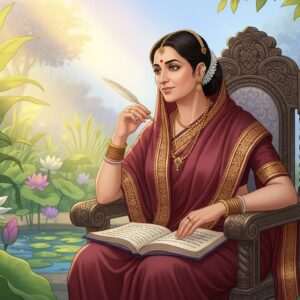


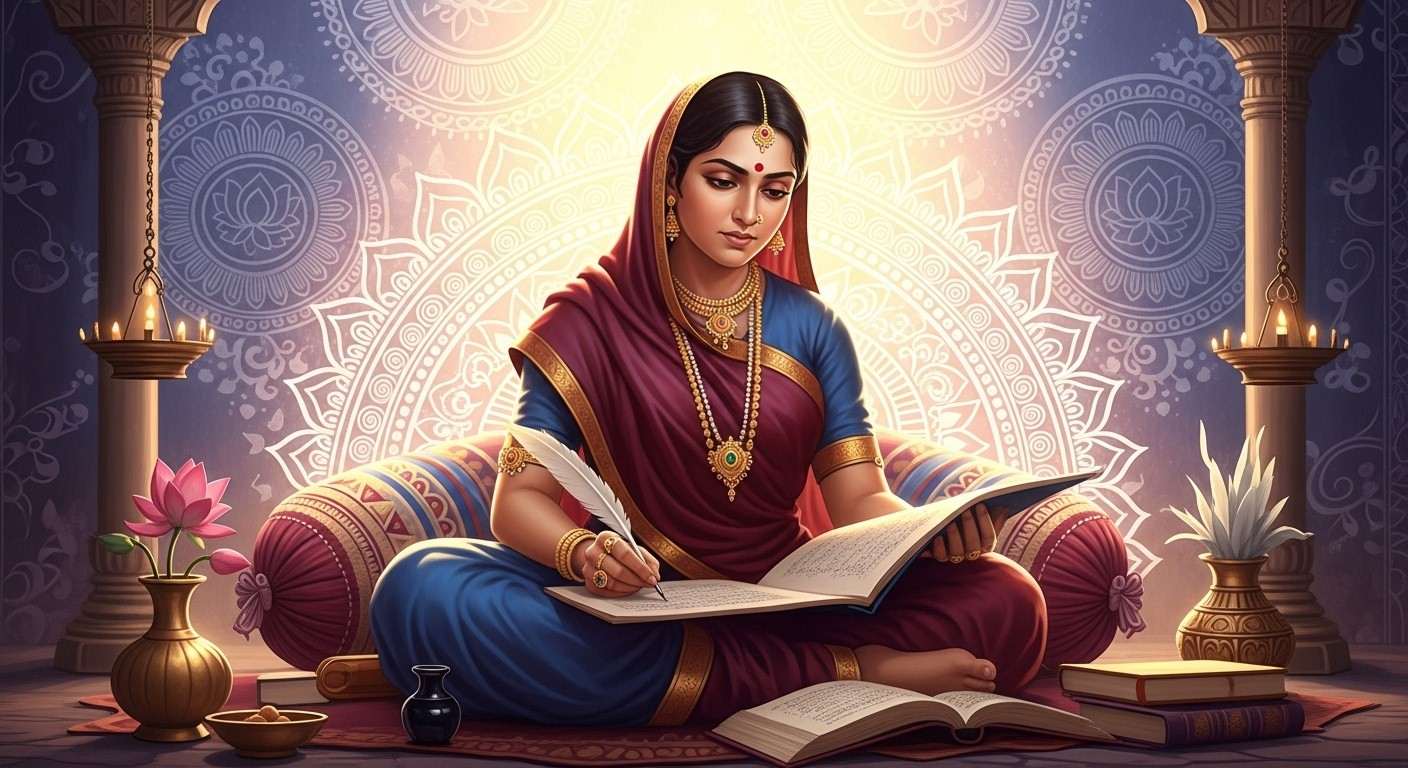
Namaskaram! When we look back at the vibrant tapestry of our nation’s history, certain voices echo with profound courage and clarity. One such extraordinary soul was Tarabai Shinde, a visionary writer and activist from 19th-century India. Living between 1850 and 1910, her remarkable life gives us a clear window into the early efforts to establish respect and equality for women in our society. Understanding her journey helps us deeply appreciate the evolving thought processes of our ancestors while keeping us connected to our historical roots.
Roots and Family Background in Maharashtra
Born in the year 1850 in the historic Buldhana district of the Berar Province—now known as present-day Maharashtra—this young reformer came from a well-to-do Maratha family. Her childhood environment was uniquely progressive for the era and laid a strong foundation for her worldview. Her father, Bapuji Hari Shinde, served diligently as a head clerk in the Deputy Commissioner of Revenues office. More importantly, he was a radical thinker who challenged the norms of his time, even publishing a thought-provoking book titled “Hint to the Educated Natives.” This enlightened, nurturing household naturally cultivated her inquisitive mind and planted the seeds for her future endeavors.
Education and Intellectual Growth
In a time when the doors of formal schooling were largely closed to girls, the young visionary was immensely fortunate to receive an education supported by her family. Because there were no girls’ schools in her area, her devoted father took it upon himself to home-school her, a beautiful testament to parental love and foresight.
- Comprehensive Linguistic Training: Under her father’s careful and loving guidance, she achieved an impressive proficiency in Marathi, Sanskrit, and English. This multi-lingual foundation was quite rare for women back then, allowing her to read widely and broaden her perspective on societal norms across different cultures, which ultimately enriched her own philosophical writings.
- Cultivation of Critical Thought: The rigorous home-schooling did far more than just impart basic linguistic skills; it deeply honed her keen intellect and analytical abilities. It fostered a profound understanding of complex social issues, allowing her to articulate the silent, everyday struggles of women with unmatched empathy, brilliance, and clarity that still resonates today.
Guiding Lights: Inspirations and Influences
The deeply rooted progressive values of her family formed the solid bedrock of her worldview. As she grew, she found profound inspiration in the monumental works of Jyotirao Phule and Savitribai Phule. These towering figures of social reform were actively fighting against the rigid caste system and tirelessly promoting women’s education across the region.
Feeling a deep kinship with their mission, she formally associated herself with their cause by joining the Satyashodhak Samaj (Truth-Seeking Society). This noble organization was dedicated to increasing social rights and providing vital education to the underprivileged. However, what truly ignited her pen was her direct observation of everyday gender disparities, culminating in the tragic case of Vijayalakshmi. When this Brahmin widow was harshly convicted and vilified by society for murdering her illegitimate child, Tarabai was deeply moved and angered. The hypocritical denouncement of women’s morals by a patriarchal society prompted her to speak out fearlessly against such double standards.
The Bold Creation of ‘Stri Purush Tulana’
Fueled by the injustices she witnessed, the activist penned her groundbreaking work, ‘Stri Purush Tulana’ (A Comparison Between Women and Men). Written against the backdrop of immense societal resistance, this text stands as a fierce critique of patriarchy and caste inequalities. It remains a highly revered piece of literature because it didn’t just challenge the status quo; it initiated crucial, foundational dialogues about gender equality in India. Her eloquent, heartfelt arguments paved the way for generations to come, securing her place as a true trailblazer.
Preserving Heritage and Embracing Progress
This extraordinary life story is a beautiful reminder of the power of education, the importance of a nurturing upbringing, and the profound impact of staying true to one’s values. As modern Indians, we continuously strive to balance this beautiful legacy of progressive thought with our deep-rooted traditions. At our core, we believe that understanding our history and preserving our cultural practices bring immense peace and groundedness to our modern, fast-paced lives.
As India’s biggest online cultural goods store, we proudly support your spiritual and traditional journey. Whether you are searching for authentic pooja essentials for your daily rituals, or seeking sacred items that connect you back to the profound heritage of our ancestors, poojn.in is your trusted companion. Please note that while we do not offer travel packages, provide travel guidance, or arrange VIP darshan of temples, we are entirely dedicated to offering you the finest cultural goods directly through our online store. Experience the true convenience of authentic shopping with us, and let us help you keep our beautiful, vibrant traditions alive in the warmth of your home.
Frequently Asked Questions
Where was this prominent social reformer born and what is her birth date?
Historical records indicate that she was born in the year 1850 in Buldhana, a historic town located in the Berar Province, which is part of present-day Maharashtra.
What was her early education like?
Because there were no formal schools for girls in her vicinity, she was lovingly home-schooled by her progressive father. This unique, nurturing education empowered her to master Marathi, Sanskrit, and English, giving her the strong, articulate voice needed to express her revolutionary thoughts.
Who served as her primary inspirations in her journey?
She drew immense strength and inspiration from the visionary social reformers Jyotirao and Savitribai Phule. Her active involvement with their organization, the Satyashodhak Samaj, significantly shaped her perspectives on equality, justice, and the upliftment of the underprivileged.
What was the main focus of her writings and why is she important in Indian history?
She is celebrated for her profound text, “Stri Purush Tulana,” where she boldly addressed the social injustices, caste discrimination, and patriarchal norms of her time. Her critical writings make her one of the earliest and most respected advocates for women’s empowerment in our nation’s history.
What unique challenges did she face during her early life?
Living in a deeply traditional 19th-century society, she faced the monumental challenge of societal opposition to her progressive views and writings. Yet, her unyielding spirit and the unwavering, progressive support of her family helped her overcome these hurdles to firmly champion the cause of equality.