
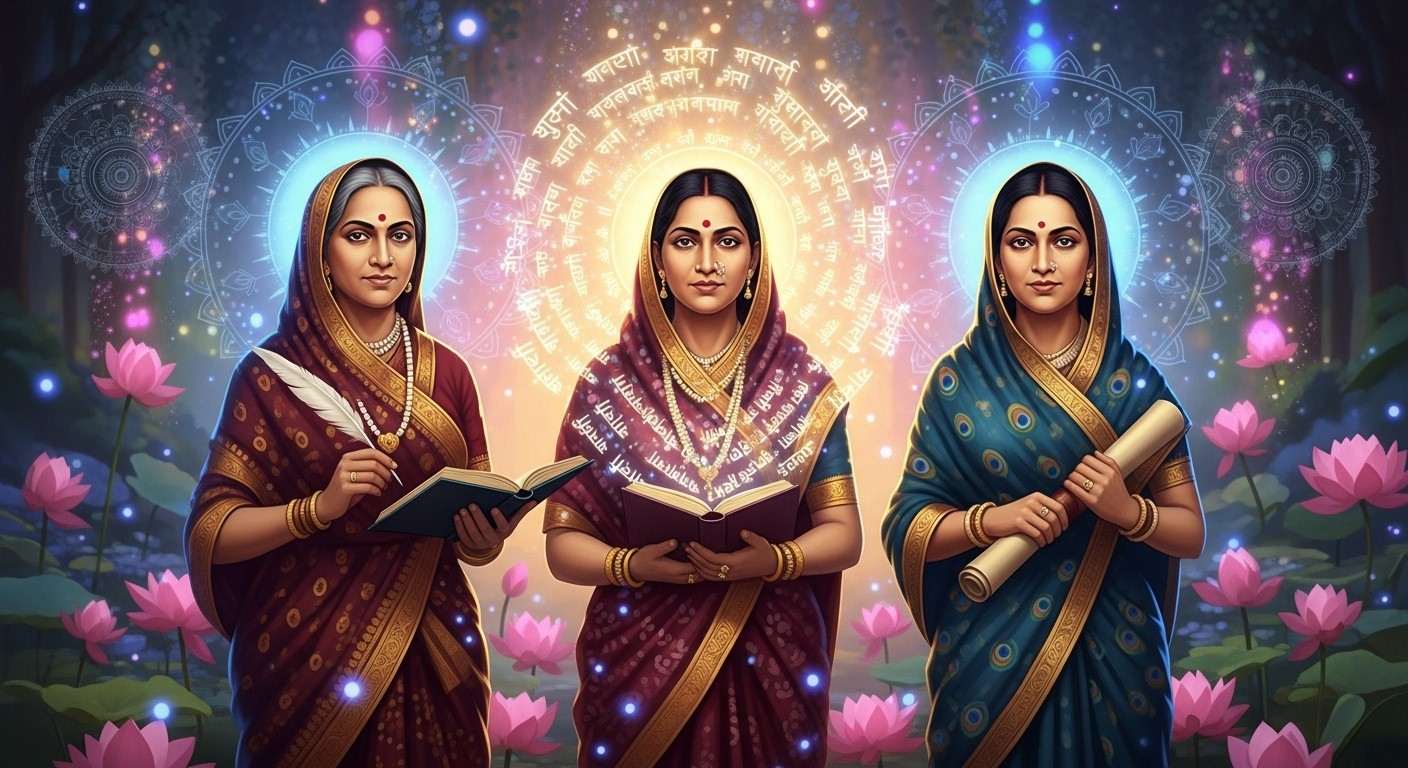
Our motherland, Bharat, has always been a land of profound cultural heritage and deep spiritual wisdom. Yet, the journey toward true gender equality required the fearless spirit of extraordinary women who dared to lovingly but firmly question rigid societal norms. In the 19th century, courageous daughters of India like Tarabai Shinde, Pandita Ramabai, and Savitribai Phule emerged as vital pillars of social reform. Their groundbreaking efforts laid a strong foundation for female empowerment, continuing to inspire our modern pursuit of a balanced and equitable society.
Tarabai Shinde: A Fearless Advocate for Equality
Tarabai Shinde is widely revered as one of the earliest champions of feminist thought in our country. She fearlessly challenged the patriarchal structures of her time with her monumental literary work, “Stri Purush Tulana” (A Comparison Between Men and Women), published in 1882. In this profound text, she critically examined the double standards embedded in society and questioned misinterpretations of Hindu religious scriptures that marginalized women. Shinde actively collaborated with visionary activists Jotirao and Savitribai Phule, fighting relentlessly against both caste and gender discrimination. As a dedicated member of the Satyashodhak Samaj—a transformative movement established by Jyotirao Phule—she fiercely advocated for social justice, ensuring that the call for equality echoed through the corridors of 19th-century India.
Pandita Ramabai: A Beacon of Education and Upliftment
Pandita Ramabai was an embodiment of grace, resilience, and intellectual brilliance who dedicated her entire life to female literacy and social upliftment. To combat the harsh realities of child marriage and promote female education, she founded the Arya Mahila Samaj in Pune. Understanding the desperate need for safe havens, Ramabai opened Sharada Sadan in Mumbai in 1889, a nurturing home of learning that provided security and education to marginalized widows. Her visionary outlook was further highlighted when she testified before the Hunter Commission on Education in India in 1882. She passionately argued for the appointment of female teachers and school inspectors, and strongly advocated for admitting Indian women into medical colleges. Recognizing the cultural hesitation of Indian women to consult male doctors for gynecological issues, she tirelessly campaigned for the necessity of female medical professionals.
Savitribai Phule: The Mother of Modern Female Education
Savitribai Phule remains an eternal symbol of selfless service and enlightenment. As a true trailblazer, she established India’s very first school for girls, breaking centuries-old barriers that denied women the right to learn. Working shoulder-to-shoulder with her husband, Jyotirao Phule, she fought deeply entrenched caste prejudices while empowering young girls through the light of education. Her enduring legacy of compassion and resilience continues to be a guiding light for social justice advocates across the globe.
The Beautiful Convergence of Revolutionary Ideas
Though they walked their own unique paths, Shinde, Ramabai, and Phule were united by a shared, unwavering devotion to social reform. Their collective ideologies organically influenced one another, creating a powerful synergy that awakened the nation’s conscience. Together, their sacrifices and triumphs built the sturdy framework upon which India’s modern women’s liberation movements proudly stand today.
Understanding the Cultural and Historical Landscape
To truly appreciate their monumental work, we must reflect on the realities of 19th-century India. During this era, restrictive social norms and complex colonial dynamics severely limited a woman’s access to public life and formal education. Despite facing immense public hostility and societal resistance, these visionary women stood tall. They gracefully but fiercely challenged traditional practices that hindered progress, proving that our culture can evolve while still retaining its core spiritual values.
Carrying the Legacy Forward in Modern India
The indomitable spirit of Shinde, Ramabai, and Phule continues to resonate deeply in contemporary times. While we have witnessed remarkable progress in female empowerment, their teachings remind us that our journey is still ongoing. Their stories provide boundless hope, urging us to build a society where every individual, regardless of gender or background, is treated with ultimate dignity and respect.
Preserving Our Heritage with Poojn.in
As we celebrate the pioneering voices of these historic reformers, it is incredibly important to stay connected to the rich, authentic traditions they sought to purify and protect. At Poojn.in, India’s largest and most trusted cultural goods store, we are deeply committed to preserving the soulful heritage of our nation. We understand that modern Indian families value both tradition and the convenience of online shopping. Please note that while we focus entirely on bringing authentic cultural goods to your doorstep, we do not offer travel packages, guidance, or VIP temple darshans. Our pure focus remains on supplying the finest traditional items that resonate with your spiritual and cultural needs.
Explore Our Authentic Cultural Goods
- Inspiring Literature and Texts: Delve deep into profound writings that echo the spirit of social reform and female empowerment. Reading these carefully curated texts helps us truly understand the historical struggles and victories of our ancestral leaders.
- Authentic Traditional Attire: Embrace the elegance of our roots with beautifully crafted sarees and ethnic wear that honor our rich cultural tapestry. Every single thread weaves a story of our heritage, allowing you to carry forward the legacy of our ancestors with immense pride.
- Exquisite Handcrafted Treasures: Discover our exclusive collection of meticulously handmade goods that celebrate the brilliant craftsmanship of Indian artisans. By bringing these authentic ritual items into your home, you directly support local creators and keep our vibrant traditions alive for future generations.
By choosing Poojn.in, you are supporting a platform that deeply respects our glorious past while seamlessly adapting to your modern lifestyle. For any inquiries or personal assistance with your order, we warmly invite you to contact us at 03369029784 or reach out via WhatsApp at 9476142738.
Conclusion
The inspiring lives of Tarabai Shinde, Pandita Ramabai, and Savitribai Phule serve as a beautiful reminder of the strength and resilience of Indian women. They dared to dream of an equal society and dedicated their every breath to turning that dream into reality. As we navigate the complexities of the modern world, their timeless wisdom continues to guide us. Let us honor their memories by continuing to advocate for education, mutual respect, and cultural integrity in our everyday lives.
Frequently Asked Questions
Who were Tarabai Shinde and Pandita Ramabai?
Tarabai Shinde and Pandita Ramabai were immensely influential social reformers in 19th-century India who dedicated their lives to female empowerment. While Tarabai challenged deep-rooted patriarchal norms through her powerful writings, Pandita Ramabai focused heavily on female education and providing safe havens for marginalized widows.
What was the relationship between Tarabai Shinde and Savitribai Phule?
Both remarkable women shared a profound, unified vision for a discrimination-free society. Tarabai Shinde worked closely alongside Savitribai Phule and Jotirao Phule under the Satyashodhak Samaj, actively combining their efforts to eradicate caste prejudices and uplift women through knowledge and awareness.
How did Tarabai Shinde and Pandita Ramabai contribute to societal progress?
Through her courageous book “Stri Purush Tulana” published in 1882, Tarabai Shinde openly challenged gender biases and double standards. Concurrently, Pandita Ramabai took actionable steps by establishing the Arya Mahila Samaj and Sharada Sadan in 1889, creating vital educational infrastructures for girls and widows who had nowhere else to turn.
What impact did these pioneering women have on our culture?
Their relentless dedication fundamentally shifted the cultural conversation around a woman’s role in Indian society. By promoting female literacy and boldly addressing taboo subjects, they planted the early seeds of modern social reform, making it possible for future generations of women to thrive independently.
What is the cultural significance of the book “Stri Purush Tulana”?
Written by Tarabai Shinde, this masterpiece is historically recognized as one of India’s earliest and most vital feminist texts. It is deeply significant because it fearlessly held up a mirror to societal hypocrisy, demanding that men and women be measured by the exact same moral and social standards.
Why are Tarabai Shinde and Savitribai Phule considered pioneers?
They are celebrated as absolute pioneers because they took action during a highly conservative era when speaking up was incredibly dangerous. By opening the first schools for girls and writing revolutionary texts, they broke the hardest barriers, paving the golden path for India’s ongoing journey toward equality.
What challenges did Pandita Ramabai face during her journey?
Pandita Ramabai navigated immense public hostility and severe criticism for her progressive views, especially regarding widow remarriage and female medical education. However, her unshakable faith and resilient spirit allowed her to overcome these societal roadblocks, ultimately transforming the lives of countless marginalized women.