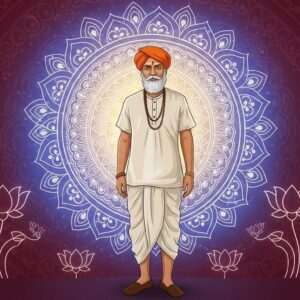

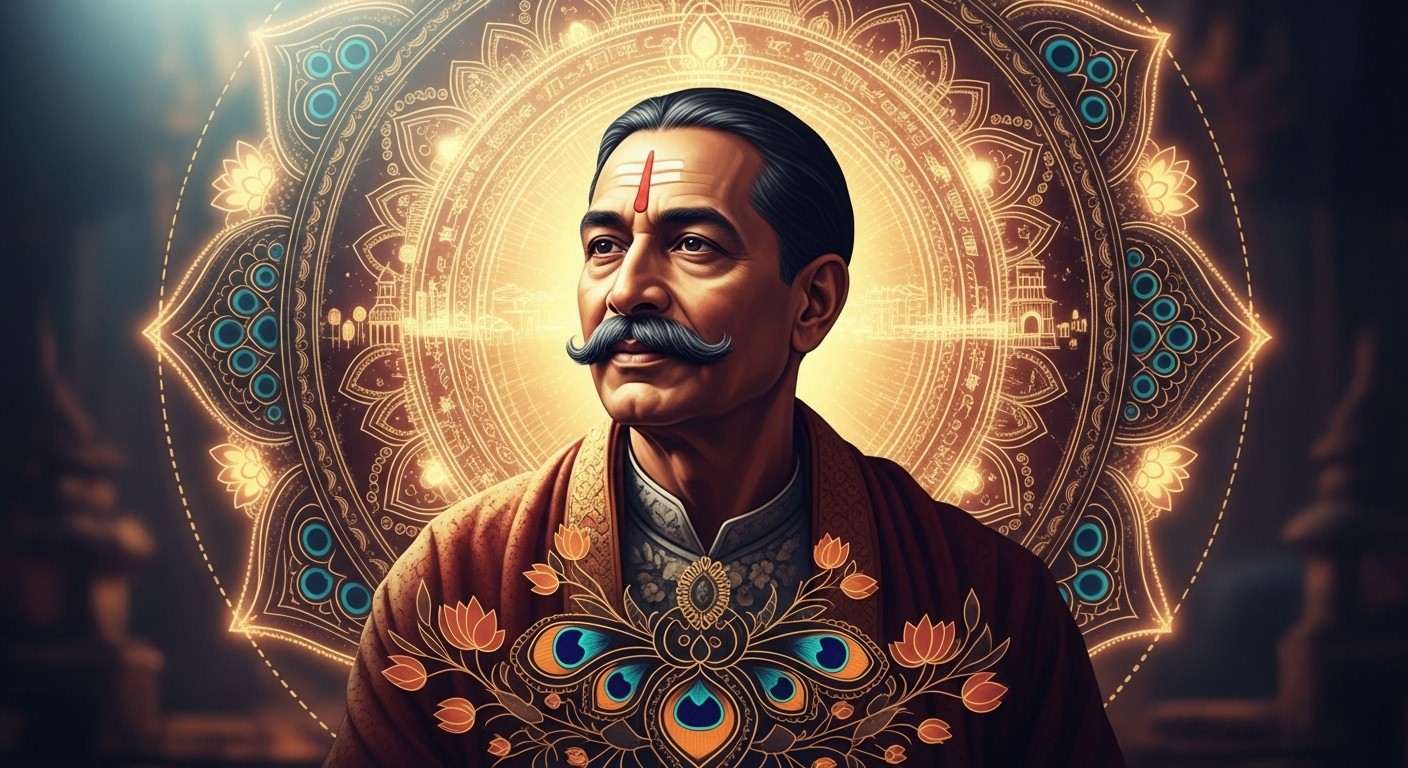
When we look back at the glorious history of our nation’s freedom struggle, certain names resonate with a quiet yet profound strength. Mahadev Desai was one such extraordinary soul, working selflessly as the trusted confidant and personal secretary to the Father of our Nation. His life story is a beautiful tapestry of deep devotion, brilliant intellect, and an unwavering commitment to the motherland. For generations of Indians who cherish our cultural roots and historical legacy, his journey serves as a beacon of inspiration and duty.
Early Years and Academic Excellence
Born on the auspicious day of January 1, 1892, in the quaint village of Bhadra in Gujarat, this devoted patriot was raised in a culturally rich environment. His father, Haribhai Desai, was a dedicated school teacher, and along with his mother, Jamnabehn, instilled strong ethical values in him from a tender age. Rooted deeply in Indian traditions, he entered into matrimony with Durgabehn in the year 1905, marking the beginning of a personal life grounded in familial commitment.
He was an exceptionally bright student who went on to study at Elphinstone College in Mumbai, where his deep-seated passion for literature and philosophy blossomed. This educational foundation, combined with his mastery over languages like English, Gujarati, and Hindi, perfectly prepared him for the monumental tasks that lay ahead in the service of the country.
The Spiritual and Political Bond with Bapu
The defining moment of his destiny arrived in 1917 when he crossed paths with Bapu. He soon became a devoted disciple, managing crucial administrative duties and attending to ashram guests for a remarkable span of 25 years. Relocating to the Sabarmati Ashram that very year, his presence became so indispensable that in 1919, following an arrest in Punjab, Gandhi Ji actually named this brilliant aide as his rightful heir.
Scholars and historians affectionately describe him as “Gandhi’s Boswell, a Plato to Gandhi’s Socrates, and an Ananda to Gandhi’s Buddha.” This beautiful comparison highlights a spiritual and intellectual bond that transcended mere political association. He was not just a secretary; he was a mirror to the great Mahatma’s thoughts.
A Legacy of Courage and Literary Brilliance
His immense contributions to the independence movement were multifaceted, balancing on-ground activism with intellectual documentation.
- Unwavering Dedication to Non-Violent Protests: This great thinker played an instrumental role in organizing massive non-violent resistances against British colonial rule. He worked tirelessly on the ground during historic events like the Champaran Satyagraha and the Bardoli Satyagraha, enduring multiple arrests and long imprisonments for the sheer love of our beloved nation’s liberty.
- Literary Contributions and Global Outreach: Beyond his administrative brilliance, he was a highly gifted writer, translator, and editor. Taking charge as the editor of Navajivan in 1924, he later translated the Mahatma’s iconic autobiography into English starting in 1925. By serializing it in Young India, he ensured the profound message of truth and non-violence resonated beautifully with audiences worldwide.
The Supreme Sacrifice for the Motherland
His sudden and tragic passing on August 15, 1942, while imprisoned at the Aga Khan Palace in Pune during the Quit India Movement, left an irreparable void in the heart of the nation. Even in his passing, his spirit of sacrifice remained unbroken. Today, his detailed diaries, articles, and books—such as ‘With Gandhi in Ceylon’ and ‘Day-to-Day with Gandhi’—continue to be invaluable treasures for anyone looking to understand the pure essence of our freedom movement.
Honoring Our Roots with Poojn.in
Understanding the monumental sacrifices of our freedom fighters naturally brings us closer to our cultural and historical roots. At Poojn.in, we are deeply committed to keeping this rich heritage alive by providing authentic cultural goods online to homes across India.
As India’s biggest cultural goods and services store, we take pride in offering items that resonate with your faith and traditions. Please note that we focus entirely on providing authentic physical items; we do not offer travel packages, pilgrimage guidance, or VIP darshan services of any temples. Our sole mission is to help you practice your rituals and connect with your roots right from the peaceful comfort of your home.
If you wish to dive deeper into the inspiring lives of prominent Indian personalities, we invite you to explore our carefully curated selection of cultural literature and authentic ritual items. For any inquiries, to seek guidance on our products, or to seamlessly place an order, simply contact us at 03369029784 or send a warm WhatsApp message to 9476142738. Experience the true essence of Indian tradition with the modern convenience of our online store.
Frequently Asked Questions About the Great Freedom Fighter
Who exactly was this prominent figure in India’s history?
He was a revered Indian independence activist and the most trusted associate of the Father of the Nation. Serving as a dedicated secretary and intellectual companion, he played a pivotal role in organizing national campaigns and documenting the core philosophies of our non-violent freedom struggle.
What are the key highlights of his early life?
Born on January 1, 1892, in the village of Bhadra, Gujarat, his early years were shaped by a traditional and academically rich environment. After marrying Durgabehn in 1905 and completing his studies at Elphinstone College, he soon immersed himself entirely in the national movement, dedicating his existence to the cause of a free India.
How did he contribute to Bapu’s vision and daily work?
He acted as a crucial mediator, a meticulous record-keeper, and a brilliant translator for the national movement. By managing the ashram’s daily affairs, maintaining detailed diaries, and translating vital texts into English, he ensured that the sacred philosophies of Satyagraha were communicated effectively across the globe.
Did he author any significant literary works during his life?
Yes, his literary legacy is incredibly rich and historically invaluable. He authored insightful books, daily diaries, and heartfelt letters that capture the day-to-day realities of working alongside top leaders, providing future generations with an authentic, front-row view of India’s fight for justice.
When did the nation lose this great patriot?
He breathed his last on August 15, 1942, while facing imprisonment at the Aga Khan Palace in Pune. His passing was mourned deeply across the entire country, marking the loss of a brilliant mind and a deeply devoted soul who joyfully gave everything for the love of his motherland.