

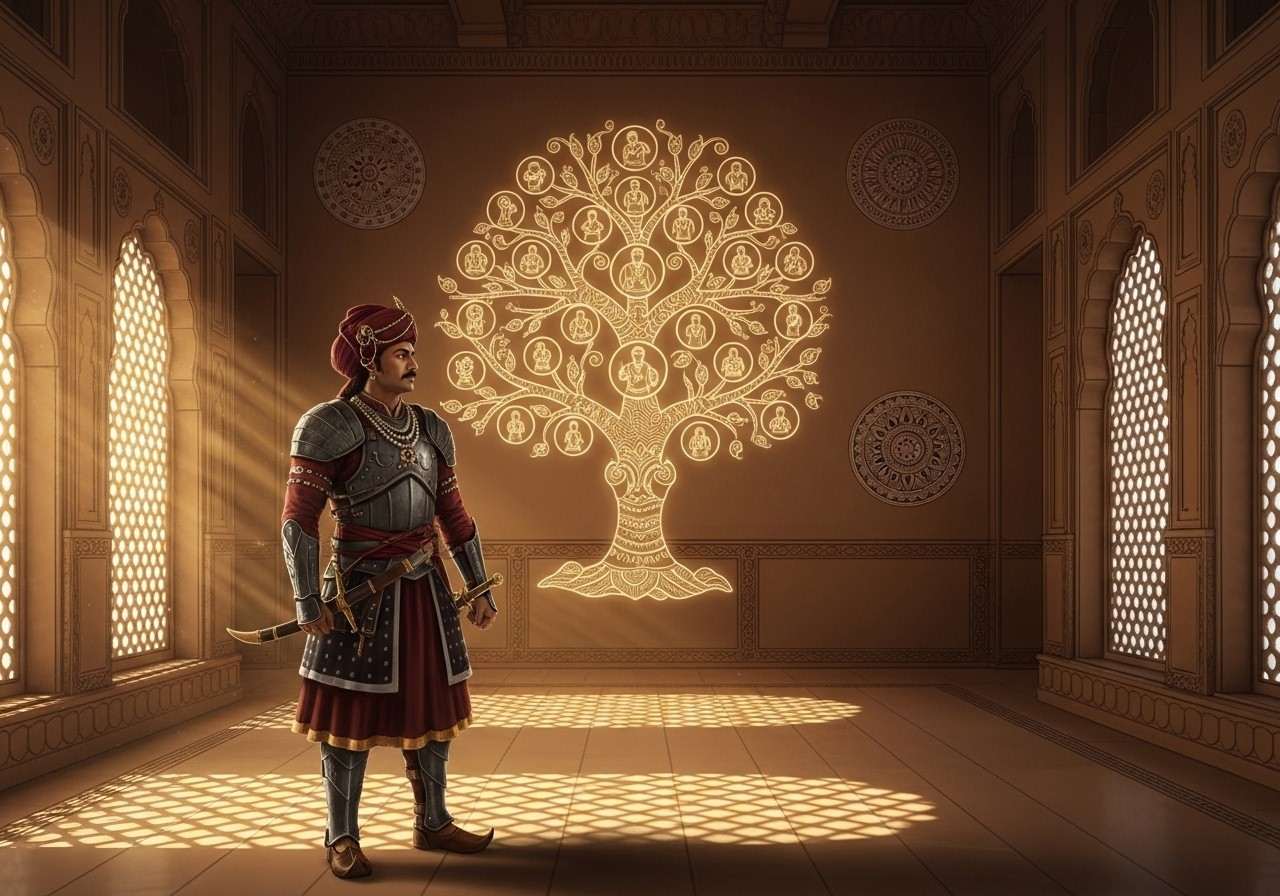
The chronicles of our motherland are beautifully woven with tales of extraordinary valor, and few stories shine as brightly as the legacy of Bappa Rawal. For deeply rooted Indians who cherish authenticity and revere the sacrifices of our ancestors, exploring the family tree of this iconic sovereign offers a profound connection to our shared heritage. Understanding the lineage of Prince Kalbhoj—as he is affectionately and historically known—helps us truly appreciate the vibrant cultural and historical fabric of Rajasthan.
Discovering Bappa Rawal’s Sacred Ancestral Roots
Bappa Rawal was not just a king; he was a visionary who altered the course of Indian history as the eighth ruler of the Guhilot Rajput Dynasty. Belonging to the esteemed Atri clan, his lineage traces back to a highly influential line of Rajput sovereigns. His ancestral background laid the very foundation for his unshakeable moral compass and fierce leadership.
His father, Rawal Mahendra II, was a significant figure who nurtured the cultural and political environment that would eventually shape his son’s monumental destiny. Moreover, spiritual grace heavily influenced his rise to power. According to cherished local legends, Bappa received the blessings and the very kingdom of Mewar from the revered sage Harit Rishi. These divine tales do not merely add to his mythic status; they reflect the deep spiritual environment of ancient India, where dharma and kingship walked hand in hand.
The Powerful Reign and Monumental Achievements of Prince Kalbhoj
Ruling from 734 to 753 CE, Bappa Rawal is celebrated as the undisputed founder of the mighty Mewar Dynasty. His reign was marked by extraordinary military prowess, most notably his successful campaigns to protect the subcontinent from foreign Arab invaders. His phenomenal battlefield successes safeguarded our culture and solidified a reputation of bravery that resonates even today.
Beyond his martial achievements, Bappa Rawal was a master of diplomacy, forming strategic alliances with neighboring kingdoms that fortified Mewar’s standing. Under his watchful eye, the region experienced an incredible surge in architectural and cultural growth, with magnificent forts and sacred temples being constructed. He essentially laid down the bedrock upon which the future glories of Mewar would be built, forever influencing the proud Rajput identity.
Tracing the Illustrious Descendants of the Mewar Dynasty
The legacy of a great ruler is often carried forward by the strength of his successors, and Bappa Rawal’s lineage is a prime example of enduring resilience. It is historically noted that he married several women and fathered over a hundred children, ensuring a massive and strong familial network. Upon his retirement from the throne in 753 CE, his capable son, Rahul Kumman, took over the reins of the kingdom to uphold his father’s magnificent legacy.
The subsequent generations of rulers faced numerous challenges but continued to expand and protect the sacred land of Mewar. Historical inscriptions proudly document a continued line of formidable descendants, including Guhil, Khuman I, Bhoj I, Khuman II, Mahendra I, Allat, Khuman III, and Mahendra II. The women in this illustrious lineage, particularly the influential queens, also played a phenomenal role in preserving the cultural and political stability of the kingdom. Together, these descendants preserved the sacred traditions initiated by their forefather, ensuring the Mewar dynasty remained a beacon of hope and strength.
Understanding the Enduring Cultural Significance of His Legacy
The profound impact of Bappa Rawal’s lineage on the cultural identity of Rajasthan and the broader Indian community simply cannot be overstated. His descendants acted as passionate guardians of our region’s rich heritage, deeply influencing the evolution of local art, magnificent architecture, and timeless literature. Today, as we explore these awe-inspiring historical narratives, we pay heartfelt homage to the foundational contributions that shaped modern India.
This enduring story of honor, spiritual devotion, and familial duty continues to guide future generations. Historical research and modern archaeology continually uncover new facets of his dynasty’s massive influence, ensuring that the legendary Prince Kalbhoj is never forgotten in contemporary times.
Embrace Your Heritage with Authentic Offerings from Poojn.in
As you immerse yourself in the awe-inspiring history of Prince Kalbhoj and his royal descendants, you may naturally feel inspired to honor your own ancestral traditions. Exploring the lives of such monumental figures reminds us of the importance of maintaining our spiritual roots. At Poojn.in, India’s biggest cultural goods store, we are deeply committed to helping you preserve these sacred practices right in the comfort of your home. While we do not offer travel packages, temple guidance, or VIP darshan services, we specialize entirely in providing the finest cultural and spiritual goods.
We offer a beautifully curated range of cultural products that perfectly complement your traditional lifestyle:
- Traditional Puja Essentials: Our meticulously curated collection includes authentic, high-quality items that help you perform your daily rituals and ancestral offerings with absolute purity and ease. By using genuine cultural goods, you can beautifully honor the timeless traditions passed down by great historical figures like those of the Mewar dynasty.
- Spiritual and Cultural Literature: If you wish to dive deeper into the glorious epochs of Indian history and the profound spiritual wisdom of our ancestors, explore our thoughtful selection of cultural texts. Reading about the sacrifices, rituals, and triumphs of our forebears keeps their enduring spirit alive in our modern, everyday lives.
- Heritage-Inspired Home Decor: You can easily add a touch of timeless tradition and sacred elegance to your living space with our carefully sourced traditional decorative items. These beautiful, culturally rooted pieces serve as a daily reminder of the rich spiritual tapestry and the proud ancestral lineage that we all collectively share.
To seamlessly integrate authenticity into your daily worship, please visit our online store at Poojn.in today. For any inquiries about our exclusive range of cultural goods, feel free to contact our warm and welcoming team at 03369029784, or conveniently reach out to us via WhatsApp at 9476142738.
Frequently Asked Questions About the Ancestry and Descendants of Bappa Rawal
Who was the father of this legendary Rajput king?
Bappa Rawal’s father was Rawal Mahendra II, a highly respected ruler from the ancient Guhila lineage. His father’s reign and the values of the Atri clan significantly influenced the young prince’s royal upbringing and his future administrative brilliance.
Which royal house did the great sovereign belong to?
He proudly belonged to the Guhilot Rajput Dynasty, specifically hailing from the Atri clan. This esteemed dynasty is undeniably one of the most notable and historically significant royal houses in the vibrant history of Rajasthan.
Who carried forward his magnificent legacy?
His legacy was carried forward by a strong line of successors, starting with his son, Rahul Kumman, who ascended the throne in 753 CE. The royal lineage continued powerfully with notable kings such as Guhil, Khuman I, Bhoj I, Khuman II, Mahendra I, Allat, Khuman III, and Mahendra II, all of whom steadfastly protected the Mewar region.
How did his leadership permanently influence his dynasty?
He is rightfully credited with firmly establishing the Guhila dynasty’s massive prominence by transitioning it into the formidable Mewar Dynasty. Through his unmatched military prowess against foreign invaders and his deep spiritual convictions, he secured a prosperous and secure future for his people.
What spiritual legends surround his ascension to the throne?
One of the most revered stories is that he received his kingdom and divine blessings from the revered sage Harit Rishi. This beautiful legend highlights the deep spiritual foundation of his rule and the traditional Indian belief in seeking the grace of enlightened masters.
Why does his historical lineage remain so important today?
His family tree represents the ultimate symbol of indigenous resistance, cultural preservation, and traditional values. Today, particularly in Rajasthan and among culturally rooted Indians everywhere, his descendants and their historical contributions are celebrated for keeping our profound heritage alive and flourishing.