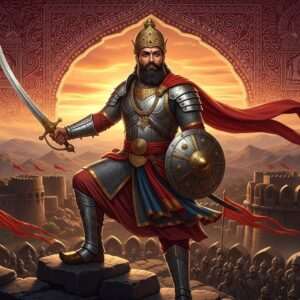


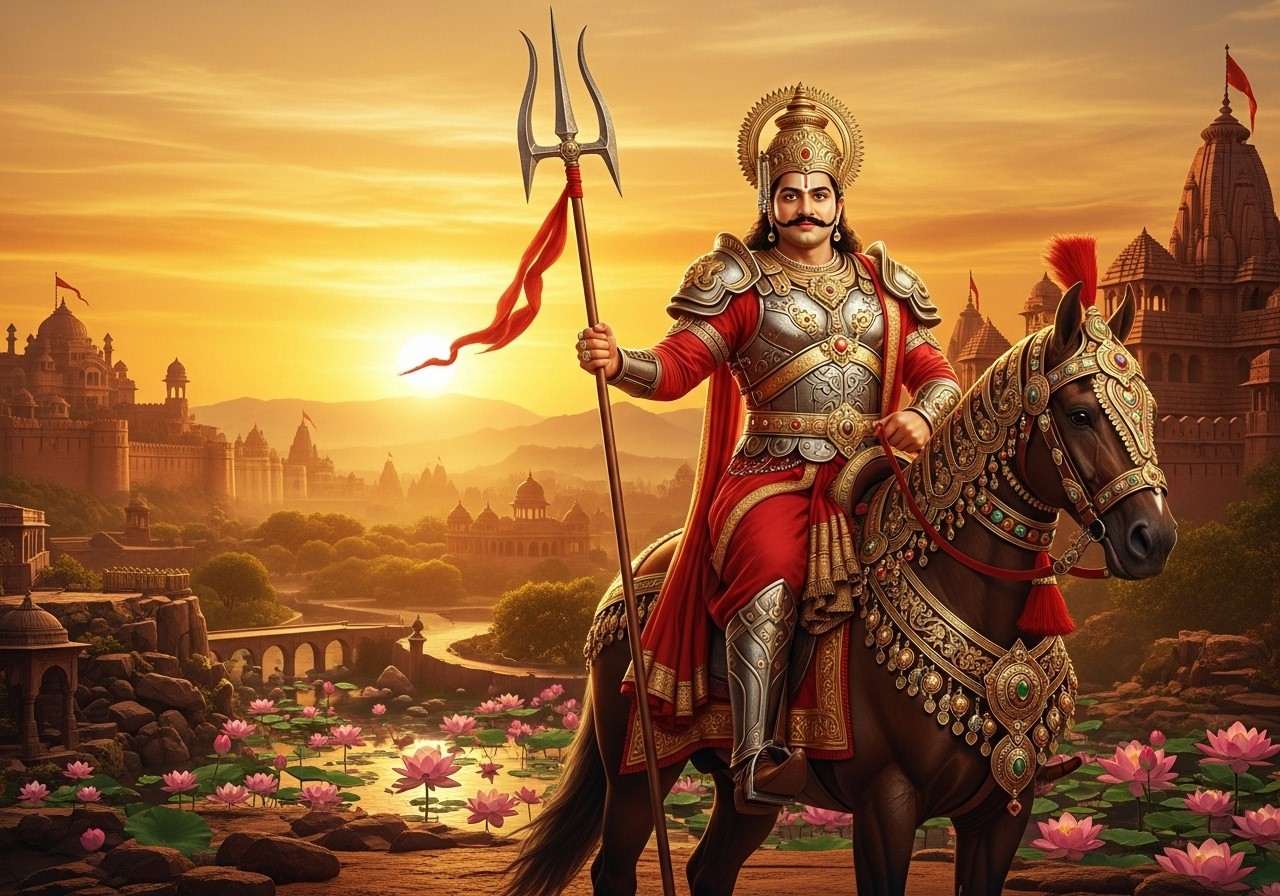
When we turn the golden pages of our rich Indian history, certain names evoke a profound sense of pride, devotion, and reverence for our motherland. The rise of Bappa Rawal’s empire stands as a pivotal and glorious chapter in the preservation of our Sanatana Dharma. As the visionary who founded the Mewar dynasty, his reign in the 8th century was not just about territorial expansion, but about safeguarding the very soul of our civilization during a time of intense regional conflicts. Understanding his monumental sacrifices and deep-rooted influence helps us truly appreciate the spiritual traditions and values we cherish in our homes today. His legacy is permanently woven into the vibrant cultural and historical tapestry of Rajasthan.
Origins of a Legend: Prince Kalbhoj and the Birth of Mewar
The remarkable journey of this great leader begins in the culturally vibrant landscape of the 8th-century Indian subcontinent. Born as Prince Kalbhoj, Bappa Rawal rose to become the eighth ruler of the Guhilot Rajput Dynasty. Ruling from 734 to 753 CE, he earned his place in history as the formidable founder of the Mewar Dynasty. Against the broader backdrop of the Gurjara-Pratihara era, his ascent to the throne was characterized by brilliant strategic alliances and unmatched martial skills.
His deep love for the motherland drove him to fiercely defend our borders against foreign incursions, thereby preserving our timeless customs and rituals. By utilizing the challenging yet strategic geography of Rajasthan, he steadily expanded his territories. Under his protective and just rule, diverse communities flourished together, ushering in an era of immense prosperity, spiritual devotion, and cultural unity.
Strategic Brilliance: Expansion and Military Campaigns
Bappa Rawal was an extraordinary military tactician whose campaigns reshaped the boundaries of the known world. His innovative defensive strategies and relentless courage made him one of the most powerful and celebrated rulers of his time.
- Forming a Formidable Hindu Confederacy: Recognizing the severe threat of early medieval invasions, Bappa Rawal created an incredibly strong confederacy of brave warriors. By uniting regional Hindu rulers, notably forging a vital alliance with the Pratihara king Nagabhata I, he successfully halted Arab attacks and prevented the Umayyad expansion from ever crossing the sacred waters of the Indus River.
- The Legendary ‘Battle of Rajasthan’ and Beyond: Leading a series of fierce confrontations, he decisively defeated Arab invaders, famously chasing commanders like Bin Qasim back to the western banks of the Sindhu. He completely turned the tide of history by launching sixteen highly successful attacks in the northwest, ultimately driving the invaders far beyond Ghazni in Afghanistan.
- Establishing Global Vassal States: Bappa Rawal’s mighty empire did not just stop at the borders of modern-day India; it expanded remarkably deep into Central Asia. His territorial reach extended to Sindh, Baluchistan, Ghazni, and Kandahar, successfully making distant kingdoms such as Khorasan, Turan, Isfahan, and even parts of Iran loyal vassals to his majestic throne.
- Capturing Strategic Strongholds: A defining moment in his early rise occurred when he overthrew the Mori rulers of Chittorgarh in 726 CE. Later, around 745 CE, his disciplined forces officially seized the formidable Chittor Fort, securing a crucial, impenetrable stronghold that would serve as the beating heart of Rajput resistance for centuries to come.
- Securing the North West Frontier: To discourage any further foreign invasions and protect the subcontinent’s spiritual heritage, Bappa Rawal strategically established a massive military base in Rawalpindi. From this crucial launchpad, he strengthened border defenses and even constructed vigilant watchtowers stretching all the way to Iran.
Cultural Triumphs and Preserving the Parampara
It is important to remember that Bappa Rawal’s empire was not solely defined by its military might. His prosperous reign sparked a magnificent renaissance in culture, spirituality, and architecture. Breathtaking temples and majestic fortresses from his era still stand today as towering testaments to his grand vision. He was a deeply devoted patron of the arts, ensuring that ancient literature, sacred rituals, and local traditions thrived under his protective umbrella.
Because of his unwavering dedication, religious and educational institutions flourished, safeguarding the Hindu way of life for future generations. The vibrant environment he fostered allowed ancient Vedic traditions and everyday household rituals to find a renewed, breathing life. It is precisely because of defenders like him that our vibrant festivals, aartis, and pujas continue to resonate with the same purity today.
Honoring the Legacy Today: Discover Authentic Ritual Items
When we reflect upon the greatness of Bappa Rawal and his dedication to our heritage, we are naturally inspired to deepen our own connection with our spiritual roots. At Poojn.in, we share this profound respect for our ancestral traditions. As India’s largest and most trusted cultural goods online store, we are dedicated to helping you bring the sanctity of these ancient practices directly into your home.
While we humbly remind our patrons that we do not offer travel packages, pilgrimage guidance, or VIP temple darshans, our true expertise lies in providing the finest, authentic cultural goods. Our meticulously curated online store is your perfect companion for every spiritual occasion. Whether you are performing a simple daily prayer or a grand festive ritual, you will find everything you need in our collection.
If you are looking for premium quality spiritual essentials, we invite you to browse our sacred offerings at https://www.poojn.in/. From beautifully crafted idols that inspire devotion to comprehensive puja kits that honor our age-old parampara, our products are crafted for those who deeply value the authenticity of Indian rituals. Experience the joy and convenience of ordering genuine cultural goods straight to your doorstep. Should you have any inquiries, our welcoming team is always here to assist you at 03369029784 or via WhatsApp at 9476142738.
Succession, Governance, and the Eternal Imprint on Rajasthan
The continuity of such a vast and prosperous dynasty was not left to chance. Through incredibly effective governance and thoughtful succession planning, Bappa Rawal ensured lasting stability. His descendants bravely adapted to the shifting tides of history, continuing to defend their sacred land against subsequent challenges. This enduring resilience has been lovingly documented in local folklore, historical texts, and the very stones of Rajasthan’s forts.
Today, the echo of Bappa Rawal’s greatness reverberates through the majestic state of Rajasthan. The architectural marvels he commissioned draw historians and spiritual seekers alike. By remembering his immense contributions, we foster a deep sense of pride and cultural unity among all Indians, ensuring his memory remains a guiding light for our future.
Exploring the History: Common Inquiries About the Mewar Founder
Who exactly was this legendary ruler? He was a celebrated king of the Mewar region, originally born as Prince Kalbhoj. History fondly remembers him as the brave 8th-century ruler who formally established the Guhila dynasty and significantly expanded his kingdom’s borders to protect his people.
What makes his empire so important in our history? His era is celebrated not just for military dominance, but for its incredibly rich cultural heritage and architectural advancements. The establishment of the Mewar dynasty formed a crucial wall of defense against early foreign invasions, allowing Indian culture to flourish undisturbed.
During which period did he shape our history? His reign took place in the 8th century, specifically from 734 to 753 CE. This was a critical period marked by sweeping territorial expansion, consolidation of royal power, and the staunch defense of the Indian subcontinent.
How did he manage to extend his territories so vastly? Through a brilliant combination of strategic regional alliances—like joining forces with Pratihara king Nagabhata I—and relentless military conquests, he expanded his rule. He backed this up by strengthening his kingdom’s internal administration and defensive infrastructure.
Why is the Guhila dynasty considered so significant? Founded by this great warrior, the Guhila dynasty holds a sacred place in Indian history for its unwavering resistance against foreign invaders and its immense contributions to temple architecture, traditional arts, and the preservation of dharma.
Where was the heart of this historical kingdom located? The core of his dynasty was situated in the Mewar region of present-day Rajasthan. From this culturally rich heartland, his powerful and influential kingdom extended its reach across the northwest frontiers.
Why does his name still evoke such deep respect today? We remember him for his selfless leadership, extraordinary bravery, and his vision in establishing a dynasty that fiercely protected the spiritual and cultural identity of India. He represents the ultimate defender of our matrubhumi.
What are considered his greatest historical achievements? His most notable triumphs include the decisive defeat of Umayyad and Arab invaders, the capture of the formidable Chittor Fort around 745 CE, expanding his empire’s influence as far as Iran, and heavily promoting the arts, traditions, and spiritual institutions of his time.