

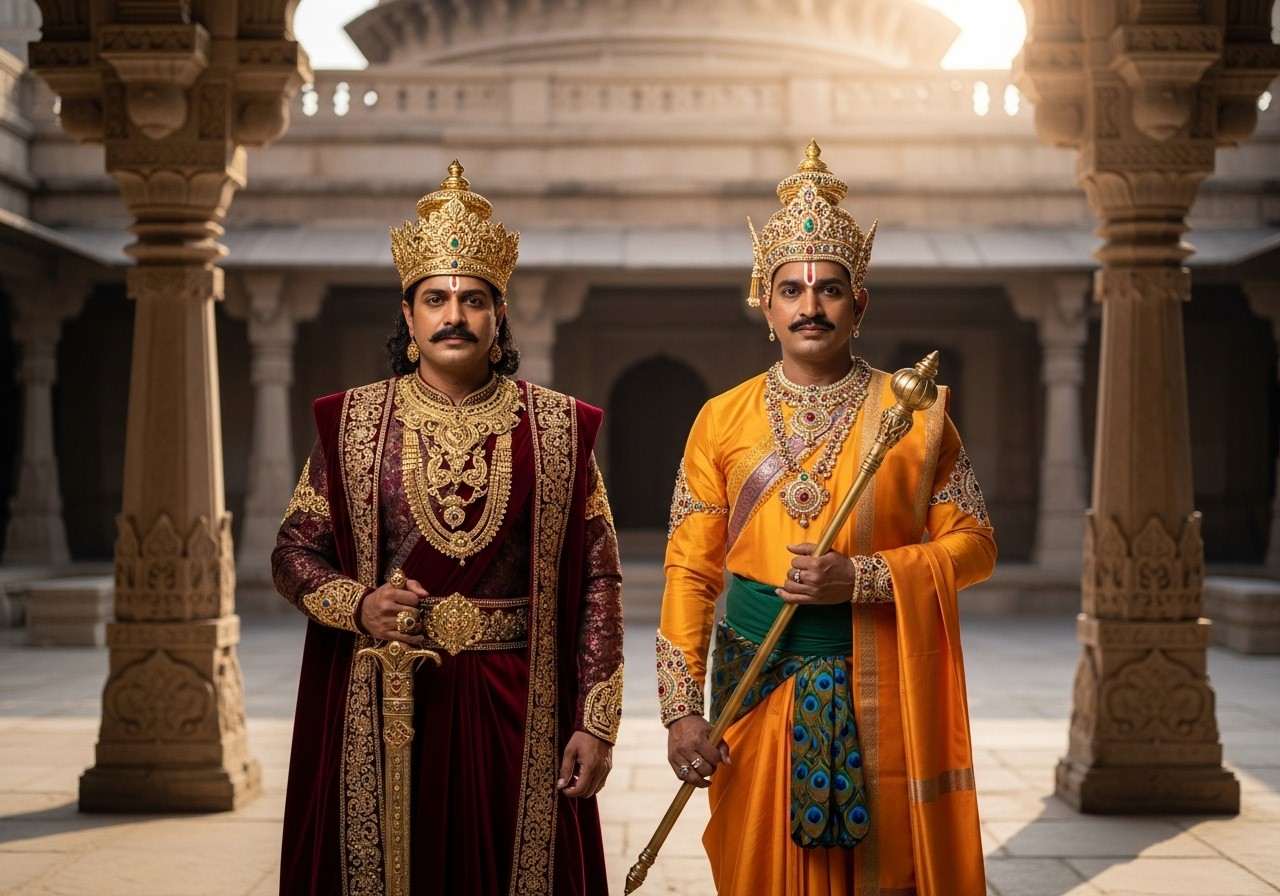
In the vibrant and deeply spiritual tapestry of ancient Indian history, two majestic kings have left an indelible mark on our subcontinent: Bindusara and Bimbisara. Because their names sound so remarkably similar, it is very natural for many of us to confuse the two or assume they belonged to the same era. However, delving into their stories reveals that they walked this earth centuries apart and shaped our glorious past in vastly different ways. Understanding the distinct legacies of these rulers is not just a lesson in history; it is a beautiful way to appreciate the diverse and complex roots of our culture.
Bimbisara: The Architect of Magadha’s Prominence
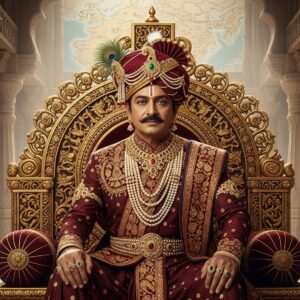
Let us first travel back to the 6th century BCE, a time of immense spiritual and political awakening in India. During this era, Bimbisara emerged as a visionary king of the Haryanka dynasty. Often referred to affectionately as ‘Shrenika’ in revered Jain literature, he is celebrated for laying the foundational stones that made the Magadha Empire a dominant force. His initial capital was the historically rich city of Girivraja, known today as Rajagriha, and he also played a crucial role in the early development of Pataliputra.
Bimbisara was a monarch who believed in the power of harmony and strategic alliances, utilizing diplomatic marriages to expand his political influence. He successfully annexed the territory of Anga, showcasing his administrative brilliance. Beyond his territorial conquests, Bimbisara held a deep reverence for spiritual growth. He was a devoted patron of both Buddhism and Jainism, offering immense support and resources to monastic communities. Tragically, his reign came to a sorrowful end when he was imprisoned and killed by his own son, Ajatashatru, who then succeeded him to the throne.
Bindusara: The Great Mauryan Heir
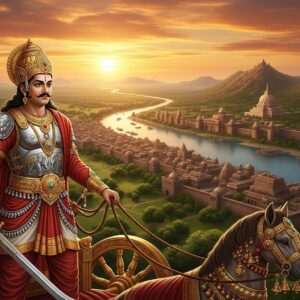
Centuries later, in the 3rd century BCE, the Indian subcontinent witnessed the rise of another formidable ruler: Bindusara. Belonging to the illustrious Mauryan dynasty, he was the proud son of the legendary Chandragupta Maurya. To the Greeks, he was famously known as “Amitrochates,” a powerful title that translates to the “destroyer of foes.” Bindusara inherited a vast empire and brilliantly extended the boundaries of the Mauryan Dynasty all the way down to Mysore, maintaining peace and prosperity throughout his realm.
Unlike his predecessor Bimbisara, Bindusara’s spiritual inclinations took a different path. He was known to be an earnest disciple of Guru Pingalavatsa, a learned Brahmin associated with the Ajivika sect. His administration was highly efficient, continuing the robust governance established by his father while encouraging rich cultural exchanges with the Hellenistic world. After a life dedicated to the expansion and protection of his empire, Bindusara was succeeded by his son, the great Emperor Ashoka, who would go on to change the course of Indian history forever.
Crucial Distinctions Between the Two Legends
While both sovereigns ruled over the Magadha Empire at different points in time, their journeys were unique. Here are the primary differences that set them apart:
- Time Period and Lineage: Bimbisara graced the Indian subcontinent much earlier, specifically reigning during the 6th century BCE as a prominent leader of the Haryanka dynasty. On the other hand, Bindusara took the throne significantly later in the 3rd century BCE, carrying forward the grand legacy of the mighty Mauryan dynasty.
- Spiritual Affiliations and Patronage: Their religious beliefs heavily influenced their reigns and cultural contributions. Bimbisara is remembered for his active and heartfelt patronage of early Buddhism and Jainism, while Bindusara sought spiritual guidance from the Ajivika sect, specifically under the tutelage of Guru Pingalavatsa.
- Titles and Historical Recognition: History has bestowed different titles upon these rulers that reflect their individual personas. Bimbisara is fondly referred to as Shrenika within ancient Jain texts, whereas Bindusara earned the fierce title of “Amitrochates” from the Greeks, honoring his reputation as a destroyer of enemies.
- Territorial Expansion and Capitals: While Bimbisara laid the early groundwork by annexing Anga and developing the capital of Girivraja, Bindusara inherited an already massive empire and ambitiously pushed its borders southward, successfully extending the Mauryan territories all the way to Mysore.
- Succession and Final Days: The conclusion of their lives presents a stark contrast in our historical records. Bimbisara faced a deeply tragic end, imprisoned and killed by his successor and son, Ajatashatru. Conversely, the exact details of Bindusara’s passing are less documented, but he famously passed the Mauryan crown to his historically monumental son, Ashoka.
Clarifying Common Confusions and Misconceptions
Because their names share a rhythmic similarity, it is a very common misconception to assume these two figures were closely related or even the exact same person. It is vital to remember that Bindusara was not Bimbisara’s son; his father was the great Chandragupta Maurya. However, some fascinating historical accounts and local tales do suggest that Bindusara might have been a 10th-generation descendant of Bimbisara. This mix-up is perfectly understandable since both leaders were deeply invested in the prosperity of Magadha and held strong religious convictions, even though their specific faiths and ultimate contributions were distinctly their own.
Connecting with Our Heritage Through Authentic Cultural Goods
Exploring the remarkable lives of ancient rulers like Bindusara and Bimbisara often fills our hearts with a profound sense of pride and a desire to connect more deeply with our spiritual roots. Reading about the grandeur of the Magadha Empire or the spiritual depth of the Mauryan era reminds us of the timeless traditions that have been passed down through generations. If this journey into the past has inspired you to bring a touch of traditional sanctity into your everyday life, Poojn.in is here to help you celebrate our cultural legacy.
As India’s most trusted destination for cultural items, we understand the emotional and spiritual value of preserving our customs. We proudly offer an exclusive, carefully curated collection of authentic cultural goods and ritual essentials through our online store. Whether you are looking for traditional literature to educate your family about our ancient history or seeking pure, high-quality ritual items for your daily prayers, you will find exactly what you need with us. Please note that we exclusively sell cultural goods through our online platform and do not offer travel packages or VIP temple darshan services, ensuring our complete focus remains on providing you with the finest traditional products. For any assistance or to explore our offerings, feel free to reach out to us at 03369029784 or send a warm WhatsApp message to 9476142738.
Addressing Common Inquiries About These Historical Figures
Understanding the Identity of Bindusara
For those curious about his background, Bindusara was the esteemed second emperor of the Mauryan Empire. Born to the legendary Chandragupta Maurya, he was instrumental in expanding the Mauryan territories, maintaining incredible stability across the subcontinent, and ultimately passing the baton of leadership to his famous son, Ashoka.
Uncovering the Story of Bimbisara
When discussing the origins of the Magadha empire’s greatness, Bimbisara is a name that always comes up. He was a foundational ruler of the Haryanka dynasty in ancient India. Reigning during the 6th century BCE, he was highly regarded for his diplomatic brilliance, his administrative reforms, and his early, vital support of spiritual traditions like Buddhism and Jainism.
Clearing the Confusion Between the Two Kings
It is a common question whether these two prominent names refer to the same individual. They definitely do not. While both are monumental figures in our past, they are separated by hundreds of years. The primary distinction lies in their timelines and dynastic roots: one was an early architect of Magadha’s power in the 5th and 6th centuries BCE, and the other was an heir to the massive Mauryan kingdom in the 3rd century BCE.
The Remarkable Achievements of Both Rulers
Both kings left legacies that shaped the future of the nation. Bindusara’s greatest triumph was the consolidation and southward expansion of an already vast empire, ensuring peace that allowed culture and trade to thrive. Bimbisara, conversely, is credited with taking a regional kingdom and transforming it into a significant political power through smart alliances, all while laying down an administrative framework that future generations would rely upon.