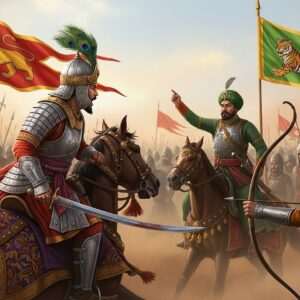


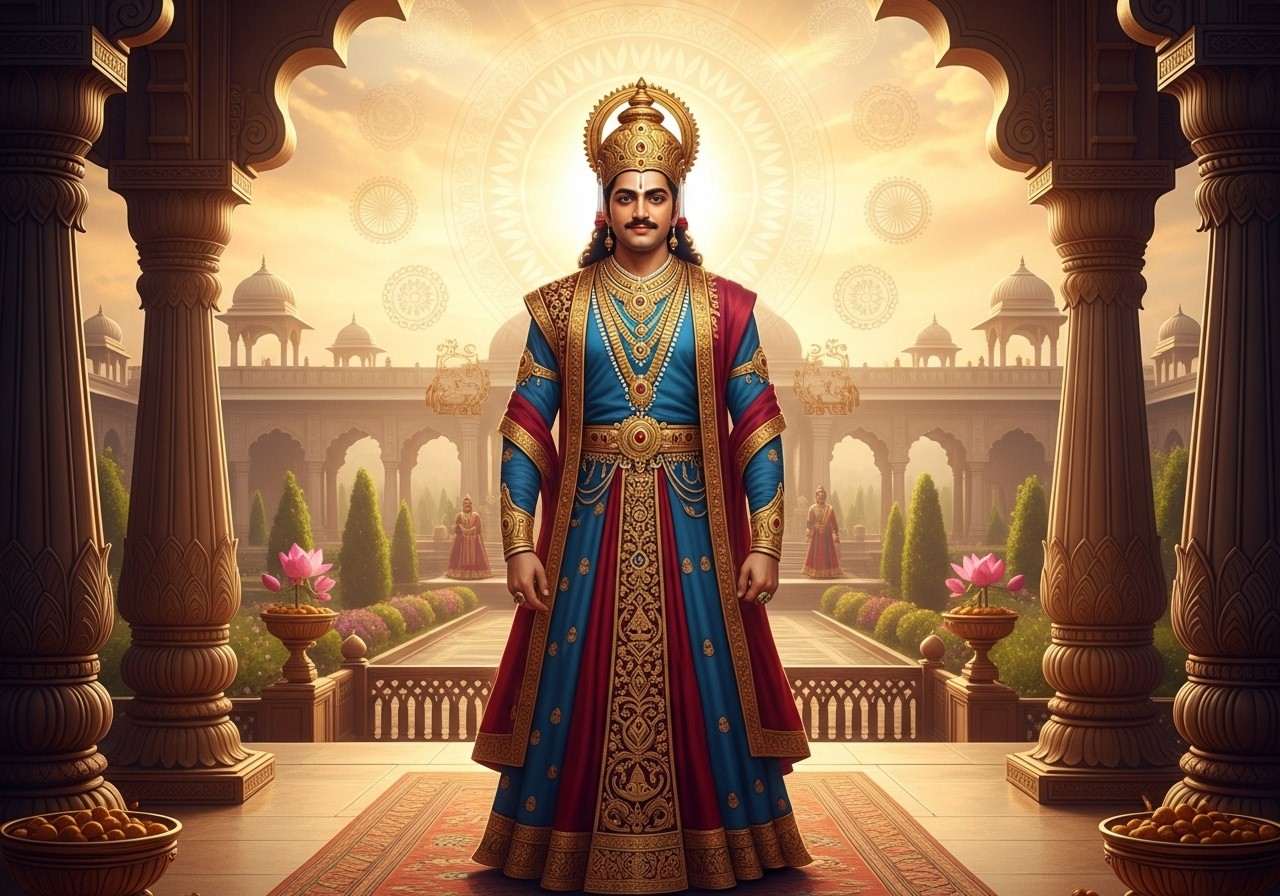
Namaste! When we look back at the vast and culturally rich history of our beloved Bharat, the Mauryan Empire stands tall as one of the most powerful and transformative dynasties to have ever graced the Indian subcontinent. Tracing our roots back to these glorious times fills us with immense pride and a deep sense of connection to our ancestors. Today, we are taking a gentle walk through the corridors of time to explore the monumental legacy left behind by this magnificent empire. We will beautifully unravel the life, parentage, and pivotal role of Bindusara, the second visionary emperor who seamlessly bridged the gap between his legendary father, Chandragupta Maurya, and his illustrious son, Ashoka the Great.
The Foundation of a Golden Era: The Mauryan Dynasty
The incredible story of the Mauryan dynasty began around 321 BCE, forever altering the spiritual and political landscape of our nation. Under the exceptional leadership of Chandragupta Maurya, India saw the birth of unprecedented administrative reforms and the beautiful spread of profound spiritual philosophies, including Buddhism. It was a time when the geographical boundaries of the empire stretched far and wide, uniting diverse regions under a single, strong umbrella of governance.
When the time came to pass the baton, Bindusara stepped up to seamlessly continue this grand expansion. His deeply rooted commitment to strengthening the empire’s hold across India ensured a period of immense stability and prosperity. The Mauryan era’s profound influence on our economy, rich culture, and public administration laid the very groundwork for the future of Indian civilization, weaving a rich tapestry of traditions that we still celebrate in our daily lives.
Understanding Bindusara’s Parentage: The Royal Lineage
Stepping into the shoes of a giant is never easy, but Bindusara inherited a formidable legacy of power, wisdom, and influence. His father, the great Chandragupta Maurya, had miraculously risen from humble beginnings to forge an empire of unmatched scale, heavily supported by the sharp intellect and wise counsel of his esteemed advisor, Chanakya.
When it comes to his mother, history beautifully blends with ancient texts. According to the renowned 12th-century Jain scholar Hemachandra in his Parishishta-Parvan, Bindusara’s mother was Empress Durdhara, the beloved consort of Chandragupta. While definitive historical evidence from that exact era is sparse, this text remains our most cherished source. There have been passing speculations that his mother might have been of Greek or Macedonian descent due to Chandragupta’s strategic alliances with the Seleucids, but it is important to note that there is absolutely no historical evidence to support these foreign origins. Our deeply ingrained traditions lovingly remember Empress Durdhara as the mother of this great king.
The Heart-Touching Legend Behind Bindusara’s Birth
Our ancient legends are often filled with sacrifice, wisdom, and divine intervention, and the story of Bindusara’s birth is no exception. It is said that the brilliant Chanakya would discreetly administer tiny, harmless doses of poison into Chandragupta’s daily meals. This was a protective measure designed to slowly build the emperor’s immunity against potential assassination attempts.
Tragically, fate had a different plan one day. Chandragupta, out of deep love, shared his food with his pregnant wife, Empress Durdhara, who was just days away from delivery. Unaccustomed to the toxin, the empress collapsed. In a desperate and dramatic effort to save the royal heir, Chanakya acted swiftly, performing an immediate, ancient form of surgery to deliver the baby. By the time the infant was rescued, a single drop of the poison had touched the baby’s forehead. Because of this, Chanakya affectionately named the child Bindusara, which beautifully translates to “the strength of the drop” or “drop-holder.” Another fascinating local variation of the tale suggests the baby’s body was marked with tiny drops, or “bindu,” of goat’s blood, which also inspired his unique name.
As Bindusara grew and eventually took the throne, his own family tree expanded massively. Historical accounts suggest he was blessed with a remarkably large family, supposedly fathering as many as 101 sons from 16 different queens. Among these many children, the most prominent were his eldest son Sushima and the legendary Ashoka. We must warmly remember that Ashoka’s mother was famously known as Queen Subhadrangi, or Dhamma, a woman of great virtue.
A Reign of Consolidation: Bindusara’s Rule (297 BCE – 273 BCE)
Taking the throne with grace, Bindusara ruled the vast Mauryan Empire from approximately 297 BCE to 273 BCE. For over two decades, he dedicated his life to building upon the monumental accomplishments of his father. Rather than purely seeking new conquests, his heart was focused on maintaining the integrity of the empire and introducing brilliant administrative innovations to keep his people happy and secure.
Often remembered in historical texts as “Amitraghata,” which respectfully means the “Slayer of Enemies,” Bindusara skillfully utilized both strategic military campaigns and warm diplomatic relations to ensure peace. He actively encouraged prosperous trade and cultural enrichment, fostering a vibrant atmosphere where traditional arts and spirituality flourished. His steady and nurturing reign perfectly set the stage for his son, Ashoka the Great, to later elevate India to unprecedented heights of glory.
The Enduring Cultural and Historical Impact of the Mauryas
The golden footprints of the Mauryan dynasty continue to guide us today. Their sincere efforts in spreading moral philosophies and Buddhism significantly shaped the spiritual consciousness of the entire Asian continent. When we visit the awe-inspiring ancient stupas and intricately carved pillars today, we are witnessing the very soul of Mauryan artistic mastery.
Furthermore, the timeless wisdom embedded in the Arthashastra, brilliantly attributed to Chanakya, beautifully highlights the dynasty’s incredibly advanced understanding of human welfare, economics, and political thought. These ancient Indian policies continue to inspire modern administrative and governance structures even today.
Embracing Our Heritage: How Poojn.in Supports Your Cultural Journey
At our core, we Indians hold a profound respect for the divine traditions and the majestic history of our ancestors. Understanding the magnificent era of Bindusara naturally deepens our desire to stay connected to our cultural roots. This is exactly where Poojn.in steps in with an open heart. As India’s largest online destination for authentic cultural goods, we lovingly curate traditional items that perfectly resonate with the spirit of ancient India, making it incredibly easy for you to bring a piece of our glorious heritage directly into your modern home.
- Historical Books and Spiritual Literature: Dive deeply into the fascinating history of the Mauryan Empire and Bindusara’s majestic reign with our handpicked selection of literature. Reading these beautifully written books not only broadens your understanding but also helps you lovingly pass down the tales of our ancestors to the younger generation.
- Authentic Traditional Artifacts: We offer a breathtaking collection of carefully crafted artifacts that are deeply inspired by ancient Indian artistry and craftsmanship. These exquisite pieces serve as a beautiful reminder of our royal past and are wonderful additions to your sacred pooja room or living space.
- Elegant Cultural Decor: Transform the ambiance of your home with our heartwarming cultural decor, which pays a sincere homage to India’s unparalleled historical richness. From intricate wall hangings to divine sculptures, our offerings reflect the true essence of traditional Indian craftsmanship that has survived through millennia.
By bringing home items from Poojn.in, you are actively participating in the beautiful preservation of India’s cultural heritage, all from the comfort and convenience of your home. For personalized assistance with our pure, cultural goods, please feel free to warmly connect with us at 03369029784, or drop a quick WhatsApp message at 9476142738.
Conclusion: Celebrating the Heartbeat of the Mauryan Legacy
As we take a moment to lovingly reflect on the life, dynasty, and parentage of Bindusara, we are met with a beautiful tapestry woven with threads of raw power, deeply held traditions, and inspiring innovation. His compelling story, rooted in the foundational brilliance of Chandragupta and the protective wisdom of Chanakya, beautifully showcases the resilience of a truly great Indian empire. Bindusara served as the essential, stabilizing bridge between the visionary dawn of the Mauryas and the deeply transformative, spiritual era of Ashoka the Great.
The cultural, spiritual, and historical impact of this time remains profoundly relevant, continuing to shape our vibrant Indian identity. In celebrating this magnificent Mauryan legacy, we honor the pure, enduring spirit of ancient Bharat. It stands as an eternal source of immense pride and timeless wisdom for all generations, guiding us with its warm, historical light into a beautiful future.
Commonly Asked Questions on the Epoch of Bindusara
Which dynasty does the great Bindusara belong to?
Bindusara proudly belongs to the legendary Mauryan dynasty. This lineage is deeply respected as one of the largest, most unified, and culturally influential dynasties in the majestic history of ancient India.
Who is the father of Emperor Bindusara?
Emperor Bindusara’s father is the great Chandragupta Maurya. He was the brilliant visionary and the founding father who established the mighty Mauryan Empire from the ground up.
What is the beloved name of Bindusara’s mother?
According to ancient Jain traditions, particularly the writings of Hemachandra, Bindusara’s mother was the revered Empress Durdhara, who was the beloved queen consort of Chandragupta Maurya.
How did Bindusara beautifully contribute to the Mauryan legacy?
Rather than merely conquering, Bindusara beautifully contributed by consolidating and expanding the empire’s vast territories. He dutifully maintained the internal strength and prosperity of the nation, honoring his father’s magnificent legacy.
Who successfully succeeded Bindusara on the throne?
Following his peaceful passing, Bindusara was succeeded by his incredibly famous son, Ashoka the Great. Ashoka went on to become one of the most spiritually awakened and celebrated rulers in world history.
What is the powerful title that Bindusara is also known by?
In historical texts, Bindusara is often referred to by the powerful title “Amitraghata.” This Sanskrit term translates to “Slayer of Enemies,” reflecting his strength in protecting his beloved empire.
Why is the Mauryan dynasty considered so highly significant?
The Mauryan dynasty holds a very special place in our hearts because it was responsible for unifying almost the entire Indian subcontinent. It laid down foundational principles for ethical governance, stunning architecture, and rich cultural traditions.
For how many years did Emperor Bindusara bless the Mauryan Empire with his rule?
Emperor Bindusara thoughtfully ruled the great Mauryan Empire for approximately 25 years, specifically from 297 BCE to 273 BCE, ensuring an entire generation lived in stability and traditional harmony.