

The gentle turning of the wheel of time often brings profound shifts that redefine the destiny of a nation. In the rich tapestry of ancient Indian history, the transition from the reign of Emperor Bindusara to the visionary leadership of his son, Ashoka, represents one such monumental phase. As the second sovereign of the grand Mauryan Empire, Bindusara thoughtfully cultivated the fertile ground upon which his son would later build an extraordinary legacy of compassion and spiritual depth. Delving into the intricate circumstances surrounding Bindusara’s final days and Ashoka’s triumphant ascension provides us with a profound understanding of our shared cultural and political heritage. Let us embark on a journey to discover how this deeply pivotal period eternally shaped the soul of the Mauryan Empire.
The Golden Era of Emperor Bindusara
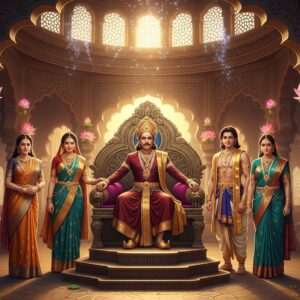
Emperor Bindusara, the illustrious son of Chandragupta, the very founder of the Mauryan Empire, played a supremely vital role in nurturing and sustaining the vast territories inherited from his forefathers. With remarkable wisdom, he upheld his father’s magnificent legacy, employing astute political and administrative strategies to seamlessly manage a remarkably expansive domain. Historical records eloquently suggest that Bindusara ruled for a span of 25 to 28 years, demonstrating his capability as a steadfast guardian of his people. His profound affinity with the Ajivika tradition, an ascetic religious sect of ancient India, brought a unique spiritual dimension to his governance. Meaning “the strength of an ocean,” the name ‘Bindusara’ perfectly encapsulated his profound depth and resilient leadership. Throughout his rule, he navigated myriad challenges, gracefully subduing revolts and forging harmonious alliances across distant horizons, continuously proving his mettle as a true sovereign.
The Enigmatic Departure of a Great Monarch
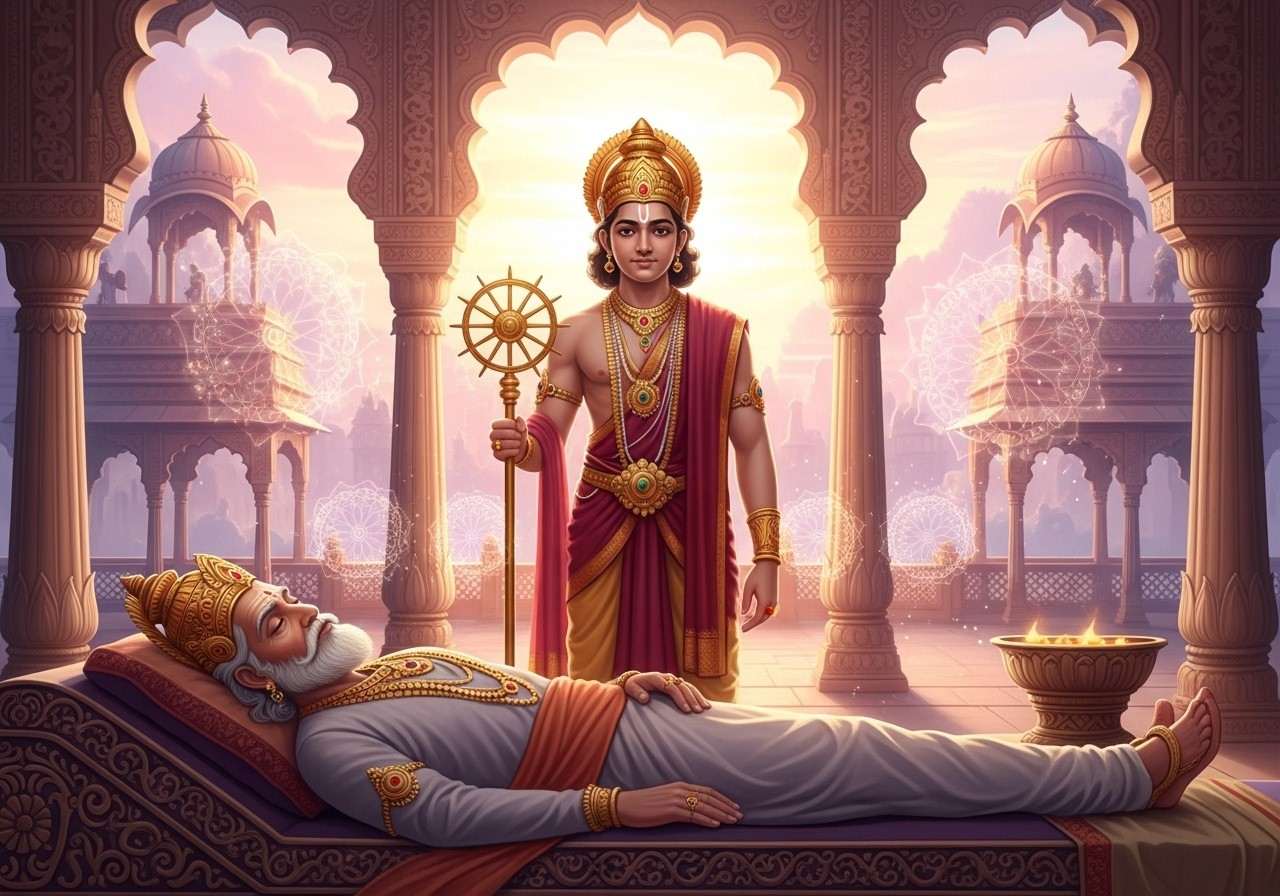
The precise circumstances surrounding the earthly departure of Bindusara remain gently wrapped in the mists of antiquity. While historical texts graciously offer varied perspectives, a veil of mystery still softly lingers. Some ancient narratives gently point towards natural health ailments contributing to his peaceful passing, whereas other accounts softly whisper tales of complex court intricacies. Regardless of the exact events, his passing marked an incredibly critical juncture in our ancient chronicles. He was celebrated far and wide for his unyielding strength, famously known to the Greeks as Amitrochates, a title beautifully derived from the Sanskrit word Amitraghāta, which translates to the “slayer of enemies”. Yet, the exact events culminating in his final moments remain a puzzle, with venerated ancient texts like the Puranas and Buddhist chronicles offering only fragmented glimpses into his last days.
The Timeline of the Grand Transition
The turning point arrived when Bindusara took his last breath around 273 BCE, marking a deeply pivotal year that would forever alter the course of the Mauryan dynasty. This somber period signaled the gentle close of a prosperous reign and the unforeseen dawn of a turbulent succession struggle among his ambitious heirs. In the absence of meticulous daily records, modern historians turn to revered ancient writings, such as the Mahavamsa, to lovingly piece together the tapestry of these past events. The transition from the comforting shade of Bindusara’s rule to the radiant light of Ashoka’s era was far from effortless. Following Bindusara’s death, Ashoka’s rise to power was not immediate, as a grueling four-year succession struggle ensued. This temporary instability gently reminded the populace of the immense challenges inherent in sustaining a dynasty and the intricate dance of ancient Indian statecraft.
The Winds of Succession and Ashoka’s Ascent
The path that led Ashoka to the illustrious throne was paved with intense trials and emotional conflicts. After the sorrowful loss of Bindusara, Ashoka found himself amidst a fierce contest with his own kin. Some poignant accounts, particularly chronicled in the Mahavamsa, heart-wrenchingly claim that Ashoka defeated and eliminated 99 of his brothers to secure the royal seat. Conversely, other historical versions suggest a more diplomatic route, where a wise minister deeply favored Ashoka and gracefully facilitated his peaceful ascension to power. Through resilience and strategic brilliance, Ashoka is widely believed to have been formally crowned emperor around 269-268 BCE, stepping up to lead the Mauryan Empire into an unprecedented era of glory.
Ashoka’s Spiritual Awakening and Eternal Legacy
Ashoka, beautifully remembered as Ashoka the Great, lovingly ruled from approximately 268 BCE to 232 BCE. His magnificent empire proudly stretched across a vast expanse of the Indian subcontinent. Although he commenced his journey as an ambitious and fiercely aggressive monarch, the sands of time had a profound transformation in store for him. The pivotal moment arrived when Ashoka waged a particularly brutal and devastating war against Kalinga around 261 BCE. The heart-rending loss of life and unimaginable destruction witnessed during the Kalinga War deeply touched Ashoka’s soul, leading him to wholeheartedly embrace the peaceful teachings of Buddhism. He beautifully transformed his imperial vision, adopting a noble policy of Dhamma, which placed the highest emphasis on peace, non-violence, and righteous conduct. Ashoka’s luminous reign became eternally notable for his passionate promotion of Buddhism, the devotional construction of magnificent stupas, and the sacred enshrinement of his moral edicts on grand pillars and rocks scattered throughout his majestic empire.
Honoring Life’s Transitions: How Poojn.in Nurtures Your Sacred Rituals
In our rich Indian culture, when a revered elder or a significant figure gracefully departs from this world, it is of utmost importance to perform sacred rituals that lovingly honor their enduring legacy and pray for the peaceful transition of their soul. At Poojn.in, we are deeply committed to providing you with the most authentic and pure ritual items needed to conduct these heartfelt ceremonies. We passionately offer premium-quality spiritual goods that empower you to preserve our beautiful traditions while enjoying the absolute comfort and ease of modern online shopping.
Authentic Sacred Offerings Available at Poojn.in:
- Comprehensive Pooja Kits: These carefully curated bundles encompass all the essential sacred items needed to perform your ancestral rituals with utmost devotion. Our kits ensure that no crucial element is missed, allowing your family to focus entirely on prayer, devotion, and loving remembrance.
- Aromatic Incense Sticks: Hand-rolled with pure, natural ingredients, our fragrant incense creates a deeply soothing and spiritually uplifting atmosphere. The divine aroma gently purifies the surroundings, inviting lasting peace and divine blessings into your sacred household space.
- Traditional Brass and Copper Utensils: Crafted by highly skilled artisans, these beautifully authentic metal vessels are indispensable for offering holy water and making divine presentations to the deities. Their timeless purity brings an authentic, traditional touch to every ancestral ritual you conduct.
- Revered Holy Books: Dive deep into the infinite ocean of wisdom with our collection of sacred texts that perfectly guide you through complex rituals and daily prayers. These timeless scriptures provide immense comfort, spiritual direction, and moral strength during challenging times of transition.
By placing your trust in Poojn.in, you bring home absolute purity, ensuring that every ritual is performed with genuine, spiritually potent items. We help you beautifully preserve our rich cultural heritage while effortlessly embracing the convenience of having these sacred goods delivered straight to your doorstep. For further assistance or to lovingly place your order, please reach out to us at 03369029784 or drop a message on WhatsApp at 9476142738.
Conclusion: The Dawn of Compassion in Mauryan History
The poignant conclusion of Emperor Bindusara’s era and the subsequent ascent of Ashoka stand as a deeply transformative chapter in the magnificent saga of the Mauryan Empire. While Bindusara gracefully laid down an unshakable foundation of stability and strength, his enigmatic departure undeniably opened the gateway to a challenging test of succession. Fueled by undeniable determination and guided by strategic counsel, Ashoka gracefully emerged as the sovereign, embarking on a soul-stirring journey that transformed him from an unstoppable conqueror into a profoundly enlightened philosopher-king.
Ashoka’s golden reign, beautifully illuminated by his total devotion to Buddhism and an unwavering commitment to universal harmony, has left a timeless imprint on the canvas of human history. His radiant legacy, which champions boundless compassion over ruthless conquest, seamlessly continues to inspire countless generations. The monumental shift from Bindusara to Ashoka serves as a beautiful reminder of the phenomenal power of inner transformation and the eternal value of a leadership anchored in deep empathy, respect, and righteousness. As we fondly reflect upon this glorious era, we are filled with immense pride for the vibrant, spiritual tapestry of Indian history and the profound, lasting impact these legendary rulers have gifted to our shared cultural heritage.
Frequently Asked Questions on The End of an Era: Bindusara’s Passing and Ashoka’s Rise
What are the circumstances surrounding Bindusara’s passing?
It is widely believed that Emperor Bindusara left for his heavenly abode due to natural causes. While our ancient historical records do not explicitly detail the exact medical reasons, his departure marked the peaceful end of a strong and remarkably stable governance.
In which year did Emperor Bindusara leave this world?
Historical texts lovingly suggest that Emperor Bindusara passed away around 273 BCE. While the exact calendar day remains softly hidden in the past, this approximate timeframe is highly respected and widely accepted by modern historians everywhere.
Who took over the reins of the empire after Bindusara?
Following his earthly departure, Bindusara was eventually succeeded by his illustrious son, Ashoka. Ashoka navigated through a highly challenging period to ultimately blossom into one of the most revered and spiritually awakened emperors in the glorious history of India.
What was the journey of Ashoka’s ascension after his father’s demise?
The path to the throne was not immediate; it involved a brief, yet incredibly intense, four-year period of struggle among his royal brothers. Blessed with remarkable leadership capabilities and the crucial support of wise ministers, Ashoka successfully secured the royal throne to guide his people.
How did the empire’s administration transform under Ashoka’s leadership?
Initially, Ashoka respectfully carried forward his father’s expansive strategies. However, the profound sorrow he felt after the Kalinga war led him to wholeheartedly embrace Buddhism. He beautifully pivoted the empire’s focus towards inner peace, moral righteousness, and non-violence, initiating a magnificent era of spiritual governance.
Why is the generational shift from Bindusara to Ashoka considered so monumental?
This beautiful transition is highly celebrated because it signifies a profound evolution in the very essence of ancient leadership. While Bindusara focused on solidifying and expanding physical boundaries, Ashoka’s divine reign redirected the empire’s soul towards universal non-violence, ethical living, and the gentle spread of Buddhist philosophies.
What immediate effect did Bindusara’s departure have on the Mauryan kingdom?
The immediate aftermath of his passing brought a temporary wave of uncertainty and a struggle for succession. However, this fleeting turbulence was gracefully calmed when Ashoka ascended, ushering in an unprecedented golden age of profound stability, spiritual prosperity, and cultural richness for the entire Mauryan Empire.