


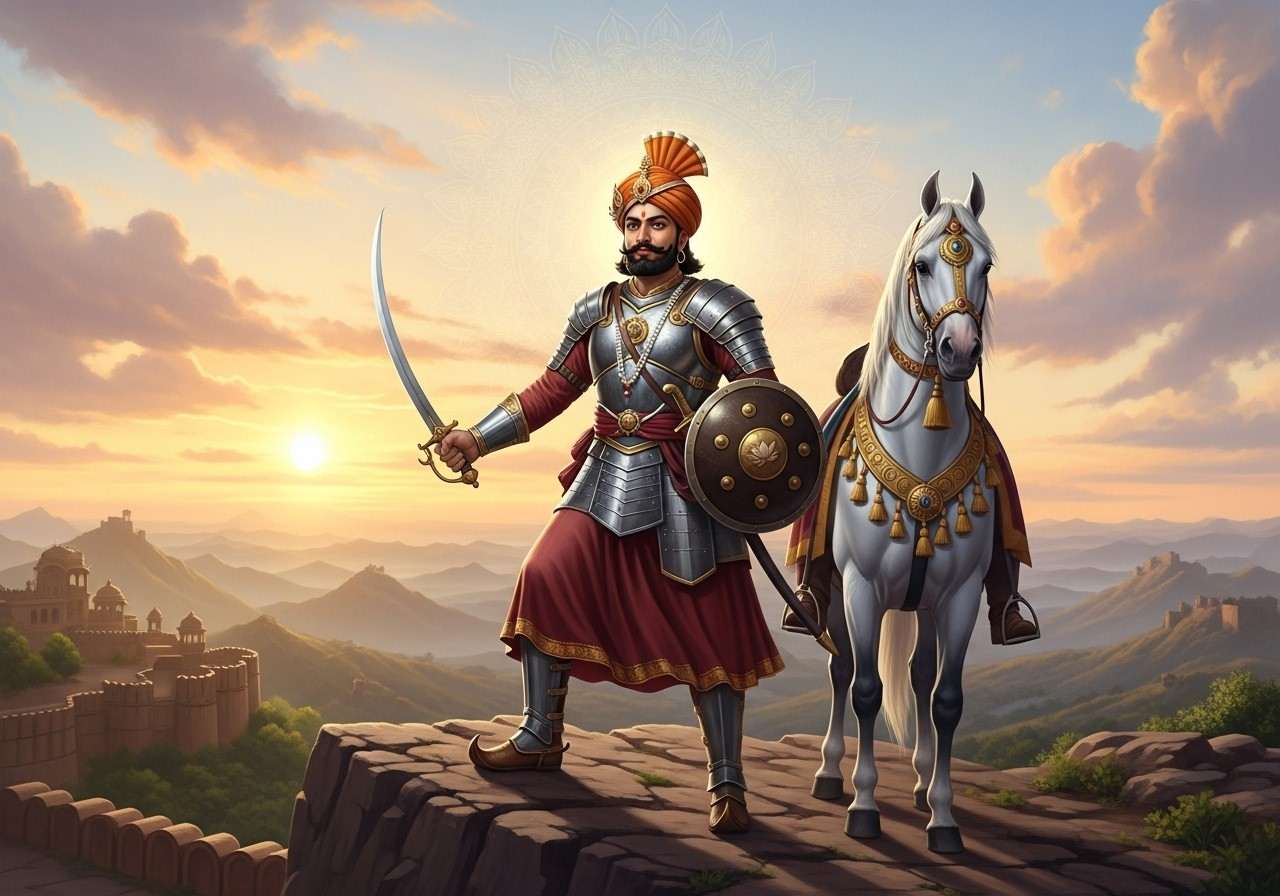
Generations of Indians have grown up immersed in the valorous tales of Prince Kalbhoj, more affectionately remembered as the legendary founder of the Mewar dynasty. As a pivotal figure in our rich historical tapestry, his strategic brilliance and unwavering commitment to dharma helped establish the powerful Mewar Kingdom around 728 CE in present-day Rajasthan. He was not just a king of the Guhila Rajput dynasty; he was a warrior-saint who fiercely defended our sacred lands from foreign incursions, ensuring that the roots of our cultural heritage remained unshaken. Understanding his profound contributions allows us to deeply appreciate the sacrifices made to preserve the spiritual and cultural identity we proudly cherish today.
The Early Life and Awakening of a Visionary Leader
Born into royal heritage in 713 AD, the early years of this great ruler were molded by extraordinary circumstances. Raised in the serene hills of Nagada by a noble Brahman lady, he found his ultimate guide in the revered sage, Harit Rishi. This spiritual mentorship was pivotal, as the young prince was taught not only the rigorous skills of warfare and statecraft but also the deep practices of meditation, self-discipline, and dharma. These foundational years instilled in him a profound sense of duty towards his motherland, setting the stage for a reign defined by righteous leadership and deep spiritual grounding.
Building an Invincible Empire: Triumphs and Conquests
The ascent of the Mewar dynasty truly began with the capture of the highly strategic Chittor Fort around 734 CE. Historical records suggest he seized this formidable stronghold from the “mlechchhas” (likely Arab invaders) or the reigning Raja Mori, shifting the absolute authority to the Guhila lineage. His military campaigns were marked by innovative tactics and unmatched bravery that expanded his sovereign reach.
- Creating a Formidable Confederacy: Recognizing the urgent need for a united front, he brilliantly brought together smaller neighboring states to form a massive confederacy of indigenous warriors. This strategic alliance was absolutely crucial in pushing back foreign forces, establishing a solid defense, and maintaining regional stability for many decades.
- Expanding Beyond Known Borders: After securing Chittor, his highly disciplined armies marched fearlessly into distant territories like Kandahar, Khorasan, Turan, Ispahan, and Iran. By successfully making these far-off kingdoms vassals, he not only expanded his territorial reach but also showcased the indomitable strength of Indian martial prowess on a global scale.
Safeguarding the Motherland: Defeating Foreign Invaders
During the 8th century, the looming threat of Arab invasions in north-western India was immense. Around 738 AD, through a series of fiercely contested battles, he successfully repelled these forces, chasing them far beyond Sindh and deep into regions like Ghazni. To further fortify his defenses, he forged powerful diplomatic alliances with formidable Hindu rulers, including Nagabhata I of the Gurjara-Pratihara dynasty and Jaysimha Varman of the Rashtrakuta Empire. This monumental victory was a significant turning point, safeguarding our timeless traditions and creating a protective shield around the subcontinent that nurtured future generations.
Exemplary Governance and Deep-Rooted Spiritual Devotion
Beyond his unquestionable military genius, the great ruler was a truly visionary administrator. He established a highly efficient, centralized governance system, deliberately empowering regional leaders to foster local trade, law, and prosperity. However, his most enduring legacy gracefully lies in his profound devotion to Eklingji (Lord Shiva), the supreme ruling deity of Mewar.
- Architectural and Spiritual Patronage: Around 734 CE, near the serene landscape of Nagda, he joyously commissioned the construction of the magnificent, original Eklingji temple. This monumental act of devotion not only provided a spiritual epicenter for his subjects but also forever cemented the deep, sacred bond between the ruler and divine providence.
- A Noble Abdication to the Divine: Demonstrating the true essence of a saint-king, he selflessly chose to step away from worldly power after nearly two decades of glorious rule. According to the revered Ekalinga Mahatmya, he abdicated the throne in either 753 CE or 764 CE in favor of his son, dedicating the remainder of his life purely to the austere worship and meditation of Lord Shiva.
Enrich Your Daily Rituals with Authentic Offerings
The profound devotion that this warrior-saint exhibited towards Lord Shiva is a beautiful, timeless reminder of our own spiritual duties. At our store, we deeply understand the emotional warmth connected to everyday worship and the paramount need for absolute purity in every prayer. If you are looking to create a serene, sacred atmosphere in your home, just as our ancestors did, we offer a meticulously curated range of authentic cultural goods. From beautifully crafted puja thalis to soothing, fragrant incense sticks, we have everything you need to perform your daily rituals with grace, peace, and devotion. You can conveniently explore our extensive collection by visiting https://www.poojn.in. Should you need any thoughtful assistance in selecting the right items for your spiritual journey, please feel free to reach out to us by calling 03369029784 or by dropping a WhatsApp message at 9476142738.
Frequently Asked Questions About the Founder of Mewar
Who was the legendary founder of the Mewar dynasty?
He was a highly revered Rajput king, originally born as Prince Kalbhoj, who successfully unified the region and laid the robust foundations of the Sisodia dynasty in present-day Rajasthan. He is celebrated across generations as a heroic warrior-saint who deeply cherished and defended Indian cultural values.
What was the geographical extent of his powerful empire?
His sovereign rule initially covered vast, rugged terrains of modern-day Rajasthan, eventually expanding its influence into parts of present-day Gujarat and Madhya Pradesh. Furthermore, his ambitious military expeditions extended his dominance over foreign territories, making them compliant vassal states of his flourishing kingdom.
How did he protect the region from foreign invasions?
By brilliantly uniting smaller regional states and forging strong, strategic alliances with powerful neighbors, he successfully defeated the encroaching Arab forces around 738 AD. His coordinated and fierce military efforts effectively chased the invaders out of the subcontinent, ensuring the region’s cultural and spiritual integrity remained intact.
What are his most celebrated life achievements?
His greatest historic triumphs include capturing the highly strategic Chittor Fort, establishing a united and invincible warrior confederacy, and constructing the deeply revered Eklingji temple. Ultimately, his legacy is most beautifully defined by his selfless abdication to pursue a tranquil life of spiritual devotion to Lord Shiva.
Conclusion: The Eternal Footprints of a Warrior-Saint
The remarkable journey of this iconic Sisodia ruler is a timeless testament to courage, supreme wisdom, and an unwavering devotion to one’s roots. By fearlessly confronting invaders and generously patronizing the spiritual arts, he did more than just rule a vast empire; he actively nourished the cultural and religious soul of India. The majestic Eklingji Temple stands today as a silent yet immensely powerful witness to his divine devotion. As we look back at the origins of the Mewar kingdom, his life offers us invaluable lessons in resilience, national unity, and the seamless blending of righteous duty with profound spirituality. Honoring his grand legacy simply means embracing and continuing the rich, beautiful traditions he fought so fiercely to protect.