

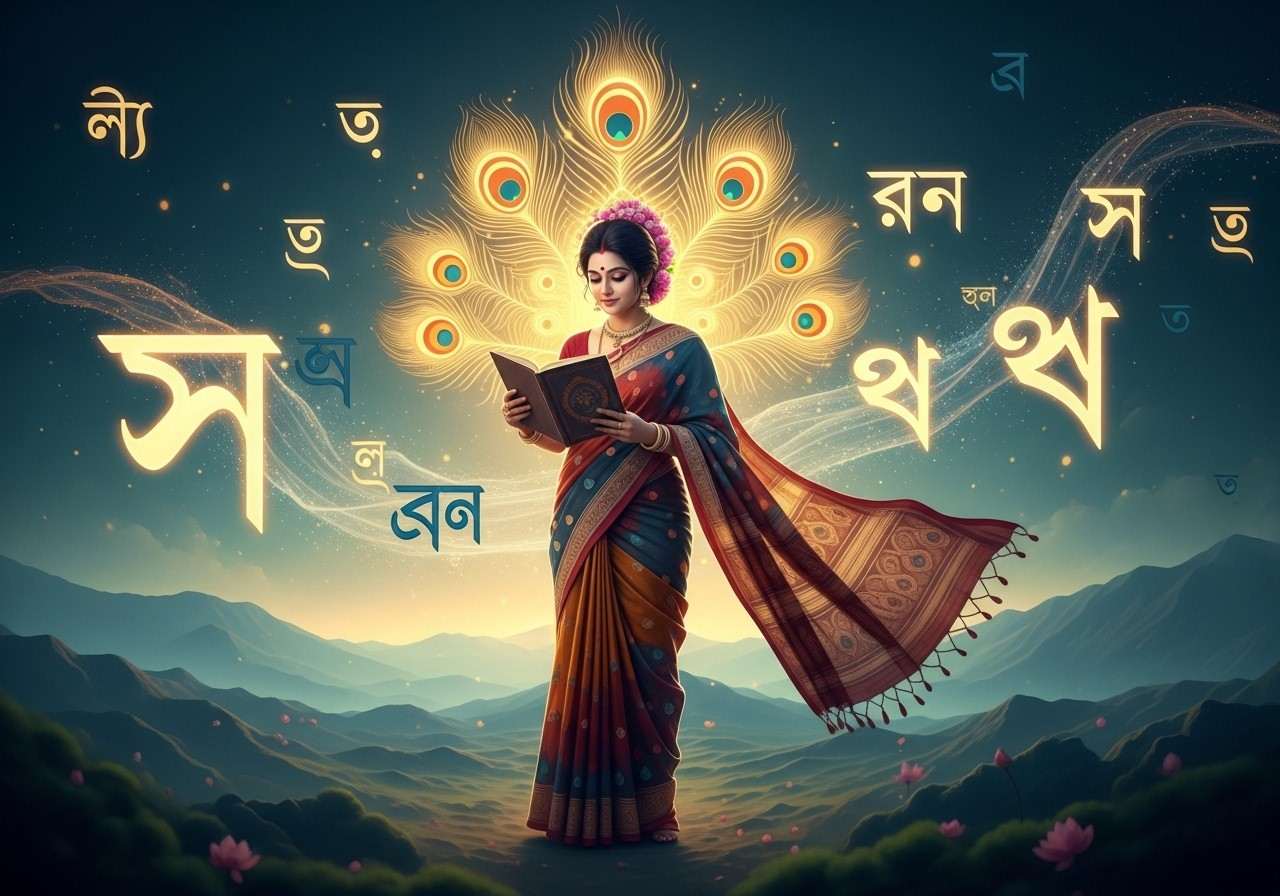
India is a magnificent land of breathtaking diversity, where every dialect and script tells a profound story of our ancestors. The native language of Bengal is far more than just a medium of communication; it is an emotional journey into a deeply rooted cultural heritage. Spoken with immense love and pride by millions across India and Bangladesh, it carries the weight of incredible literature, soulful music, and timeless traditions . For those of us seeking to stay intimately connected to our cultural roots, understanding the intricate framework of this phonetic system brings us closer to the heart of our vibrant identity.
The Foundations of the Script: An Overview
The beautiful writing system, affectionately known as the Bangla alphabet, is a proud descendant of the ancient Brahmi script . It functions as a beautifully structured abugida writing system, meaning its base letters carry an inherent sound that can be elegantly modified by subtle marks . Today, this rich and expressive script serves as the primary literary vehicle in Bangladesh, West Bengal, Tripura, and Assam . The traditional alphabet typically features 51 distinct letters, harmoniously divided into vowels and consonants that create the lyrical phonetic texture we so deeply admire.
Vowels (স্বরবর্ণ – Swarabarna): The Melody of the Language
In this rich linguistic tradition, vowels are truly the soul of the spoken word. There are 11 vowel graphemes that can stand proudly on their own at the beginning of a syllable or transform into delicate diacritical marks to support other letters . They represent a vibrant spectrum of main sounds and diphthongs, giving the regional tongue its signature sweetness. The cherished vowel list includes অ, আ, ই, ঈ, উ, ঊ, ঋ, এ, ঐ, ও, and ঔ . Interestingly, while the sound ‘অ্যা’ is commonly spoken in modern conversation, it does not have a distinct standalone symbol in the classical script .
Consonants (ব্যঞ্জনবর্ণ – Byanjanbarna): The Structural Pillars
If vowels are the beautiful melody, consonants are the strong, enduring backbone. Traditional linguistic texts often mention 32 primary consonant letters, though numerous historical and modern sources account for 39 or even 40 consonants . Each of these structural letters inherently carries the subtle vowel sound “ɔ” (অ) . These letters are thoughtfully categorized based on exactly where the sound originates in the mouth—be it guttural, palatal, retroflex, dental, or labial . Furthermore, when two or more consonants gracefully embrace one another, they form complex, beautiful conjuncts known as Juktakhyar . Like most of our revered native scripts, it is gracefully written from left to right, united by a continuous horizontal line at the upper part called a matra.
Matras: The Transformative Diacritics
To truly master the flow of words, one must understand the absolute magic of Matras (often affectionately called “kars”). These are transformative diacritical marks that visually represent vowel sounds whenever they gracefully follow a consonant . They can be elegantly placed before, after, above, or below the base letter to completely change its phonetic identity. It is a beautiful quirk of the language that the default inherent vowel “অ” acts as an invisible, guiding force, meaning it does not have a physical matra of its own .
Nurturing Your Cultural Roots with Authentic Indian Goods
As we passionately pass down these invaluable linguistic traditions to the next generation, creating an environment that respects our heritage becomes a heartfelt priority. Finding the right cultural items is essential for families who wish to keep their native traditions alive while enjoying the absolute convenience of online shopping. This is where https://www.poojn.in beautifully steps in as your trusted companion for all cultural needs.
- Embracing Traditional Wisdom: Discover authentic cultural goods that resonate with our timeless Indian values and beliefs. Bringing these sacred items into your home ensures that the pure atmosphere of our ancestral learning is beautifully preserved for generations to come.
- Creating a Spiritual Space: By choosing verified and authentic products from our extensive collection, you create a deeply nurturing environment. This remarkable attention to detail makes every cultural practice and family tradition feel much more intimately connected to our ancestral roots.
- Supporting Our Heritage: Shopping at https://www.poojn.in means you are actively choosing uncompromising quality and authenticity. It helps you stay wonderfully rooted in tradition without ever compromising on the everyday convenience and reliability that modern Indian families need.
Understanding the Basics: Common Inquiries Answered
How many letters make up this beautiful script?
The comprehensive script generally consists of 50 to 51 letters in total. This unified system beautifully combines both the essential independent sounds and the structural base letters to form a complete, harmonious phonetic family .
What exactly are the vowels in this language?
There are 11 primary sound markers that breathe musicality and emotion into the vocabulary. These letters are incredibly versatile, functioning as proud independent characters at the start of words or seamlessly blending with others to guide pronunciation .
How many consonant letters exist in the system?
Depending on the specific linguistic source you consult, there are between 32 to 40 structural letters. These sturdy phonetic pillars help in creating the distinct, resonant, and dynamic sounds that perfectly characterize the spoken tongue .
How do diacritical marks function alongside other letters?
Known affectionately as “kars”, these special diacritical marks attach directly to the base letters to thoughtfully modify their inherent sounds. They are the magical, transformative symbols that turn simple characters into expressive, highly meaningful syllables .
Can these marks change the entire meaning of a word?
Absolutely, altering a single delicate mark shifts the entire phonetic sound, which can completely change the word’s meaning. It beautifully showcases the delicate, precise, and sophisticated nature of our traditional writing systems.
Why is understanding these foundational elements so crucial?
Grasping these core phonetic components is the ultimate key to mastering correct pronunciation and elegant reading fluency. They form the absolute bedrock of the region’s vast literary, poetic, and spiritual heritage.
The journey through our native scripts is much more than a simple educational exercise; it is a joyous celebration of our timeless legacy. As you lovingly explore these beautiful linguistic elements, you gain profound insight into the heart of a culture that has nurtured art, devotion, and community for centuries. Let your exploration be guided by deep respect, and may it forever enrich your family’s spiritual and cultural life.