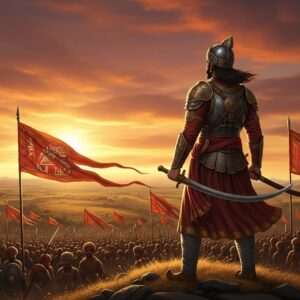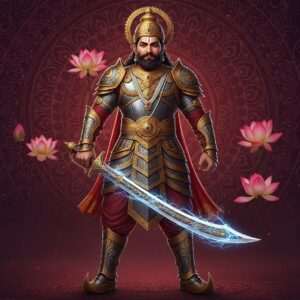


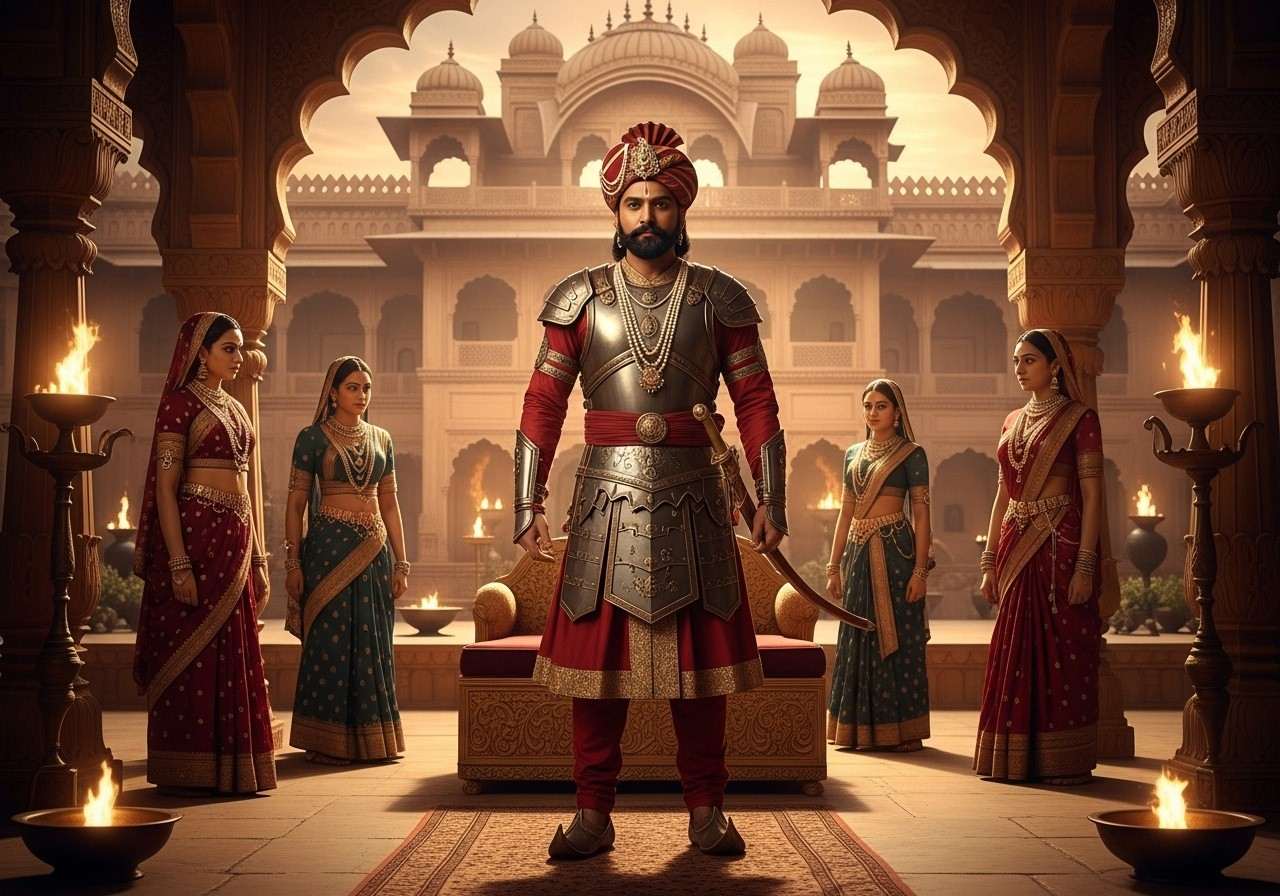
Our motherland is blessed with countless tales of bravery, spirituality, and a deeply rich cultural heritage that continues to inspire us today. Among these luminous historical stars shines the phenomenal founder of the Mewar Kingdom. Known originally as Kalbhoj, this great warrior’s life is a brilliant tapestry of unmatched valor, strategic genius, and deep-rooted devotion to our ancient traditions. Understanding his monumental contributions gives us a profound sense of pride in our historical roots and a stronger connection to our cultural identity. Let us take a deeply respectful journey into his life, tracing the footsteps of a true protector of Dharma.
The Dawn of a Legend: Birth, Lineage, and Early Struggles
Born in the year 713 AD, this illustrious figure belonged to the revered Guhilot Rajput lineage, gracefully carrying forward the legacy as its eighth ruler. Some classical accounts beautifully state that he was the 80th in descent from Lord Rama himself. Tragedy, however, struck quite early when his father, Rawal Mahendra II, was tragically assassinated in 716 AD, leaving the young prince without a father at merely three years of age.
His resilient mother, a noble Paramara Rajput princess from the serene landscapes of Mount Abu, raised him with immense courage. Together, they found refuge and strength amidst nature and loyal companions.
- The fiercely loyal Bhil community played a highly foundational role in his early upbringing and physical conditioning. Deep in the rugged terrains, these indigenous warriors graciously taught the young royal the rigorous military warfare and survival skills he would later rely on to navigate the harsh realities of battlefield leadership.
- His spiritual awakening blossomed beautifully in a tranquil religious retreat located in the foothills below Nagda. Here, he spent his peaceful childhood years tending to sacred cattle, absorbing the divine energies of the land, and preparing his mind for the monumental duties that lay ahead of him.
- Under the profound and highly revered guidance of the sage Harit Rashi, his moral compass was firmly established. The wise sage deeply initiated him into the sacred rites of Lord Shiva, instilling in him an unshakable devotion and righteous philosophy that would heavily define his future governance as a king.
Establishing an Empire: A Reign of Monumental Achievements
By the year 728 CE, he successfully laid the robust foundation of the Mewar Kingdom, marking the grand genesis of an era entirely defined by martial brilliance and strict cultural preservation. Historical records proudly note that at the young age of 21, in 734 AD, he valiantly captured the impregnable and culturally significant fort of Chittor.
- Defending the sacred motherland from foreign incursions was consistently his most paramount duty as a sovereign. He heroically defeated and fiercely pursued the Arab invader Bin Qasim, forcing the hostile armies to retreat far beyond the western banks of the Sindhu river, thereby securing India’s borders.
- A true master of political diplomacy and strategic alliances, he actively united fragmented neighboring states. By bringing smaller kingdoms together to form a formidable defense network, he achieved a legendary and historic triumph over the Arab forces in the famous Battle of Rajasthan in 738 AD.
- His territorial expansion was nothing short of extraordinary on the global map of that era. He successfully extended his sovereign influence across vast international regions, including Kandahar, Khorasan, Turan, Ispahan, and even parts of Iran, establishing all of them as respectful vassal states to his empire.
- Displaying immense foresight in military infrastructure and long-term kingdom security, he built enduring strongholds. He successfully established a heavily fortified military outpost city which we know today as Rawalpindi, fundamentally securing his northern frontiers against any future foreign invasions.
- His unwavering, lifelong devotion to the divine ultimately culminated in the magnificent construction of the Eklingji temple. This architectural marvel and spiritual sanctuary remains a highly revered pilgrimage site today for countless devotees seeking the eternal blessings of Lord Shiva.
After approximately two decades of a highly glorious and deeply righteous rule, he gracefully abdicated his throne. Handing over the flourishing kingdom to his capable son, he wholeheartedly embraced the peaceful, ascetic life of a ‘Yati’, dedicating his remaining years solely to the profound worship of Mahadeva.
Royal Alliances: Exploring Personal Life and Marriages
In the rich tapestry of ancient Indian royalty, matrimony very often served as a highly crucial bridge for securing political stability and maintaining territorial peace. Historical narratives suggest that his matrimonial alliances were both vast and strategically brilliant, reportedly resulting in over one hundred children who proudly carried forward his illustrious lineage.
- Embracing widespread global diplomatic relations through the sacred bond of marriage, he secured his borders. Ancient legends and folklore proudly state that he married several Persian princesses, beautifully weaving an intricate web of international alliances that greatly strengthened his empire’s diplomatic standing.
- Fostering long-lasting peace through strategic royal unions was a definitive hallmark of his expanding reign. Compelling historical accounts mention that he had around 100 wives, which intriguingly included 35 daughters of various Muslim rulers, ensuring harmony and minimizing conflict across diverse territories.
An Everlasting Legacy: Shaping India’s Proud Heritage
The legacy left behind by this phenomenal leader is etched eternally in the very heart of Indian civilization. As a fierce protector of our sacred borders and a devoted patron of Sanatan traditions, he is immortalized today as a true cultural savior. His divine devotion, combined with his unparalleled military genius, paved a golden path for future generations. Great, fearless warriors like Rana Sanga, Maharana Pratap, and Rana Uday Singh are his direct and proud descendants, who valiantly carried forward his indomitable spirit of independence.
Connecting with Our Roots Through Authentic Ritual Offerings
When we reflect upon the majestic, deeply spiritual lives of our ancient ancestors, it naturally awakens a profound desire within us to reconnect with our own cultural traditions. Setting up a serene, welcoming puja space at home or simply reading about our glorious past helps keep these timeless, invaluable values alive in our modern, everyday households. At poojn.in, we are completely dedicated to bringing you the finest, most authentic cultural goods to beautifully enrich your family’s spiritual journey.
- Delve much deeper into our rich, magnificent heritage with our carefully curated traditional literature collection. You can easily find comprehensive, enlightening books on Indian history and legendary rulers by visiting our dedicated section at .
- Experience the pure, divine essence of ancient daily rituals with our premium, hand-picked puja essentials. Explore our complete range of meticulously assembled, high-quality puja kits available directly online at .
- Illuminate your beautiful home with the warm, spiritually uplifting glow of our traditional brassware and fragrances. Discover exquisitely crafted diyas and incredibly soothing incense varieties by browsing our store at .
Please kindly remember that our sole focus at Poojn is exclusively on providing you with premium, high-quality cultural merchandise. We strictly do not arrange any travel packages, nor do we facilitate VIP darshans at any temples. We are simply a retail store devoted to bringing culture to your doorstep. For any heartfelt inquiries about our authentic retail products, please feel free to reach out to us comfortably via WhatsApp at 9476142738 or call us at 03369029784.
A Timeless Conclusion
The magnificent, awe-inspiring journey of Mewar’s founding father is a striking testament to the fact that when sheer courage is coupled with deep spiritual grounding, immortal legends are born. His steadfast commitment to safeguarding his people, alongside his profound, unwavering reverence for Lord Shiva, provides a timeless blueprint for righteous and noble living. Let us continue to draw infinite inspiration from his extraordinary life, keeping the warm flame of our majestic Indian heritage burning brightly and proudly within our modern homes and hearts.
Frequently Asked Questions About This Great Historic Icon
What is the accepted timeframe for the birth of this great Mewar founder?
Historical consensus, based on various classical Rajput accounts and records, clearly indicates that he was born in the year 713 AD. Despite the heartbreaking tragedy of losing his noble father at a very tender age of three, he rose through immense adversity to become a monumental historical figure in the vibrant 8th century.
During what exact era did he successfully establish his sovereign rule?
He formally and successfully laid the strong foundation of the Mewar Kingdom in the year 728 CE, and notably captured the highly strategic fort of Chittor around 734 AD. His powerful reign brought about a crucial, desperately needed period of military consolidation and rich cultural resurgence in the region.
Who exactly were the spouses of this legendary and victorious king?
While specific individual names are often veiled by the long passage of time, local folklore and detailed historical records suggest he engaged in a vast number of strategic marriages. It is widely chronicled that he had approximately 100 wives, which remarkably and strategically included several Persian princesses as well as 35 daughters of prominent Muslim rulers.
Where exactly did his widespread sovereign influence and military power extend?
He originally established his impregnable stronghold in the culturally rich Mewar region of present-day Rajasthan. However, his military campaigns were so incredibly successful that his commanding influence expanded dramatically, turning distant, foreign lands like Kandahar, Khorasan, Turan, Ispahan, and Iran into loyal vassal states.
What are widely considered to be his absolute most significant historical achievements?
Beyond founding an enduring, fiercely independent royal dynasty, he is highly celebrated across India for successfully defending the sacred subcontinent against aggressive foreign invasions. His highly decisive victory at the historic Battle of Rajasthan in 738 AD and the deeply devotional creation of the majestic Eklingji temple remain two of his absolute most enduring monumental contributions.
Why is his direct royal lineage considered so incredibly vital to Indian history?
His brave descendants eventually formed a proud, completely unbroken chain of fierce resistance and meticulous cultural preservation over the centuries. Subsequent iconic rulers such as the great Maharana Pratap and Rana Sanga directly inherited his fierce independence and deep spiritual devotion, forever cementing the illustrious family’s legacy in our proud national consciousness.