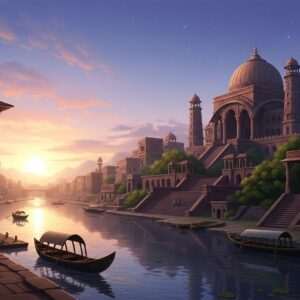


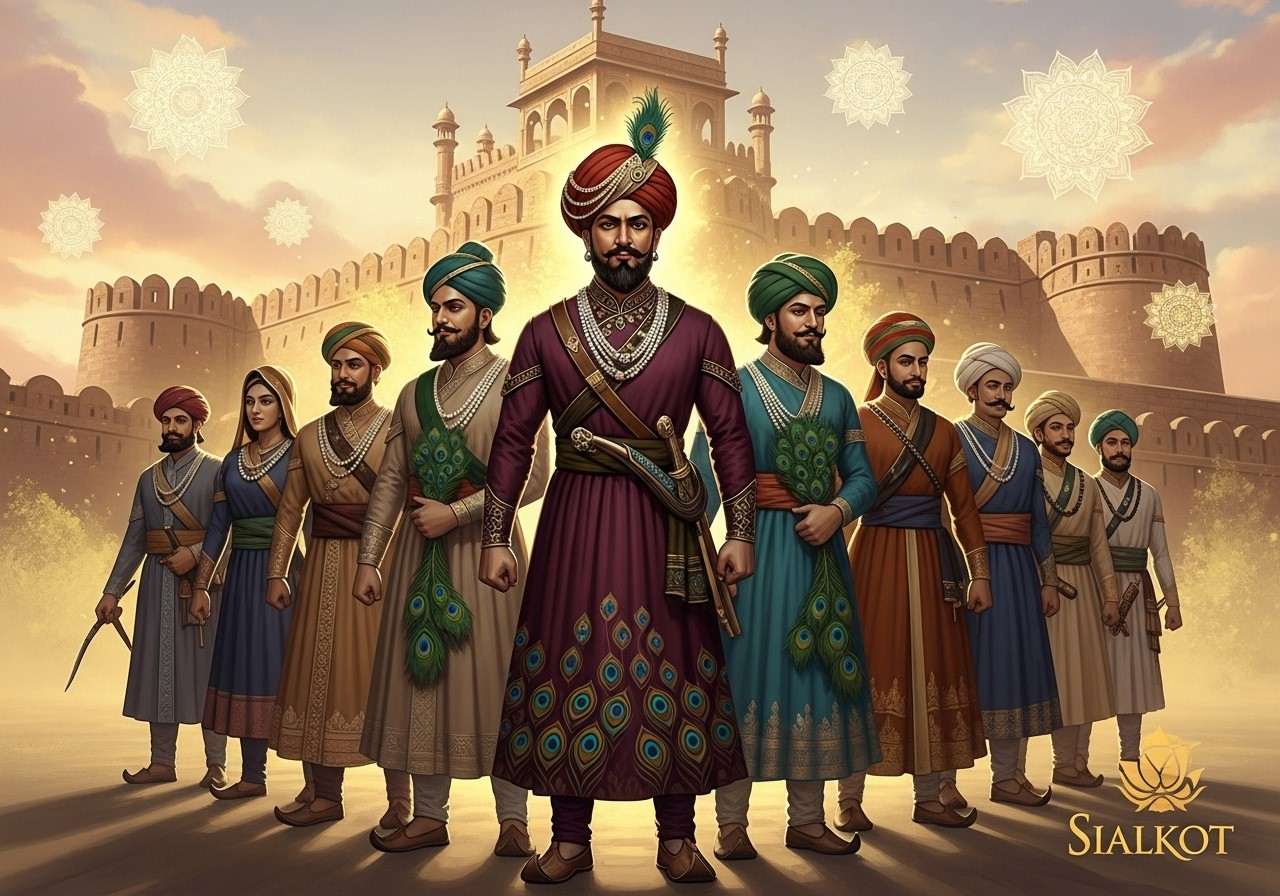
The rich tapestry of the Indian subcontinent is woven with tales of valor, resilience, and spiritual depth. Sialkot, a city that has witnessed the rise and fall of magnificent empires, stands as a testament to this profound heritage. Its historical landscape has been continuously molded by legendary figures, ranging from ancient kings who envisioned strategic capitals to passionate freedom fighters who fiercely opposed colonial oppression. This historical journey offers deep insights into the extraordinary leadership and cultural contributions that continue to inspire generations today.
The Ancient Roots: A City Forged by Visionary Kings
Historically, the region’s geographical placement made it an essential hub for ancient trade routes, bringing immense cultural and architectural prosperity. The prominence of the city as a crucial capital is well-documented in classical texts and archaeological findings dating back to the Mauryan Empire. Below are some of the most influential ancient and medieval rulers who defined its legacy:
- Raja Sala: According to the revered traditions of the Mahabharata, Raja Sala is believed to have founded the city and constructed its mighty fort around 5000 years ago. His majestic dynasty is said to have continuously ruled the region for approximately 1500 years, establishing a profound historical foundation.
- Raja Salivahan: Flourishing around the 2nd century CE, he is celebrated for re-establishing the settlement and building a formidable fort. He beautifully named it ‘Sal-kot Shakil Nagri,’ a title that was later affectionately shortened to its current name, ruling over the fertile lands between the Ravi and Chenab rivers.
- Menander I (Milinda): As the renowned king of the Indo-Greek Kingdom, he ruled from circa 155/150 to 130 BC and proudly established Sagala (the ancient name of the city) as his capital. The sacred Buddhist text, ‘Milinda Panha,’ beautifully describes his capital as a major center of profound learning and spiritual discourse during his reign.
- Jasrat Khokhar: A fierce Punjabi warlord who courageously made the city the capital of his expanding kingdom in the early 15th century. Through brilliant strategic military campaigns between 1421 and 1442, he successfully conquered vast territories of Punjab from the Delhi Sultanate, along with Jammu in 1423.
- Sikh Chieftains of the Bhangi Misl: By the year 1786, these valiant Sikh leaders successfully gained control of the region, significantly influencing its cultural fabric. They thoughtfully divided the area into four administrative quarters under the capable leadership of Sardar Jiwan Singh, Natha Singh, Sahib Singh, and Mohar Singh.
- Maharaja Ranjit Singh: The formidable Sikh Empire under his visionary leadership captured the territory in 1808, bringing an era of renewed stability. The city remained a vital part of this powerful empire until the arrival and subsequent occupation by British forces in 1849.
The Dawn of Independence: Voices of Courage and Sacrifice
During the turbulent era of colonial rule, the region became a fertile ground for revolutionary thoughts and the independence movement. Brave individuals emerged from local communities, employing diverse strategies to advocate for social justice, communal harmony, and absolute freedom.
- Allama Muhammad Iqbal: Born in 1877, he grew to become a globally revered philosopher, poet, and politician whose words ignited the souls of millions. Often regarded as the “Spiritual Father of Pakistan,” his powerful vision deeply inspired the Pakistan Movement and left an enduring mark on South Asian literature.
- Pyarelal: An incredibly significant figure in the Indian independence movement who dedicated his life to working closely alongside Mahatma Gandhi. His remarkable contributions to social reform, grassroots education, and cultural identity continue to inspire contemporary social movements to this day.
- Lala Kanshi Ram: A prominent and fiercely dedicated freedom fighter whose early life experiences profoundly shaped his unwavering political ideology. He played a crucial leadership role in organizing protests during the non-cooperation movement, constantly fostering communal harmony despite facing immense personal challenges.
- Zahida Mushtaq: A passionate and resilient female freedom fighter who fearlessly participated in numerous rallies and demonstrations. Her active involvement was instrumental in gathering grassroots support for the Independence Movement and empowering local women.
- Jalal-ud-Din Khan: An influential political figure who played a highly significant role in shaping the geopolitical landscape of the mid-20th century. In 1947, he served crucially as a member of a commission set up by Muhammad Ali Jinnah to advocate for their political cause during the upcoming referendum.
- Naseer Ahmed Malhi: A dedicated political leader who actively joined the local chapter of the Muslim League, bringing great organizational strength. He eventually rose to become its president, furthering the political aspirations of his community with immense dedication.
- Makhan Singh: Though his battles were fought on different shores, this native son became a legendary figure in trade unionism and the freedom struggle in Kenya. His indomitable spirit stands as a shining example of how local heroes influenced anti-colonial movements far beyond their homeland.
Spiritual Luminaries and Literary Giants
Beyond kings and political revolutionaries, the cultural heartbeat of the city was nurtured by spiritual guides and literary maestros whose wisdom transcended borders.
- Imam Ali-ul-Haq: A revered Sufi warrior-saint who arrived in the region during the 13th century, bringing a profound spiritual transformation. His teachings and presence played a pivotal role in converting many to Islam, forever transforming the religious landscape of the city.
- Faiz Ahmed Faiz: Recognized globally as one of the most celebrated Urdu poets, his profound verses captured the pain of oppression and the beauty of human resilience. His timeless poetry continues to evoke deep emotional resonance among literature lovers across the world.
- Muhammad Zafrulla Khan: An exceptionally brilliant jurist and seasoned diplomat who hailed from this historic soil. His intellectual contributions and global diplomatic efforts brought immense international recognition to his roots.
Honoring Tradition and Cultural Heritage with Poojn.in
Connecting with the deep, rich tapestry of our past often begins in the sacred space of our homes, through heartfelt daily rituals and traditional practices. At Poojn.in, we are deeply committed to celebrating India’s magnificent history by providing authentic cultural goods that help you honor our legendary ancestors.
Whether you are seeking premium puja samagri like soothing incense sticks, beautifully handcrafted diyas, or sacred threads, our online store ensures your devotion is met with unparalleled quality. Wearing our carefully curated traditional attire during family ceremonies beautifully deepens your emotional connection to the enduring legacy of the past. Please remember that we focus exclusively on delivering the finest cultural items through our seamless online platform. We do not offer travel packages, guided tours, or VIP temple darshan services.
You can effortlessly browse and purchase your essential ritual items from the absolute comfort of your home. Should you need any assistance in selecting the perfect authentic products for your spiritual needs, our warm and welcoming team is always here to help. Feel free to contact us directly at 03369029784 or drop us a message on WhatsApp at 9476142738.
Frequently Asked Questions on Legendary Figures and Regional History
Which prominent ancient ruler established this historic city as his capital?
Among the most celebrated ancient kings, Raja Salivahan is highly revered for establishing the city as his majestic capital around the 2nd century CE, affectionately naming it ‘Sal-kot Shakil Nagri’. Furthermore, the Indo-Greek King Menander I (Milinda) also chose Sagala, the city’s ancient name, as his flourishing capital between 155 and 130 BC, making it a prominent center of learning.
Who was Pyarelal and what was his contribution to the nation?
Pyarelal was a deeply committed visionary and prominent freedom fighter who actively emerged from the region to work in close association with Mahatma Gandhi. He played an incredibly vital role in advancing social reform, promoting grassroots education, and shaping the cultural consciousness of his people during the arduous struggle for independence.
What is the historical significance of Lala Kanshi Ram?
Lala Kanshi Ram stands out as a highly notable and deeply dedicated freedom fighter whose enduring political ideology was shaped by his early life experiences. He took on a crucial leadership role during the non-cooperation movement against colonial rule, passionately organizing protests while tirelessly fostering communal harmony and social justice within the community.
Why is this historical region so famous for its rulers and freedom fighters?
The region boasts an incredibly rich and diverse history filled with legendary personalities who profoundly shaped its identity over millennia. From visionary ancient kings who built robust infrastructure and promoted trade, to fearless revolutionaries who sacrificed everything for independence, their collective legacy continues to deeply inspire modern generations.
How did the early kings and rulers influence the region’s overall development?
The visionary rulers who established their capitals here played an absolutely pivotal role in the region’s socio-economic and architectural evolution. By constructing formidable forts, securing crucial ancient trade routes, and encouraging cultural and spiritual learning, they ensured the lasting prosperity of their people and left an indelible mark on history.
Are there physical monuments dedicated to honoring these historical icons?
Absolutely, the region proudly preserves its glorious past through various magnificent monuments, ancient forts, and revered memorials. These significant historical sites serve as poignant reminders of the immense contributions made by ancient kings, Sufi saints, and courageous freedom fighters, attracting visitors who wish to pay their heartfelt respects.