


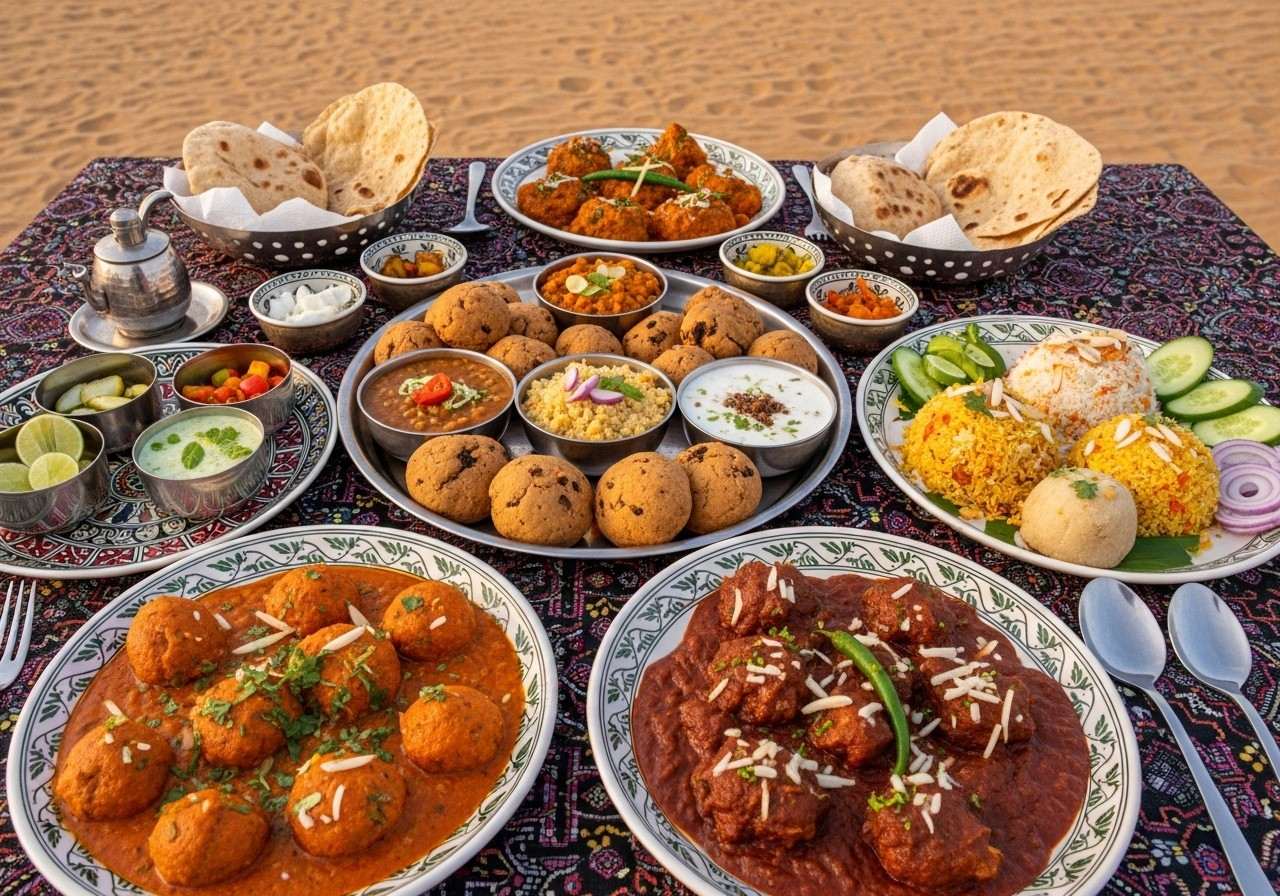
There is a saying in India that the dialect changes every few miles, and so does the taste of the water. In the golden land of Rajasthan, this couldn’t be truer. Embarking on a culinary journey through this majestic state is like turning the pages of a history book, where every flavor tells a story of valor, royalty, and survival. Rajasthani meals are more than just sustenance; they are a warm embrace of hospitality, a manifestation of cultural identity, and a vibrant celebration of life in the desert.
When you sit down to eat in a Rajasthani home, you aren’t just being served food; you are being served a legacy. The unique socio-political history and the challenging geography of this region have greatly influenced its traditional cuisine. It plays a vital role in bringing communities together, preserving historical narratives, and ensuring that the guest is treated like a god.
Resilience in Every Bite: Defining the Cuisine
At its heart, the food of this region is a beautiful tale of adaptation. Rajasthani cuisine is defined by its bold flavors and a brilliant reliance on locally sourced ingredients. For centuries, the people here faced a harsh arid climate and water scarcity. Instead of limiting their palate, these challenges sparked incredible creativity in the kitchen.
Staple ingredients like millet (bajra), pulses, and dairy were used innovatively to overcome the lack of fresh greens. The concept of ‘Marwari Bhojan’ emphasizes simple yet wholesome meals that nourish the body and soul. Furthermore, vegetarianism holds immense significance here, deeply rooted in religious influences and the compassionate Vaishnav tradition. This has led to a culinary culture that can create a feast without meat, using rich dairy and spices to create depth and flavor.
Historical Influences: From Sand Dunes to Royal Palaces
In the heart of Rajasthan’s rich culinary history lies a story of resilience and grandeur. The arid landscape challenges its people, yet it gives rise to remarkable food traditions that have stood the test of time.
The Environmental Influence
Because water was precious and fresh green vegetables were often a luxury, the local people turned to dried and preserved foods. Lentils, grains, and an array of spices became the heroes of the plate. This fostered innovative cooking methods where food could last for several days without heating—a necessity for travelers and warriors crossing the desert.
The Royal Rajput Legacy
On the other hand, the grandeur of Rajput and Mughal influence is ever-present in the state’s gastronomy. The Royal Rajput families, known for their elaborate lifestyle, left a lasting mark on the menu. Their meals, known as “Rajwaadi” cuisine, are lavish, often adorned with dry fruits, milk-based gravies, and rich ghee. Spices like cardamom and saffron elevate flavors to a divine level. In true royal fashion, some dishes were even decorated with gold and silver foils, turning a meal into an art form.
Stories Served on a Thali
Every dish here has a biography. Here are a few that define the region:
- Dal Baati Churma: This is perhaps the most iconic dish of the state. It is said to have originated as a warrior’s meal because it was durable and nutritious. Soldiers would bury dough balls made of wheat and ghee in the hot desert sand to bake them. Today, it is a beloved combination served with panchmel dal (five lentils) and sweet churma, symbolizing the sweet reward after a hard battle.
- Laal Maas: This fiery meat dish was once a favorite hunting meal for the Kings. Prepared with robust mathania chillies, the heat of the spices not only helped preserve the meat during long hunting trips but also provided warmth and immunity against the desert cold. It is a dish that demands respect for its bold, unapologetic flavor.
- Gatte ki Khichdi: A true creation born from necessity, this rice dish embraces gram flour dumplings (gatte) in the absence of vegetables. It showcases how the women of Rajasthan could turn the simplest ingredients like chickpea flour into a delicacy that rivals any vegetable dish in taste and texture.
Bring the Authentic Taste of Rajasthan Home
Understanding the history of these dishes makes us appreciate them more, but cooking them requires the right touch. Rajasthani cuisine is rich in history and flavor, and it reflects the culture and traditions of the land. To get that authentic taste—the “swaad” that reminds you of a grandmother’s kitchen—you need ingredients that are pure and unadulterated.
At Poojn.in, we understand that the soul of a dish lies in its ingredients. We offer authentic items that are essential for preparing traditional Indian dishes, ensuring your home-cooked meals carry the true essence of our culture.
Authentic Ingredients Available at Poojn
- Traditional Spices: Our collection includes turmeric, cumin, coriander, and more. These aren’t just powders; they are the magic dust that transforms simple vegetables into a Rajasthani feast. These spices are key to creating the distinct, aromatic taste that defines this cuisine.
- Premium Lentils and Pulses: We provide high-quality lentils like moong dal and chana dal. These are staples in many Rajasthani recipes, from the Panchmel Dal to the Gatte, and we ensure they are clean, natural, and full of nutrition for your family.
- Pure Ghee and Oils: Pure ghee is the heartbeat of Rajasthani cooking. No Dal Baati is complete without a generous pouring of ghee. We offer pure, traditional ghee that adds that nutty, rich aroma and wholesome goodness to your culinary needs.
Why should you choose Poojn for your kitchen? We are committed to bringing you products that meet high standards of quality. You can shop online from the comfort of your home, avoiding the hassle of crowded markets. Most importantly, our products are sourced to maintain the authenticity of traditional flavors, so your food tastes exactly how it should.
For more information on our products or to place an order, you can simply contact us at 03369029784 or send us a WhatsApp message at 9476142738. Explore the soul of Rajasthan on your plate with Poojn’s authentic ingredients!
Common Questions About Rajasthani Food Heritage
Many people are fascinated by the depth of this cuisine. Here are some insights into the questions we often hear from food lovers and culture enthusiasts.
What defines the essence of Rajasthani cuisine?
It is a delightful blend of rich flavors and hearty dishes that reflect the vibrant culture of the state. It is not just about eating; it is about celebrating life. Dishes like Dal Baati Churma and Gatte ki Sabzi are perfect examples of this richness.
Why is the food here so unique compared to other Indian cuisines?
The uniqueness comes from the land itself. The use of locally sourced spices and ingredients makes the dishes incredibly flavorful and aromatic. Moreover, the cuisine adapts to the arid climate, featuring recipes that require less water and stay fresh longer.
How has history shaped what is eaten today?
The history of Rajasthan is filled with tales of royalty and warrior clans, and this directly influences the kitchen. Traditional dishes often originated in royal kitchens or warrior camps, showcasing a rich heritage where food was fuel for bravery and a symbol of status.
What are the must-have ingredients for a Rajasthani pantry?
To cook like a local, you need staples like gram flour (besan), lentils, and yogurt. However, the real secret lies in the variety of spices like cumin, coriander, and turmeric, which add the necessary depth and heat to the dishes.
Why do both locals and tourists love this food so much?
It is the warmth and the robust flavor profile. The traditional dishes provide a genuine taste of Rajasthan’s cultural richness. The food is welcoming, just like the people, attracting everyone to the dining table.
What role do traditional cooking methods play?
Techniques like slow-cooking and using clay pots are vital. They allow the spices to release their oils slowly and enhance the textures of the dishes, preserving the authenticity that modern pressure cooking sometimes misses.
Conclusion: A Timeless Legacy
Rajasthani cuisine stands as a testament to the state’s vibrant history and unyielding spirit. Each dish carries the whispers of ancient stories, royal indulgence, and the clever adaptability of its people. From the earthy, comforting flavors of Dal Baati Churma to the regal richness of Laal Maas, every meal is a celebration of tradition and taste. The legacy of Rajasthan’s culinary art continues to thrive, inviting us all to savor its timeless and flavorful journey. We hope you bring a little bit of this magic into your home.