

Dimapur is not just a bustling city in Nagaland; it is a gateway to a mysterious and glorious past that whispers stories of the ancient Dimasa Kachari Kingdom. When you step into this region, you are greeting a history that dates back to the 10th century, a time when culture, architecture, and administration flourished in the northeast of India. For those of us who cherish our heritage, the Kachari Ruins and the Rajbari are not merely broken stones; they are the soul of a civilization that once stood tall against the test of time.
Unveiling the Mystery of the Mushroom Pillars
The most striking feature of Dimapur’s historical landscape is undoubtedly the collection of mushroom-domed pillars found within the Kachari Ruins. These structures are unique to this region and have baffled historians and archaeologists for generations. Unlike the typical architectural styles seen in other parts of India, these pillars stand as a testament to a distinct and sophisticated stone masonry tradition.
Walking amongst these giant monoliths, one cannot help but wonder about their purpose.
- Symbolism and Rituals: Many experts believe these pillars held deep symbolic importance, possibly linked to ancient fertility rituals or religious beliefs of the Kachari people. The shapes are distinct and suggest a spiritual connection that has been lost to the ages.
- A Game of Giants: A popular local legend and speculation suggest that these pillars resemble chess pieces. It is fascinating to imagine that they might have been part of a grand strategic game played by royals, now frozen in time as a reminder of the strategic prowess of the kingdom.
These ruins are remnants of the powerful Dimasa Kachari Kingdom, which ruled vast areas including parts of present-day Assam, Nagaland, Manipur, and Tripura before the Ahom invasion in the 13th century. Despite the crumbling stone, the spirit of the Kachari people—known for their warfare skills and administrative wisdom—remains palpable here.
Rajbari: A Glimpse into Royal Grandeur
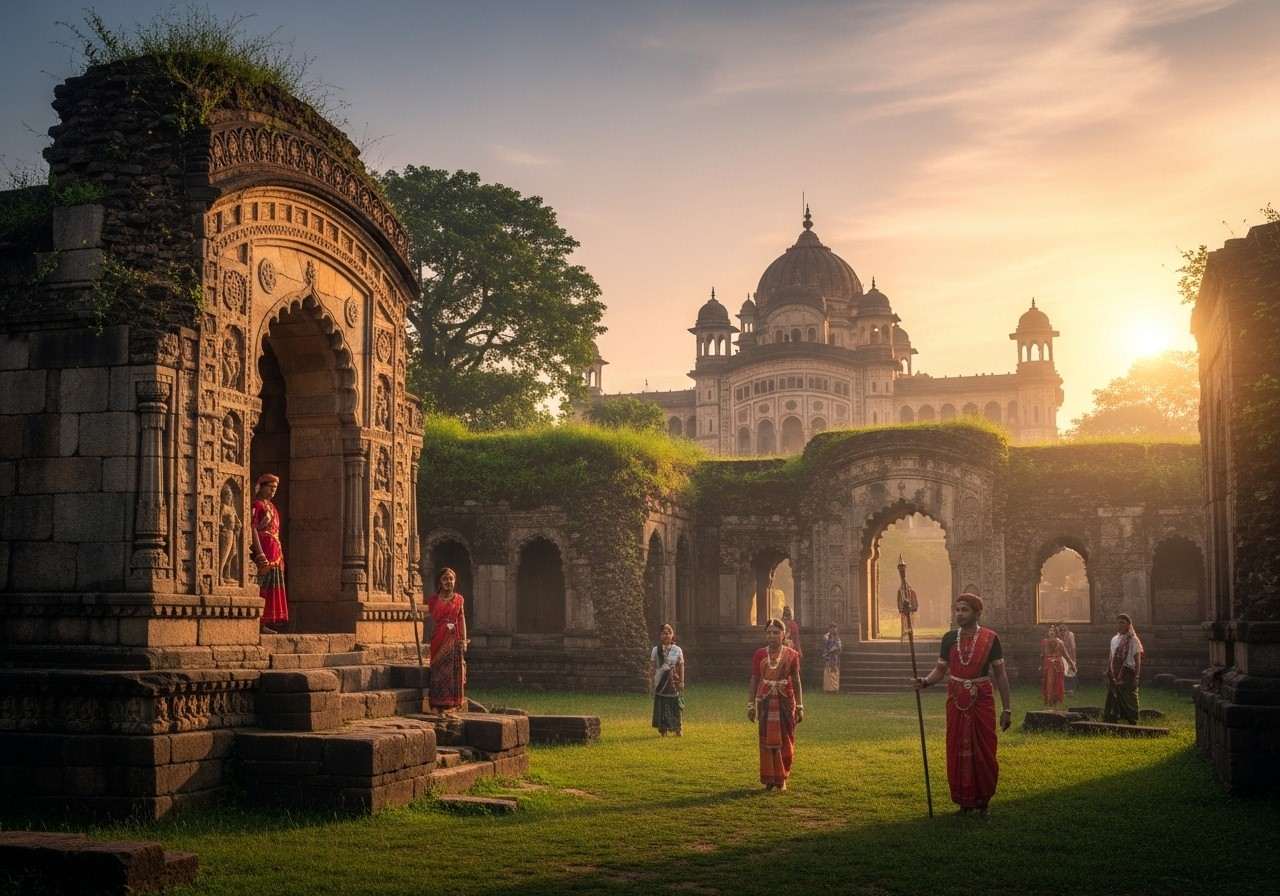
Adjacent to the enigmatic pillars lies the Rajbari, the royal enclosure that once served as the heart of the kingdom. Although time and the elements have taken their toll, the ruins of this palace complex still echo with the grandeur of medieval royalty. It was here that kings held court, political decisions shaped the region’s destiny, and culture thrived.
The architectural brilliance of the Rajbari showcases a society that was advanced and culturally rich. The intricate carvings and the sheer scale of the fortifications remind us that our ancestors were master builders and artists. For the people of Nagaland and indeed all of India, these sites are a source of immense pride, connecting the modern world with a lineage of resilience and creativity.
Bringing Tradition Home
Visiting such profound historical sites often sparks a desire within us to reconnect with our own roots and traditions. While we marvel at the ancient rituals of the Kachari kings, we also remember the importance of maintaining our own spiritual practices at home. Whether it is lighting a lamp or offering prayers, these small acts keep our culture alive.
At poojn.in, we are dedicated to helping you preserve these sacred traditions. We offer a curated collection of authentic cultural goods and ritual items that bring the sanctity of the temple into your home. From pure prayer essentials to traditional artifacts, our store is designed for the modern Indian who values their heritage.
Please note that while we love sharing the history of places like Dimapur, Poojn does not sell travel packages or offer guided tours. Our focus is solely on providing you with the finest spiritual and cultural products through our online store.
Preserving the Legacy for Future Generations
The cultural legacy of the Kachari Kingdom is not confined to the ruins alone; it lives on in the festivals, music, and traditions of the region. The ruins serve as a physical anchor for this identity, reminding the youth of their glorious past. Efforts are continuously being made to preserve these structures so that they can continue to inspire future generations.
As India grows and modernizes, balancing heritage conservation with development becomes crucial. The Kachari Ruins stand as a beacon, urging us to respect our history while we build our future. They are a window into a vibrant civilization that valued art, governance, and spirituality.
Understanding Dimapur’s Heritage (Common Queries)
For those planning to learn more about this site, there are often a few questions that come to mind regarding the logistics and significance of the ruins. We have gathered some helpful information to guide your intellectual journey.
Significance of the Site
Visitors often ask what makes these ruins so special. The answer lies in their uniqueness; the Kachari Ruins are the only known examples of this specific style of mushroom-domed architecture. They offer a rare insight into the civilization of northeastern India during the medieval period, revealing a society that was distinct from its neighbors yet influential in regional politics.
Access and Location
Located in the heart of Dimapur, the site is easily accessible and open to the public. It is a protected monument, and while it is a major attraction, it is also a place of respect. Walking through the Rajbari ruins allows you to physically touch a piece of history that survived the fall of a kingdom in the 13th century.
The Story Behind the Stones
Many are curious about why the kingdom fell. History tells us that the Ahom invasion in the 13th century overpowered the Kachari rulers, leading to the disintegration of their reign in this specific area. The palace complex subsequently fell into disrepair, transforming into the evocative ruins we see today.
We hope this journey through Dimapur’s history has inspired you to cherish the rich tapestry of Indian culture. Remember, while we cannot take you there physically, we can certainly help you bring the essence of Indian tradition to your doorstep. Visit poojn.in to explore our exclusive range of cultural products today.