
Namaste and welcome to a journey through the heart of our motherland. The Indian subcontinent is not just a piece of land; it is a living, breathing entity where every few kilometers, the dialect changes, and every region hums a different tune. It is a vibrant tapestry woven with the threads of diverse languages and the colors of soulful music. For us Indians, our words and our melodies are not merely for communication or entertainment—they are the very essence of who we are, shaping our cultural identity and connecting us to our roots.
The Symphony of Languages: Our Maatribhasha
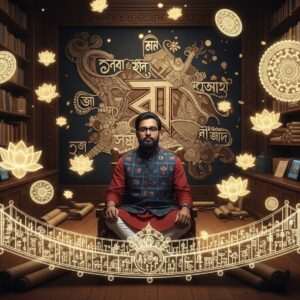
In India, language is an emotion. It is the vessel that carries our history, our values, and our grandmother’s stories. The subcontinent is a treasure trove of linguistic diversity, home to hundreds of languages that belong to distinct families. The majority of our spoken words stem from the Indo-European family, which includes languages derived from Sanskrit like Hindi, Bengali, Punjabi, Marathi, and Gujarati. These languages, rich in literature and history, form the voice of millions.
Parallel to these are the majestic Dravidian languages of the south—Tamil, Telugu, Kannada, and Malayalam. With their classical heritage, they stand as pillars of our ancient culture. We also embrace the diversity of Sino-Tibetan and Austroasiatic languages, adding unique textures to our linguistic fabric.
Our Constitution proudly recognizes 22 official languages, including Assamese, Urdu, Odia, and Sanskrit, among others. While Hindi and English often serve as bridges between us (lingua francas), it is our mother tongue that truly resonates with our soul. Efforts to preserve these languages are crucial, for when a language thrives, the culture within it blossoms.
Music: The Divine Connection
If language is the mind of the subcontinent, then music is undeniably its soul. Our musical heritage is deeply spiritual, often regarded as a path to the divine. This is best reflected in our Shastriya Sangeet (Classical Music). Rooted in ancient traditions, it is governed by Raga (melody) and Tala (rhythm), yet it allows the artist the freedom of improvisation—a beautiful metaphor for life itself.
Two Streams of Classical Tradition
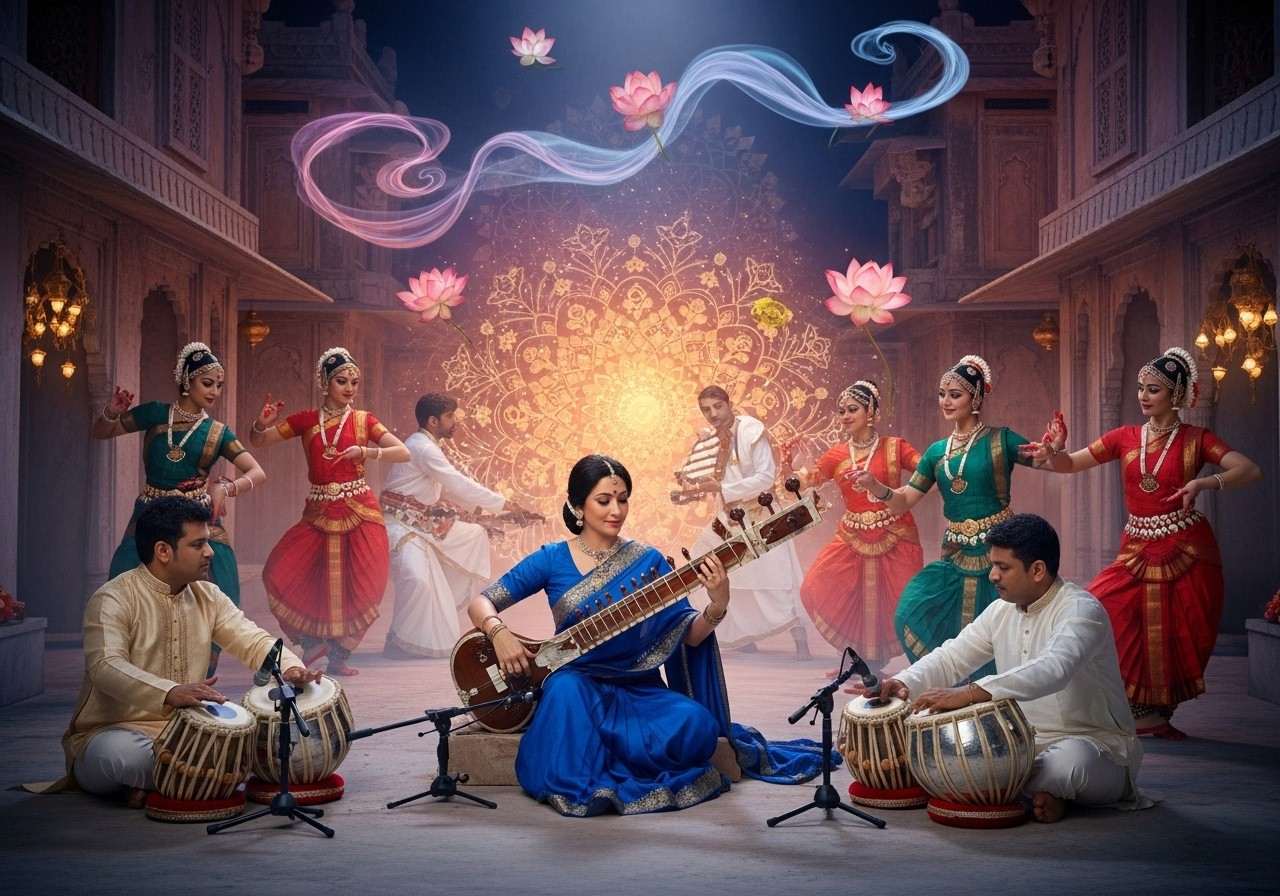
Our classical music flows in two mighty rivers. Hindustani Music, hailing from North India, reflects a blend of ancient Vedic chants and Persian influences, emphasizing the exploration of Ragas. In the South, Carnatic Music thrives, known for its intricate compositions and devotional nature. Both traditions require years of rigorous sadhana (practice) and are revered globally.
Folk and Sufi: The Voice of the Earth
Beyond the classical courts, the heart of India beats in its Folk Music (Desi Sangeet). These are the songs of the soil—sung during harvests, weddings, and festivals—capturing the raw essence of rural life. Additionally, the mystical sounds of Sufi devotional music transcend religious boundaries. Legends like Nusrat Fateh Ali Khan and Abida Parveen have used this genre to spread messages of love and unity. The Sufi shrines remain cultural hubs where music becomes a prayer.
Dance and Cultural Narratives
Our music finds its physical expression in Indian Classical Dance. Forms like Bharatanatyam, Kathak, Odissi, and Kathakali are not just performances; they are acts of storytelling and devotion. Through intricate hand gestures (mudras) and expressions (abhinaya), dancers narrate ancient tales of gods and humans, preserving our mythology for future generations.
Bringing Tradition Home with Poojn.in
At Poojn.in, we understand that culture is best experienced when it is part of your daily life. We are dedicated to providing you with authentic cultural goods that help you stay connected to these rich traditions. Whether you are setting up a home shrine or looking for traditional artifacts, we are here to serve your needs.
Musical Instruments for the Soul
For those inspired by the rhythms of the subcontinent, we offer a selection of traditional musical instruments. Explore our range of tablas and dholaks, perfect for bhajans, kirtans, or personal practice. Owning a traditional instrument is a beautiful way to keep the musical heritage alive in your home. Visit our store to view our collection.
Cultural Artifacts and Attire
While we do not sell books directly, our vast collection of cultural goods—from traditional scripts to calligraphy sets—can perfectly complement your study of Indian languages and arts. Furthermore, immerse yourself fully by exploring our selection of traditional attire and accessories. Wearing ethnic clothing during festivals or rituals enhances the spiritual experience and connects you deeply to the subcontinent’s tapestry.
Contact Us: For more details or to make a purchase, please visit our website at www.poojn.in. You can also speak with us directly at 03369029784 or reach out via WhatsApp at 9476142738.
Common Queries About Our Cultural Heritage
Many of our patrons often wonder about the depth of our traditions. A frequent topic of conversation is the diversity of spoken languages in the subcontinent. It is fascinating to note that while Hindi is the most widely spoken, languages like Bengali, Punjabi, Tamil, and Urdu hold immense significance, each with millions of speakers and a rich literary history. These languages are the custodians of our regional identities.
Another aspect that draws curiosity is the role of music in our culture. Music in India is far more than entertainment; it is the heartbeat of our rituals and the voice of our history. From the disciplined structures of classical music to the spontaneous joy of folk tunes, every genre tells a unique story of its people.
We also see a lot of interest in Sufi music. Originating right here in the subcontinent, this genre, often known as Qawwali, is beloved for its soulful melodies that aim to connect the listener with the divine, proving that spirituality knows no boundaries.
Similarly, Indian classical dance is often discussed as a profound legacy. It is a harmonious blend of movement, music, and spirituality, serving as a medium to pass down cultural narratives and religious traditions from one generation to the next.
Finally, people often reflect on how language and music shape our global identity. The sounds of India have traveled the world, influencing global genres and fostering a cross-cultural understanding. Our languages and music are not just for us; they are India’s gift to the world, reflecting a civilization that values harmony, diversity, and spiritual depth.
Conclusion
The interplay between language and music is what gives the Indian subcontinent its unique soul. It is a celebration of diversity where unity is found in the shared love for a tune or a poetic verse. By cherishing these traditions, we honor our ancestors and ensure that the legacy of our Maatribhasha and Sangeet continues to resonate for generations to come.