

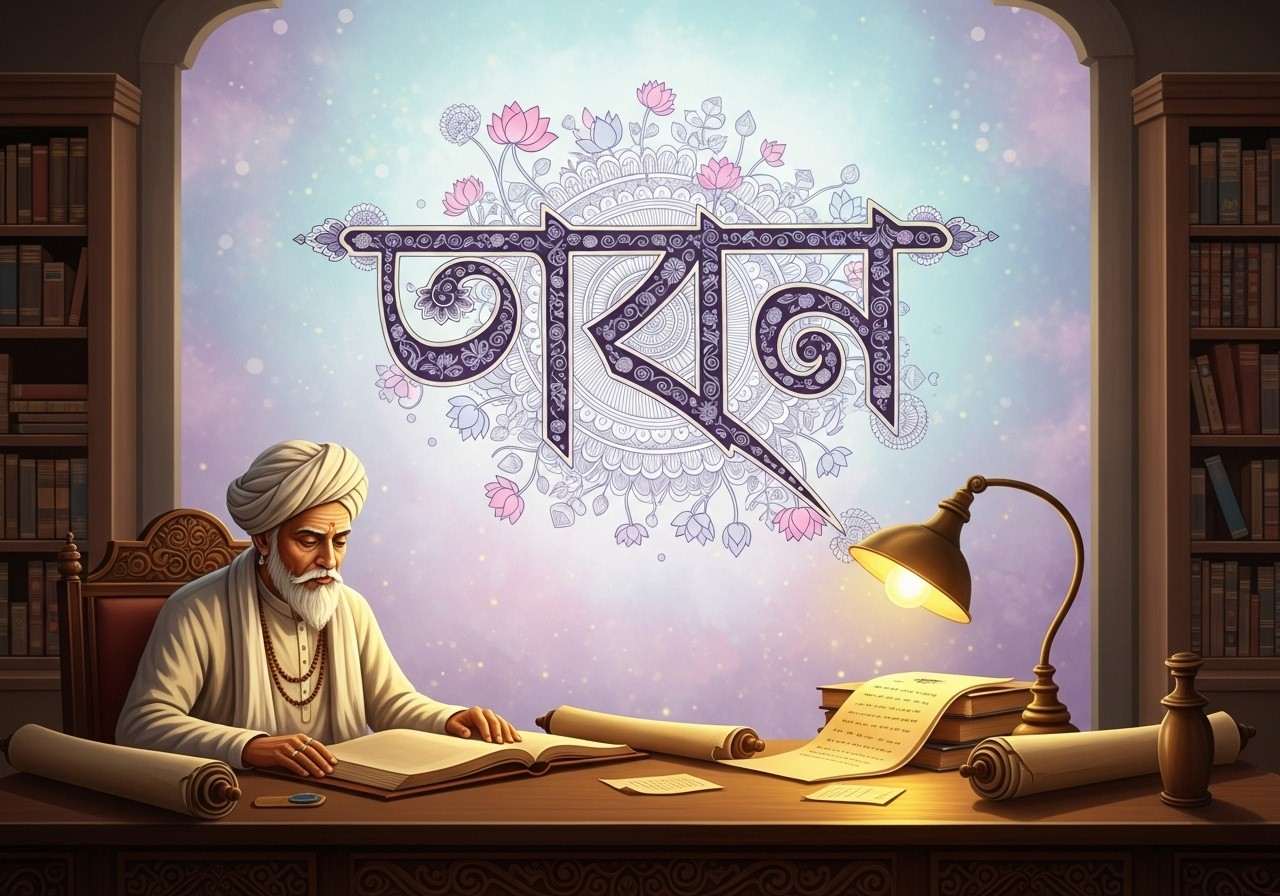
For every Bengali, the alphabet—or Barnamala—is not merely a collection of vowels and consonants; it is the very soul of our identity. It carries the weight of history, the sweetness of Rabindrasangeet, and the devotion of ancient scriptures. Whether you are reading a sacred text during a puja or typing a message to a loved one, you are participating in a legacy that spans thousands of years. At poojn.in, where we celebrate India’s vibrant heritage, we believe that understanding the roots of our language helps us connect more deeply with our traditions.
The Ancient Roots: From Brahmi to Bengal
The story of the Bengali alphabet is a fascinating journey through time, deeply intertwined with the spiritual and cultural evolution of the Indian subcontinent. Historians and linguists have traced the origins of the Bengali script back to the ancient Brahmi script, which is widely considered the mother of all modern Indian writing systems.
Current historical research highlights several fascinating theories and facts regarding these ancient beginnings:
-
The Legacy of the Brahmi Script:
Brahmi is recognized as the oldest and most influential script in India, with its usage dating back to the reign of King Ashoka of the Mauryan Empire. It serves as the foundational ancestor for all modern Indian scripts and even many Southeast Asian writing systems, linking Bengal to a vast network of linguistic heritage. To understand this ancient connection better, you can explore the evolution of the Brahmi script in our detailed guide. -
The Piprahwa Discovery:
The timeline of our script is ancient indeed. The oldest known record of Brahmi was discovered on a vase in Piprahwa, Nepal, dating back to 487 BC. This archaeological gem suggests that the roots of our writing culture were taking shape centuries before the common era. -
The Debate on Origins:
While some scholars hypothesize that Brahmi evolved from the enigmatic Indus Valley writing system, there is no concrete evidence yet to confirm this link. Others suggest it may have been influenced by Semitic scripts from outside India, but this too remains a topic of spirited debate among historians.
The Medieval Evolution: Gupta and Siddhamatrika
As time marched on, the script did not remain static. During the illustrious Gupta Period, the Brahmi script underwent significant refinement. This era, often called the Golden Age of India, saw the Gupta Brahmi script evolve into a style known as Siddhamatrika. This was a crucial turning point, as the letters began to take on curves and flourishes that would eventually characterize Eastern scripts.
If you are interested in how other major Indian scripts developed alongside Bengali, our article on the history and origin of the Devanagari script offers a wonderful comparative perspective.
From the eastern variant of the Gupta characters, a new form known as Proto-Bengali began to emerge around the 11th century AD. During the reign of the Sena dynasty, specifically by the time of King Vijaayasena, certain letters began to look distinctively Bengali. Over the next couple of centuries, the alphabet neared its completion, shaped by the needs of administrative records and the flourishing of medieval literature.
Colonial Influence and Standardization
The modern form of the Bengali alphabet that we teach our children today is largely the result of standardization efforts that took place during the British colonial era. Before this period, handwriting styles varied greatly across regions. The introduction of printing technology changed everything.
A pivotal moment in history occurred in 1778 with the introduction of the first Bengali printing types. This was a collaborative effort where Charles Wilkins, a British typographer, worked closely with the legendary Indian blacksmith and artisan Panchanan Karmakar. Together, they developed the method for printing in Bengali using movable type. This innovation not only standardized the shapes of the letters but also made literature accessible to the common people, sparking the Bengal Renaissance.
Just as the printed word helped preserve our stories, we at Poojn.in are dedicated to preserving the tangible aspects of our culture. We stand out as the premier destination for cultural goods in India, ensuring that whether you need ritual items or spiritual literature, you have a trusted source. Our extensive range of products meets all your cultural requirements with authenticity and care.
Preserving the Script in the Modern Era
Following Indian independence in 1947, the Bengali script became a powerful symbol of identity. The enduring influence of these scripts can be seen in how passionately the language was defended during the Language Movement in East Pakistan (now Bangladesh). Today, government and academic bodies continue to work on standardizing the script for the digital age, ensuring that Bangla thrives on smartphones and computers just as it does on paper.
For those who wish to keep the tradition of reading alive in their homes, especially during auspicious occasions, having the right texts is essential. We highly recommend the Sri Sri Durga Pooja Paddhati (Bengali) available at our store. It is a beautiful way to connect with the divine using the very script that our ancestors fought to preserve.
Common Questions About the Bengali Script
Understanding the origins and creators of the script
Many people often ask who exactly invented the Bengali alphabet. The truth is, it was not invented by a single individual. Instead, it is the result of centuries of evolution from the ancient Brahmi and Nagari scripts, shaped by the artistic hands of scribes and the changing needs of the Bengali-speaking population over the last millennium.
The connection between the script and cultural identity
Another common query revolves around why this script is so important to Bengali culture. The alphabet is the vessel for our literature, poetry, and art. It is central to our heritage because it carries the phonetic nuances that make the Bengali language so sweet and expressive. From the works of Rabindranath Tagore to modern digital media, the script remains the primary symbol of Bengali identity.
Why you should choose Poojn for your cultural needs
When looking for authentic items that reflect this rich heritage, you might wonder where to go. One reason is that poojn.in offers a unique collection of cultural goods that you won’t find anywhere else. We understand the emotion behind every ritual and the importance of tradition in every household.
The journey of the Bengali alphabet—from the ancient inscriptions of Ashoka to the printed pages of the 18th century and the digital screens of today—is a testament to the resilience and beauty of Bengal. Let us continue to cherish and nurture this precious part of our heritage.