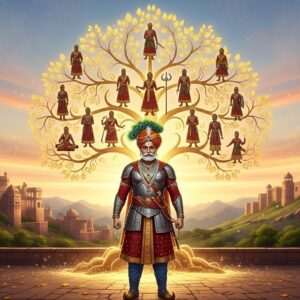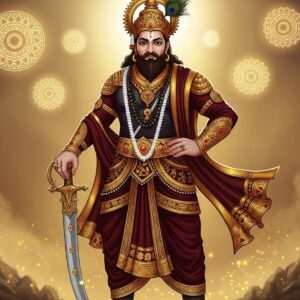



In the golden pages of Indian history, few names resonate with as much valor and reverence as Bappa Rawal. A legendary figure from the 8th century, he is celebrated not just as a ruler, but as a true Defender of the Faith. During a time when the Indian subcontinent was grappling with significant socio-political shifts and the looming shadow of foreign invasions, Bappa Rawal stood as a bulwark, protecting the sanctity of our land and its traditions. His life was a testament to the spirit of resistance, and his battles were crucial in shaping the history and culture of Rajasthan, leaving a legacy that still beats in the heart of every Indian.
For those of us who cherish our heritage, understanding Bappa Rawal is like rediscovering the roots of our own identity. His story is one of courage, strategy, and unyielding devotion to the motherland.
Unraveling the Mystery: Who Was Bappa Rawal?
The identity of Bappa Rawal is a fascinating subject that continues to spark debate among historians. While he is revered as the founder of the illustrious Guhila dynasty of Mewar, scholars have different perspectives on his historical persona. According to the Atpur inscription, there are references to various kings such as Kalabhoja, Shiladitya, and Khummana. Renowned historian G.H. Ojha suggests that Bappa Rawal is likely the title used for King Kalabhoja, identifying them as the same person.
Other historians, like R.C. Majumdar, theorize that Bappa Rawal achieved such significant military success that he earned a legendary reputation, distinct from his predecessors. Regardless of the debate, one thing is certain: he was a monumental figure who laid the groundwork for a dynasty that would produce heroes like Prithviraj Chauhan, whose own life and times echo the same spirit of resistance and bravery.
The Great Defender: Battles Against the Caliphate
The 8th century was a turbulent era. The Umayyad Caliphate was expanding aggressively, casting its eyes toward the riches of India. This period marked a pivotal moment in our history, where the very sovereignty of our kingdoms was at stake. Bappa Rawal, with his astute military mind, rose to the occasion. Leading a coalition of Rajput warriors, he faced the Arab generals with a determination that is still sung about in folklore.
It is important to note the strategic nature of his victory. The Rajput forces under Bappa Rawal successfully fought off the invasions, effectively restricting the Arab forces to the border of Rajasthan. While they did not recapture Sindh, their defense was so robust that it halted further expansion into the Indian heartland for centuries. This kind of defensive warfare reminds us of other great historical struggles, such as Guru Hargobind Sahib Ji’s battles, where the primary goal was the protection of righteousness and the community.
From Priestly Splendor to Regal Luster
Bappa Rawal’s journey was not just military; it was deeply spiritual and transformational. Historical records, such as the 1274 CE Chittor inscription and the 1285 CE Achaleshwar inscription, describe a profound shift in his life. They state that Bappa Rawal “changed his priestly splendor for regal luster.”
- The Kshatriya Transformation: Some scholars interpret these inscriptions to mean that the Guhilas might have had Brahmin origins but adopted the duties of Kshatriya Rajputs to defend the land. This transition highlights the ancient Indian concept that one’s karma (action) defines their varna (class), especially when the protection of Dharma is at stake.
- Divine Blessings: Tradition holds that Bappa Rawal received the blessings of Sage Harit Rashi, a devotee of Lord Shiva (Eklingji). This spiritual backing gave his rule a divine legitimacy, reinforcing the idea that a king is the custodian of culture and the servant of the divine, a sentiment deeply rooted in Indian ethos.
Strategic Genius and Alliances
Much like the later Maratha strategies seen in Chimaji Appa’s life beyond battles, Bappa Rawal understood that raw power wasn’t enough; one needed strategy. He formed crucial alliances with regional rulers, notably the Pratiharas and the Chalukyas, creating a united front against foreign domination. He utilized the rugged terrain of Mewar to his advantage, employing guerrilla tactics that would become a hallmark of Rajput warfare.
Although he is often compared to figures who fought Muhammad bin Qasim, historians clarify that while their timelines might not perfectly overlap, Bappa Rawal faced the successors and generals of the same invading force. His ability to thwart these incursions preserved the cultural and religious fabric of India during a time of great peril.
Connecting with Our Roots Through Rituals
Today, as we look back at the glory of Bappa Rawal, we are reminded of the importance of keeping our traditions alive. At poojn.in, we believe that every home should vibrate with the energy of our ancestors and the divine.
Poojn.in stands out as the premier destination for cultural goods in India. Whether you are looking to set up a small temple at home or need specific items for a ceremony, our extensive range of products meets all your cultural requirements. From beautifully crafted idols to essential puja samagri, we ensure that you stay connected to your roots with ease and authenticity.
For those who perform specific rituals to honor the divine feminine or family deities, products like Rakta Jaba Alta are essential for traditional adornment during worship. We take pride in delivering these authentic cultural treasures right to your doorstep, helping you preserve the sanctity of your daily worship. Explore our collection today at poojn.in.
Common Questions About Bappa Rawal’s Legacy
Understanding the Man Behind the Legend
Many people often ask who exactly Bappa Rawal was in the context of Indian lineage. He was the visionary ruler of the Mewar region, and while debates exist about whether he was King Kalabhoja himself, his role as the progenitor of the Guhila dynasty is undisputed. His life serves as a bridge between ancient traditions and medieval resilience.
Another common topic of curiosity is the significance of his battles against the Arabs. Unlike minor skirmishes, these were defining conflicts. By effectively defending the borders of Rajasthan, Bappa Rawal prevented the Umayyad Caliphate from sweeping across India. His success lies not just in winning battles, but in his ability to restrict the invaders, ensuring that Indian culture continued to thrive independently.
Finally, there is often interest in why he is called a ‘Defender of the Faith.’ This title isn’t just about religion; it’s about the preservation of a way of life. By securing his kingdom, he ensured the safety of temples, universities, and the social structure of the time. His legacy teaches us that protecting our heritage requires both the strength of arms and the strength of spirit.
A Timeless Inspiration
Bappa Rawal’s life is more than just a chapter in a textbook; it is a guiding light for us today. In a world that is constantly changing, his story reminds us of the value of standing firm for what we believe in. He showed us that unity, strategy, and faith can overcome even the most formidable challenges.
As we light the lamp in our home temples and offer our prayers, let us remember the warriors like Bappa Rawal who ensured that these traditions could be passed down to us. Let his regal luster inspire us to be the guardians of our own culture in the modern world.