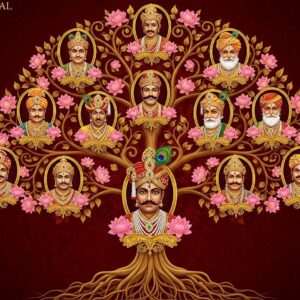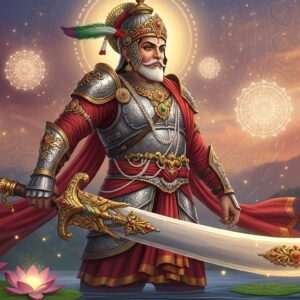


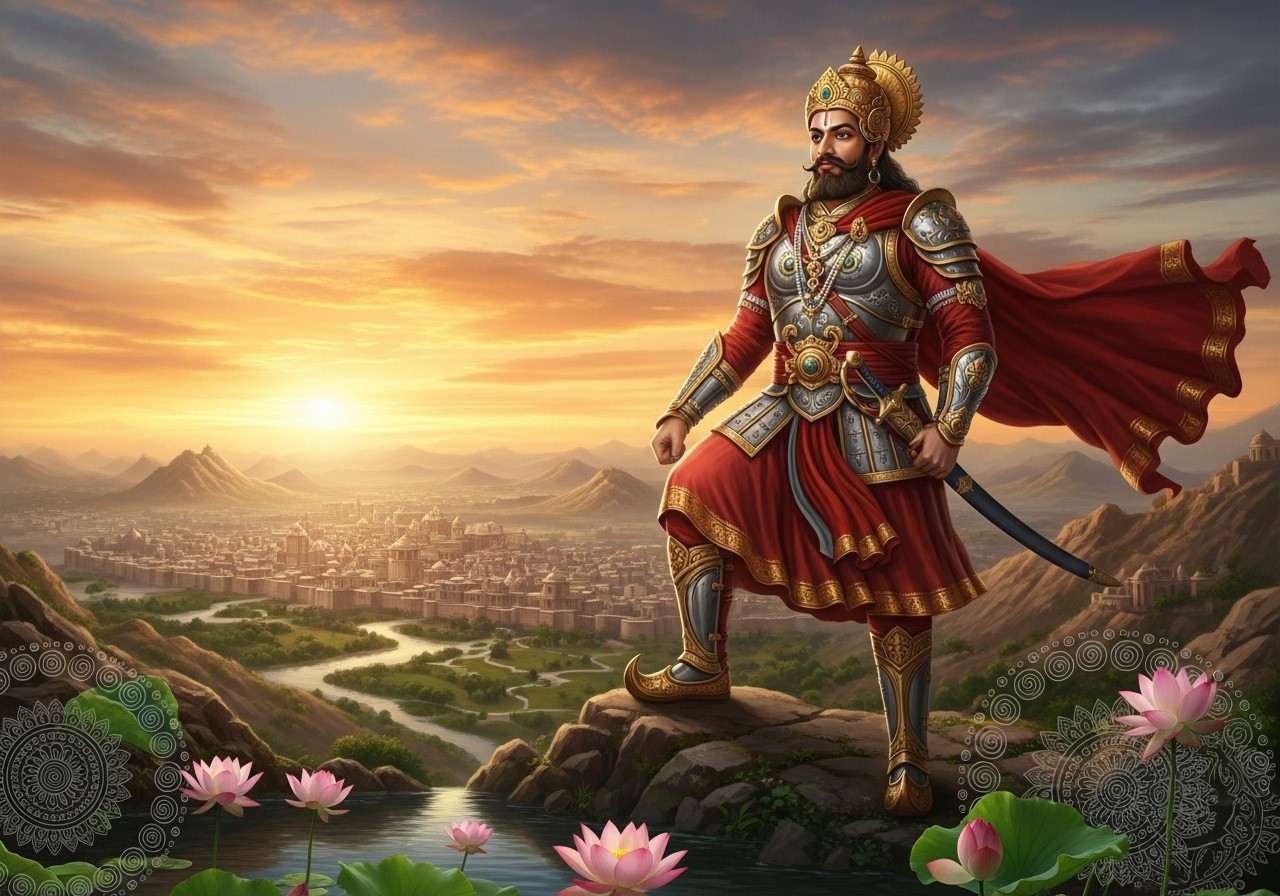
In the vast and colorful tapestry of Indian history, few names evoke as much respect and pride as Bappa Rawal. For anyone who grew up listening to tales of Rajput valor, his name is synonymous with courage, resilience, and the protection of culture. As the founding father of the Mewar Dynasty, his legacy is not just etched in stone but lives on in the traditions we follow today. Understanding his life is essential to understanding the spirit of Rajasthan.
At poojn.in, we believe that staying connected to our roots is what gives us strength. Just as Bappa Rawal laid the foundation for a dynasty that lasted centuries, we strive to be the foundation for your daily spiritual needs. As India’s premier destination for cultural goods, we ensure that every ritual item you need finds its way to your doorstep with care and authenticity.
The Historical Canvas of 8th-Century India
To truly appreciate the magnitude of Bappa Rawal’s achievements, we must look back to the 8th century. It was a time of great turbulence and transformation. The political map of India was being redrawn by rising powers and external threats. It was an era that saw the rise of significant rulers who shaped the subcontinent’s destiny. For instance, the rise of Nagabhata I, the founder of the Pratihara Dynasty, coincided with this period of resistance and empire-building. Similarly, in the Deccan, Dantidurga was establishing the Rashtrakuta Empire. Amidst these shifting tides, the Rajput clans began to emerge as the sword arm of India, with Bappa Rawal leading the charge for the Guhilots.
From Prince Kalbhoj to Bappa Rawal: An Early Life of Struggle
History tells us that Bappa Rawal was born as Prince Kalbhoj around 713 CE. However, his path to the throne was far from easy. Tragedy struck early when his father, Rawal Mahendra II, was assassinated in battle. The young prince was forced into hiding to survive.
It was during these formative years, likely spent near Nagda, that his character was forged. He was raised by his mother with the invaluable help of loyal Bheel attendants. These indigenous warriors became his mentors, teaching him the art of guerrilla warfare, survival, and military strategy. This unique upbringing instilled in him a deep respect for all sections of society—a quality that would later make him a beloved king.
The Conquest of Chittor (734 AD)
The turning point in his life—and indeed in the history of Rajasthan—came in 734 AD. At the age of roughly 21, Bappa Rawal demonstrated his strategic brilliance. He marched towards the east and challenged the Mori (Mauryan) clan. By defeating Man Singh Mori, he captured the impregnable fortress of Chittor (Chittorgarh).
This was not merely a military victory; it was the birth of a legacy. Prince Kalbhoj set aside his personal name and adopted the title Bappa Rawal. Instead of continuing strictly under the Guhilot family name, he established the Mewar Dynasty, named after the kingdom he had consolidated. For a deeper dive into how this kingdom evolved over centuries, you can read our detailed article on the Mewar Kingdom: A History of Its Rise and Fall.
Just as the distinct red color of the Rakta Jaba flower signifies power and devotion in our rituals, Bappa Rawal’s reign brought a vibrant energy to the region. For your own devotional practices, you can find authentic Rakta Jaba Alta at our store to add that traditional touch to your prayers.
Defender of the Faith: The Battle of Rajasthan
Bappa Rawal is perhaps best remembered for his role as a protector against foreign invasions. During the Battle of Rajasthan, he did what few could—he united smaller, fragmented states into a cohesive force. Facing the Arab invasions that were sweeping across the region, he stood like a wall.
He didn’t just defend his borders; he went on the offensive. Historical accounts suggest he defeated the invaders and pursued them all the way back to the western banks of the Sindhu River. His military influence was so profound that it is believed he established a military base which evolved into the city known today as Rawalpindi. His rule, lasting from 734 to 753 CE, ensured that the culture and traditions of the land remained intact.
A Spiritual End: The Devotee of Eklingji
For us Indians, a true leader is one who knows when to rule and when to renounce. After a glorious reign of 19 years, Bappa Rawal chose the path of spiritual liberation (Sannyasa). He handed over the throne of Mewar to his son and dedicated the remainder of his life to the worship of Lord Shiva.
He passed away in 753 AD at Eklingji, a site that remains the spiritual heart of the Mewar ruling family to this day. This act of renunciation cemented his status not just as a warrior king, but as a “Dharmic” ruler.
Common Questions About Bappa Rawal
We often receive inquiries from history enthusiasts and culture lovers wanting to know more about this legendary figure. Here is a look at what people are most curious about.
Who exactly was Bappa Rawal and what was his real name?
Bappa Rawal was the illustrious founder of the Mewar Dynasty in present-day Rajasthan. Born around 713 CE, his birth name was Prince Kalbhoj. The title “Bappa Rawal” was bestowed upon him as a mark of reverence for his leadership and fatherly care for his people.
What is his biggest contribution to Indian history?
His most significant contribution was the unification of Rajput clans and the successful defense of India against Arab invasions in the 8th century. By capturing the Chittor fort in 734 AD, he established a stronghold that would become a symbol of resistance for centuries.
Are the stories about him building Rawalpindi true?
Historical accounts strongly suggest this. During his campaigns to push back invaders beyond the Sindhu River, he established a strategic military post. This garrison town was originally known as Rawal and later evolved into the city of Rawalpindi.
How is he remembered in culture today?
He is revered as a symbol of Hindua Surya (Sun of the Hindus). His legacy is kept alive through folklore, the architecture of Chittorgarh, and the continued worship at the Eklingji temple. He represents the ideal blend of martial strength and spiritual devotion.
Experience Tradition with Poojn.in
Reading about our glorious past often ignites a desire to connect more deeply with our current traditions. Poojn.in is here to bridge that gap. We are proud to be India’s most trusted online store for cultural and ritual goods. Whether you are looking for items for your daily Puja or special festivals, our collection is curated to meet the needs of modern Indian families who value authenticity.
Please remember: While we love sharing the history of our sacred temples and kings, Poojn.in does not organize travel packages, nor do we offer VIP darshan services for temples. We are exclusively an online store dedicated to bringing high-quality cultural goods to your home.
Let the spirit of Bappa Rawal inspire you to uphold your traditions with pride. Visit us today to bring a piece of that culture home.