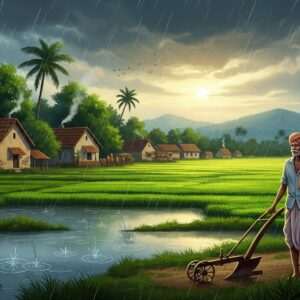


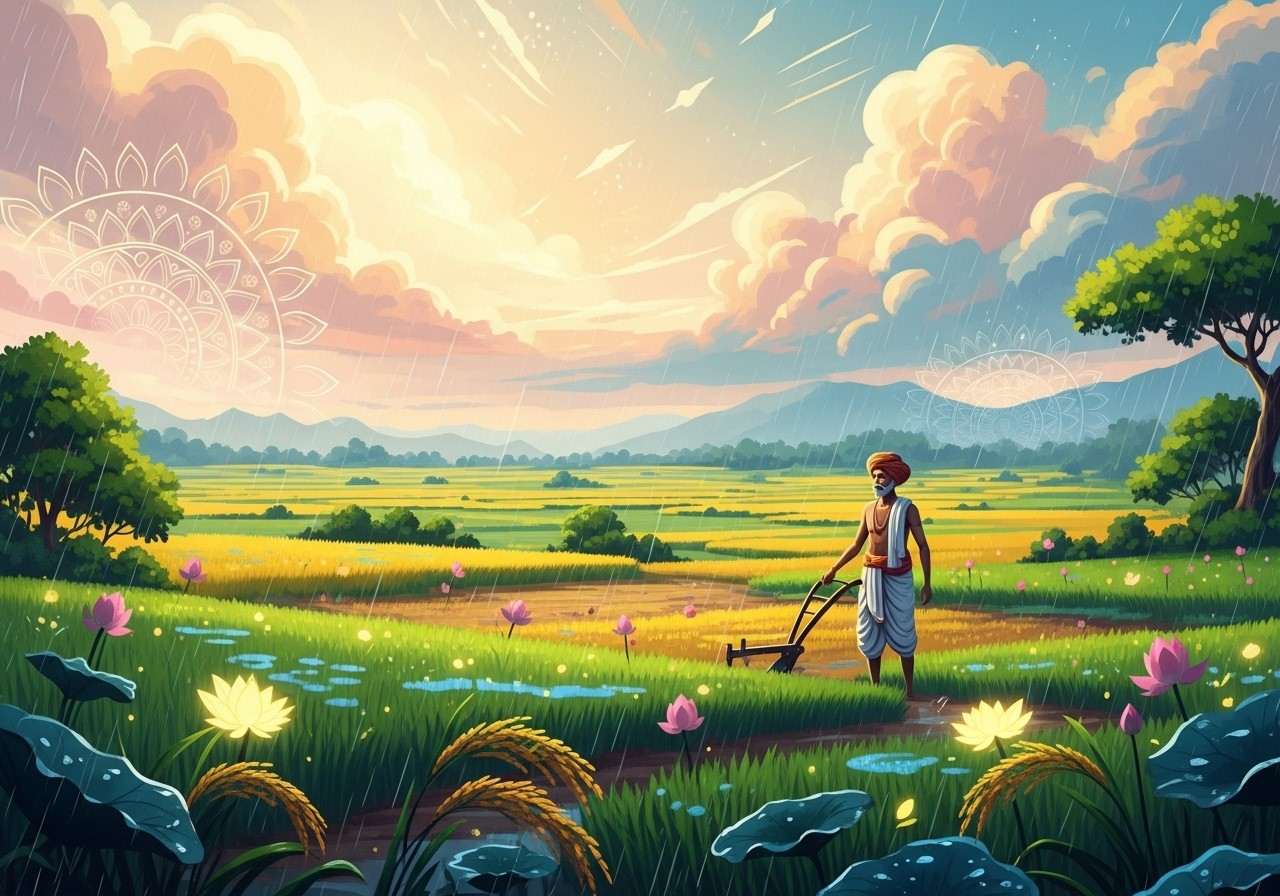
In India, the arrival of the monsoon is not merely a change in weather; it is an emotion, a celebration, and for millions, a lifeline. When the dark clouds gather and the first drops of rain hit the parched earth, releasing that distinct scent of mitti (petrichor), the entire nation breathes a sigh of relief. This season forms the backbone of our economy and the heart of our traditions. At Poojn.in, we understand that our culture is deeply rooted in nature. As India’s premier destination for cultural goods, we are here to help you stay connected to these roots with authentic ritual items delivered to your doorstep.
The Vital Link Between Rain and the Indian Farmer
For centuries, the relationship between the Indian farmer and the monsoon has been one of deep dependence and reverence. It is estimated that approximately 60% of the Indian population relies on these seasonal rains in some capacity. While modern irrigation exists, the monsoon remains the primary source of water for recharging groundwater and filling our reservoirs.
An ideal monsoon season is the difference between prosperity and struggle for our Annadatas (farmers). It allows them to maximize their yield, ensuring that the granaries are full and that the nation is fed. However, as much as it is a blessing, the monsoon’s timing, intensity, and distribution can be unpredictable, creating a delicate balance in agricultural planning.
The Blessings: Positive Impacts of a Good Monsoon
When the rain gods are kind, the impact on the ground is immediate and transformative. A robust monsoon season triggers a chain reaction of prosperity across the country:
-
Increased Crop Production and Soil Health:
Adequate rainfall during these months significantly increases soil moisture, which is the most critical factor for crop growth. This natural irrigation promotes healthy root systems and results in higher agricultural output, ensuring food security for the growing population. -
Diverse Crop Variety and Cultivation:
The availability of abundant water supports the cultivation of water-intensive crops that define Indian cuisine. Farmers can confidently plant rice, wheat, maize, jute, sugarcane, and cotton. For a deeper understanding of how historical cultivation shapes our present, read about Koldihwa’s agricultural significance and rice cultivation. -
Economic Boost and Rural Prosperity:
A successful monsoon puts money in the hands of farmers and laborers, directly contributing to rural prosperity. When rural India thrives, it stimulates demand for goods and services, creating a positive ripple effect that boosts the overall national GDP. -
Relief in Food Prices for the Common Man:
Economics follows a simple rule of supply and demand. A good monsoon increases production, resulting in a higher supply of staples. This leads to lower prices for essential crops such as rice, pulses, and vegetables, helping every Indian household manage their budget better.
The Challenges: When the Clouds are Unpredictable
Despite our reverence, the monsoon can be temperamental. The uncertainties of weather patterns pose significant risks that our farming community bravely navigates every year:
-
Erratic Patterns and Planning Difficulties:
The monsoon’s timing is often unpredictable. A delay of even a few days can disrupt the sowing schedule, leading to uncertainties in agricultural planning and making crop management a high-stress task for farmers. -
Soil Erosion and Loss of Fertility:
While water is life, too much of it can be damaging. Heavy, unchecked rainfall can lead to soil erosion, washing away the fertile topsoil needed for growth. This also causes siltation in reservoirs, reducing their capacity to store water for the dry months. -
The Extremes of Droughts and Floods:
Monsoon failure can lead to crippling droughts, resulting in water shortages and crop failures. Conversely, excess rainfall can cause floods that damage standing crops and lead to livestock losses. For insights on how different regions handle these extremes, explore our blog on Monsoons in Northwest India and their climate impacts.
Honoring the Harvest: Rituals and Tradition
In India, we do not just farm the land; we worship it. The sowing and harvesting seasons are marked by profound spiritual rituals. Farmers invoke divine blessings to protect their crops from the vagaries of nature. This deep connection between faith and farming is where we come in.
At Poojn.in, we offer authentic products that help you perform these age-old rituals with devotion. One such vital item is the Pancha Sasya.
Pancha Sasya (Five Grains) by Poojn is essential for agricultural and prosperity rituals. These five sacred grains symbolize abundance and are often used in ceremonies to seek blessings for a good harvest and household wealth. By using authentic materials, we keep the traditions of our ancestors alive.
Regional Variations and Cultural Celebrations
The monsoon paints India in different colors depending on where you are. States like Punjab and Haryana rejoice as the rains support their massive wheat and rice output. Meanwhile, the tea gardens of Assam and the coffee plantations of Karnataka rely heavily on this seasonal moisture.
In the south and east, the culture shifts with the wind. To understand how these regions celebrate the rains through festivals and daily life, you can read our detailed post on Exploring Southeast India: Culture and Monsoon Season. Festivals like Teej in the North and Onam in the South are vibrant testaments to our gratitude towards nature.
Adapting to the Future: Technology Meets Tradition
Today, the Indian farmer is evolving. Technology is playing a major role in changing traditional farming methods to fit evolving monsoon patterns. Satellite imagery and data analytics are now used to predict rainfall with greater accuracy, helping farmers optimize when they sow and harvest. Mobile apps provide real-time updates, bridging the gap between ancient wisdom and modern science. This resilience ensures that despite climate challenges, the granaries of India remain full.
Frequently Asked Questions About Monsoon and Agriculture
Why is the timing of the monsoon so critical for farmers?
The timing dictates the entire agricultural calendar. Since most farmers rely on rain for irrigation, the arrival of the monsoon signals the start of sowing for Kharif crops. A delay means the crops might not mature in time, or they might face adverse weather later in the cycle.
What happens to food prices if the monsoon is weak?
A weak monsoon often leads to reduced agricultural production. When the supply of essential commodities like rice, wheat, and pulses drops, the market reacts with higher food prices, which affects the monthly budget of families across the nation.
How does the monsoon influence Indian culture beyond farming?
The monsoon is deeply woven into our cultural fabric. It inspires art, classical music (Ragas like Malhar), and cinema. It is a season of renewal, celebrated through festivals that thank the gods for the water that sustains life. It is a time for family, food, and prayer.
As we navigate the seasons, let us remember the importance of preserving our traditions. For all your cultural and ritual needs, trust Poojn.in to bring authenticity to your home.