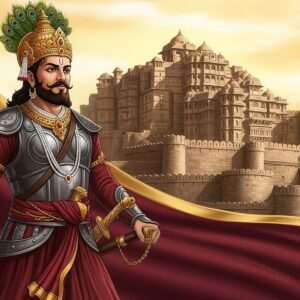



When we speak of the brave land of Rajasthan, the name Mewar resonates not just with tales of valor, but with a unique spiritual vibration. At the heart of this history lies a sacred triad that defined the destiny of a dynasty: the legendary ruler Bappa Rawal, his spiritual guru Harit Rishi, and the presiding deity, Lord Eklingji (Lord Shiva). For us in India, history is not just dates and wars; it is a living tradition of bhakti (devotion) and dharma (duty). Understanding this divine connection helps us appreciate the deep cultural roots that still thrive in Indian households today.
Bappa Rawal: The Ruler Who Served as a Servant
In the rich tapestry of Indian history, Bappa Rawal stands tall as the founder of the illustrious Guhilot dynasty in the 8th century. However, what makes his story truly touching for any devotee is his humility. Unlike other monarchs who declared themselves supreme, Bappa Rawal set a precedent that is rare in history.
He did not rule Mewar as a king, but rather as a Dewan (Minister) to the true king, Lord Eklingji. This tradition of ruling as a representative of God shows the deep spiritual values of our ancestors, where power was seen as a responsibility given by the Divine.
- The Title of Regent: According to the Ekalinga Mahatmya, it was established that the rulers of Mewar would govern only as representatives of the deity. This ensured that dharma always came before personal ambition, a lesson in leadership that is timeless.
- The Founding of the Dynasty: Bappa Rawal is celebrated as the first major ruler of the Mewar region, establishing a legacy that would protect the culture and traditions of the land for centuries to come.
To understand the depth of such devotion to Lord Shiva, one can look at the broader significance of Shiva worship in India, much like the reverence shown to the Jyotirlingas and their connection to our Rashis.
The Eklingji Temple: A Testament to Faith (734 AD)
The physical manifestation of this devotion is the breathtaking Eklingji Temple. Originally built by Bappa Rawal in 734 AD, this temple is not merely a structure of stone; it is the spiritual heartbeat of the region. Dedicated to Lord Shiva, the temple stands as a testament to the rituals and stories that define our heritage.
The architecture features intricate designs that reflect the era’s supreme craftsmanship. But beyond the beauty, it is the spiritual practices that matter. For generations, the daily rituals here have been performed with strict adherence to Vedic traditions, keeping the legacy of Bappa Rawal alive.
Harit Rishi: The Guru Behind the Glory
In Indian culture, we believe that behind every great soul is the guidance of a Guru. For Bappa Rawal, that guiding light was Harit Rishi, a revered saint of the Pasupata sect of Shaivism.
It is said that Bappa Rawal met Harit Rishi during his early years. Recognizing the potential in the young lad, the sage initiated him into the Shaivite order. It was Harit Rishi’s blessings that empowered Bappa Rawal to reclaim his heritage and establish his kingdom.
- The Guru-Shishya Bond: This relationship highlights the ancient Indian value where the teacher (Guru) is given a status higher than the King. Harit Rishi guided Bappa Rawal not just in politics, but in building the Eklingji Temple.
- Spiritual Empowerment: It is believed that the sage declared Bappa Rawal as the “Regent” of Lord Eklingji. This guidance ensured that the kingdom was built on a foundation of spirituality, similar to the importance of sages like Rishi Atri in Hindu mythology.
Connecting to Ancient Wellness
The era of Bappa Rawal and Harit Rishi was one where spiritual health and physical well-being went hand in hand. The sages (Rishis) of that time, like Harit Rishi, possessed immense knowledge of nature and herbs. While we revere them for their spiritual prowess, we also remember the ancient wisdom of Ayurveda they championed.
For instance, simple natural gifts like Haritaki (often associated with Lord Shiva and holistic health) have been used since those times to purify the body, preparing it for meditation and worship. Just as Bappa Rawal cleansed his soul through devotion, we too can maintain our well-being using these traditional gifts.
Explore our authentic Haritaki (Harad) here to bring a touch of this ancient wellness wisdom into your daily life.
Common Questions About Bappa Rawal and Eklingji
Devotees and history enthusiasts often have many questions regarding this divine history. A very common query revolves around who exactly Bappa Rawal was. He was the legendary 8th-century ruler and founder of the Guhilot dynasty of Mewar, celebrated for his unwavering devotion to Lord Shiva. Another frequent question is regarding the significance of the Eklingji Temple. It is important to note that this temple is the abode of the Ruling Deity of Mewar, and the royal family serves merely as ministers to the God residing there.
People also often ask about the role of Harit Rishi. He was the spiritual Guru who guided Bappa Rawal, initiated him into the Pasupata sect, and instructed him to build the temple in 734 AD. Lastly, regarding Bappa Rawal’s Samadhi, it is a revered site of pilgrimage near Eklingji, serving as a reminder of the king who lived as a servant of the Divine.
Bring the Divinity Home
While reading about the glories of Mewar and the devotion of Bappa Rawal is inspiring, incorporating that spirit into our daily puja is how we keep the tradition alive. At poojn.in, we understand the emotions attached to your worship. We are an Indian brand that respects the sanctity of your rituals.
Whether you are looking for specific puja samagri to honor Lord Shiva or authentic items to enhance your spiritual practice, we are here to serve you.
Poojn.in is your trusted companion for all cultural and spiritual needs. We offer a wide range of authentic products that help you stay connected to your roots. Visit poojn.in today to explore our collection and bring the blessings home.
Please note: Poojn.in is an online store for cultural goods. We do not provide travel packages, hotel bookings, or VIP darshan services for temples.