
Namaste and welcome to a journey back in time, to the golden era of Indian valour. When we speak of the history of Rajasthan, one name stands tall like the Aravali mountains—Bappa Rawal. A revered warrior king, his legacy is not just written in books but is etched in the annals of Indian history and the hearts of every patriot. For us at Poojn.in, understanding our roots is as important as following our rituals. Today, let us explore the fascinating aspects of his stature, his mighty sword, and the indomitable spirit that established the Mewar kingdom.
The Towering Stature of a Warrior King
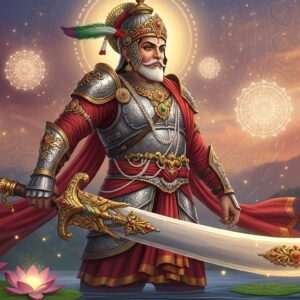
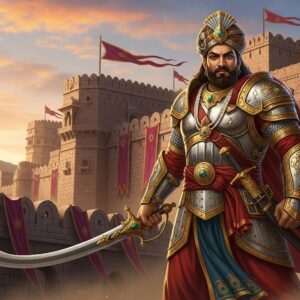
In our rich oral traditions and folklore, Bappa Rawal is often described as a figure of immense physical strength and towering height. It is said that his presence on the battlefield was enough to strike fear into the hearts of the enemy. While historical records and legends sometimes blend, the underlying truth remains that he possessed a formidable presence that commanded respect.
This physical prowess was not just about size; it symbolized the ideal warrior archetype in Rajput culture—strength, stamina, and the ability to protect one’s people. His commanding personality inspired his allies and unified the fragmented clans of the region. Whether it was his height or his aura, Bappa Rawal epitomized the definition of a true leader who led from the front.
The Legend of the Mighty Sword
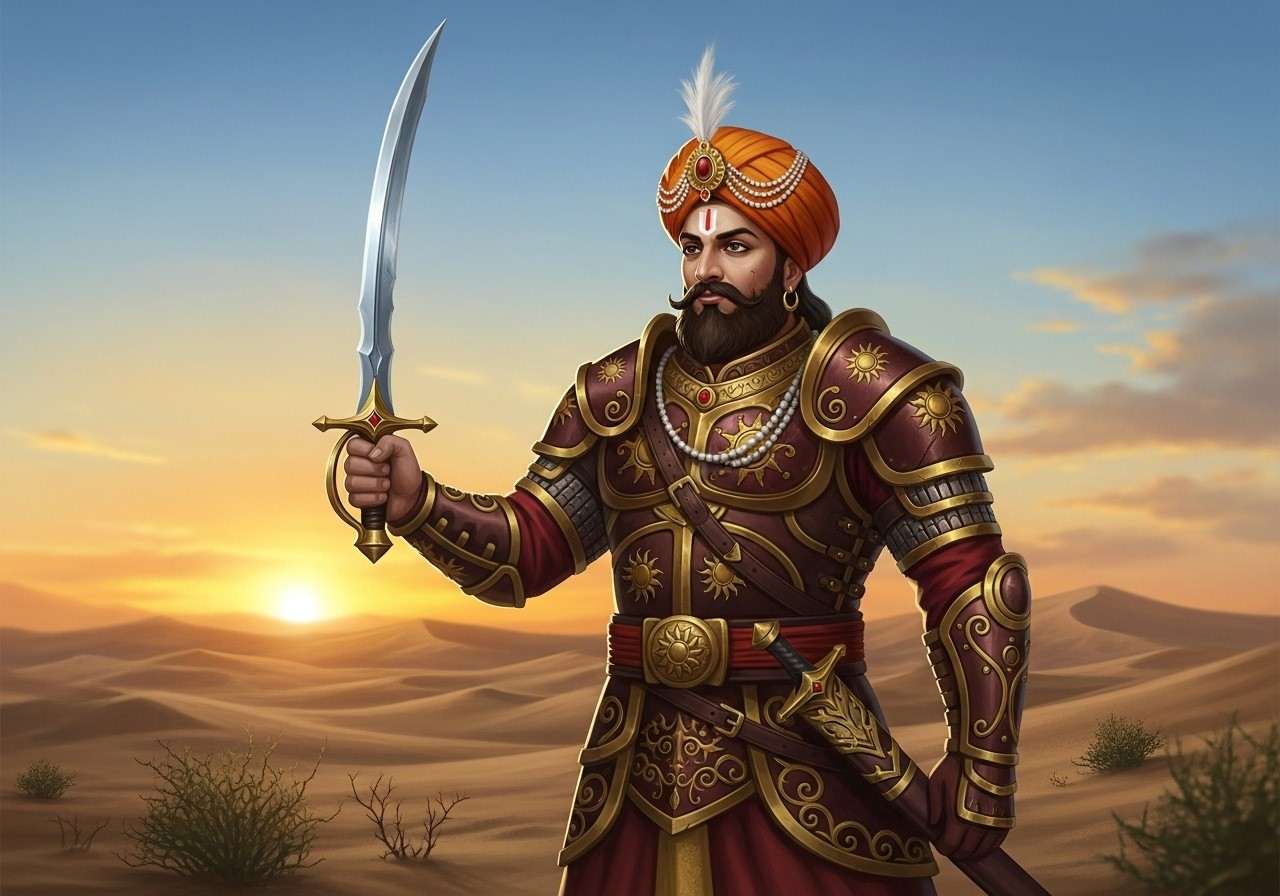
You might have heard the tales from your elders about the heavy sword of Bappa Rawal. Folklore suggests that his weapon was extraordinarily heavy, a testament to the sheer power required to wield it. In Indian martial traditions, the sword is not merely a tool of war but a symbol of protection, justice, and Dharma.
The stories of his blade highlight the exceptional craftsmanship of ancient India and the significance of weaponry in Rajput history. It is believed that this mighty sword played a crucial role in his numerous victories, cutting through enemy lines and defending the honor of the motherland.
At Poojn.in, we understand the deep spiritual connection our customers have with traditional weaponry and ritual symbols. Just as the sword represented protection for Bappa Rawal, our collection of ritual items helps you maintain that connection to our martial heritage.
If you are looking to bring a symbol of this strength into your home shrine, we invite you to explore our authentic collection. Our Brass Tir Kathi (14 Inch) is crafted with precision, reflecting the tradition associated with warrior icons. For those desiring a more commanding presence in their puja room, the Brass Tir Kathi (18 Inch) stands tall, symbolizing power and bravery.
Furthermore, if you are interested in the history of Indian blades, you might enjoy our deep dive into Khanda vs Katana: Iconic Sword Comparison, where we explore the significance of these legendary weapons.
From Kalbhoj to the Founder of Mewar
Born in 713 AD into the Guhilot Rajput dynasty, Bappa Rawal was originally known as Kalbhoj. His childhood was not one of luxury but of survival and grit. After his father and male relatives were lost in battle, he was raised in secrecy by his mother, supported by loyal Bheel attendants. These childhood years in the wild were his first school of warfare.
- Mentorship under Sage Harit Rishi: It was the divine guidance of Sage Harit Rishi that transformed a young warrior into a king. The Sage trained him not only in military warfare skills but also in meditation, self-discipline, and the intricate knowledge of politics and Dharma.
- Establishing the Kingdom: At the young age of 21, in 734 AD, Bappa Rawal displayed his military genius by defeating Man Mori, the Mori ruler. This victory led to the capture of the Chittor Fort, establishing his rule and laying the strong foundation for the Mewar kingdom in present-day Rajasthan.
The Protector of the North: Battles Against Arabs
One of the most significant chapters in Indian history is the Battle of Rajasthan in 738 AD. Bappa Rawal did not just defend his own kingdom; he stood as a shield for the entire nation. He unified various Rajput clans, creating a confederacy that inflicted a resounding defeat on the invading Arab forces.
History tells us that he didn’t stop at the borders. He liberated Sindh and chased the invading armies beyond Ghazni to protect Hindu culture. To fortify the North-West Frontier against future incursions, he is credited with establishing a military base that evolved into the city of Rawalpindi, which still exists today. His strategic foresight halted major foreign invasions into North-West India for centuries to come.
Common Questions About Bappa Rawal’s Legacy
As we interact with our community of history enthusiasts and devotees, several questions often arise regarding the life of this great ruler. We have gathered some of these insights to help you understand his magnitude better.
Many people are curious about Bappa Rawal’s actual height and physical built. While historical texts confirm he was of a commanding and impressive stature, much taller than the average man of his time, specific measurements in feet and inches often belong to the realm of oral legend, symbolizing his larger-than-life persona.
Similarly, there is much fascination regarding the weight of his sword. Devotees often ask if it was really as heavy as the myths say. The consensus among historians and folklore is that his weaponry was indeed exceptionally heavy and large, designed for a warrior of immense strength. This highlights that his physical capabilities were far superior to his contemporaries.
Another point of discussion is the cultural impact of his rule. Beyond his battles, Bappa Rawal is remembered as a warrior-saint. He is credited with building the famous Eklingji Temple, dedicating his kingdom to Lord Shiva. This blend of martial prowess and spiritual devotion is what makes his legacy endure in Indian identity today.
Keeping the Tradition Alive
Bappa Rawal’s life teaches us that true strength lies in the protection of one’s culture and values. At Poojn.in, we are committed to keeping these traditions alive. We are the premier destination for cultural goods in India, offering an extensive range of products that meet all your ritual requirements.
Whether you need authentic puja items or traditional brassware that reminds you of our glorious past, we are here to serve you. You can easily explore our collection today at poojn.in. For any assistance, feel free to contact us at 03369029784 or reach out via WhatsApp at 9476142738.