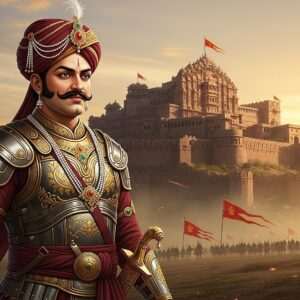


In the golden pages of Indian history, few names resonate with as much valour and spiritual depth as Bappa Rawal. As the legendary founder of the Mewar dynasty, his life was not just about conquering lands but also about conquering the self. While his military exploits are sung in folklore, the circumstances of his death and his Samadhi (final resting place) offer a profound insight into the spiritual traditions of Rajasthan. For those of us who cherish our heritage, understanding his final journey helps us connect with the roots of our culture.
Bappa Rawal: The Architect of Mewar
Born as Kalbhoj, Bappa Rawal was more than just a king; he was a guardian of Dharma. He is credited with establishing the Mewar Kingdom in 728 CE, a pivotal moment that shaped the destiny of the region. His reign was marked by incredible military brilliance, most notably his success in repelling Arab invaders, thereby securing the sovereignty of his people. Under his rule, art, architecture, and governance flourished, laying a foundation that would support the dynasty for centuries. However, the true beauty of his life lies in how he balanced his duties as a ruler with his devotion to the divine.
The Spiritual Transition: From Throne to Asceticism
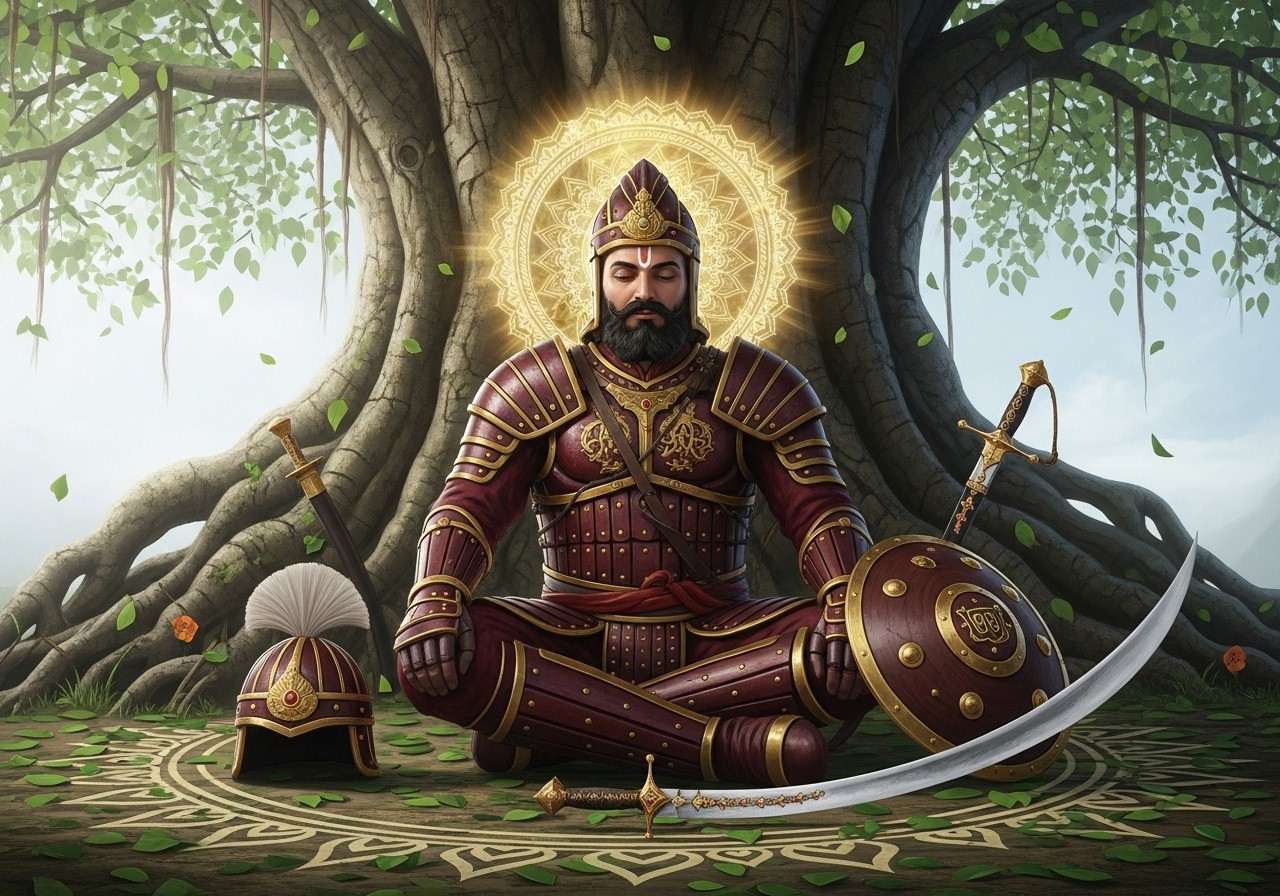
In the Indian tradition, the concept of Vanaprastha—retiring to the forest for spiritual pursuit—is deeply revered. Historical texts suggest that Bappa Rawal embodied this ideal. Around 753 CE, after years of just rule, he chose to abdicate the throne. Entrusting the kingdom to his son, he retreated from the material world to embrace a life of solitude and devotion.
It is believed that he spent his final days as a Shaivite ascetic, immersed in the worship of Eklingji, the presiding deity of the Mewar lineage. This transition from a mighty warrior to a humble devotee reminds us of the teachings found in our scriptures, where the ultimate goal is not power, but liberation. To understand more about the deep spiritual significance of such transitions, one can look at how other great figures are remembered, such as in the exploration of Rupa Goswami’s Samadhi and legacy, which highlights the sanctity of these holy sites.
Locating the Sacred: Bappa Rawal’s Samadhi
For pilgrims and history enthusiasts, the location of Bappa Rawal’s Samadhi is a place of deep reverence. Contrary to some popular misconceptions that place it elsewhere, historical records and local traditions indicate that he breathed his last in Nagda.
The Samadhi Sthal is situated approximately one mile north of Eklingpuri and about 2 km from Nagda, near Kailashpuri. The site includes a temple dedicated to his memory. While the site has undergone restoration to preserve its sanctity, it remains a humble testament to a man who once ruled a vast empire. Standing there, one can almost feel the vibration of history and spirituality intertwining. It is somewhat similar to the reverence shown when we discuss the legacy and remembrance of Jiva Goswami, where the memory of the saint keeps the tradition alive for future generations.
Understanding Samadhi: The Final Liberation
In Sanatan Dharma, Samadhi is not merely death; it is the highest state of meditative absorption, leading to Moksha (liberation). For a figure like Bappa Rawal, his passing was the culmination of a spiritual journey. It signifies the moment the soul sheds its mortal coil to merge with the absolute.
This concept can be complex to grasp for the modern mind. The profound nature of leaving the physical body is beautifully articulated in spiritual discourses, such as the teachings of Nisargadatta Maharaj on death and the ‘I Am’. Similarly, Bappa Rawal’s Samadhi serves as a pilgrimage site that inspires devotees to reflect on the impermanence of life and the eternity of the soul.
Bring the essence of divinity into your home with Poojn.in.
As we honor the spiritual legacy of great souls, creating a sacred space in our own homes is essential. Poojn.in stands out as the premier destination for cultural goods in India, offering authentic items to support your daily worship. For those seeking to enhance their home temple with spiritual grace, we recommend the Premanand Ji Maharaj Wall Hanging. It is a beautiful reminder of devotion that complements any household.
Our extensive range of products meets all your cultural requirements. Explore our collection today at poojn.in.
Common Questions About Bappa Rawal’s Departure
Devotees and history students often have many questions regarding the end of this era. Here, we address some of the most common inquiries to provide clarity on his final journey.
Regarding the cause of his death:
While the pages of history do not pinpoint a specific medical cause, it is widely accepted that his passing was a natural conclusion to a long, fulfilling life. Having embraced the life of an ascetic in the forests near Eklingji, his departure was peaceful, befitting a saintly king.
On the timing of his passing:
Historical consensus suggests that Bappa Rawal abdicated his throne around 753 CE. His passing occurred sometime after this period of spiritual retreat, marking the end of the 8th century.
About visiting the site:
The Samadhi near Kailashpuri is open to those who wish to pay their respects. It is a site of historical importance where visitors can offer their pranams to the founder of the Mewar dynasty. However, visitors should note that while restoration has occurred, some reports suggest preservation efforts are ongoing, so the site maintains a rustic and ancient atmosphere.
A Legacy Etched in Time
Bappa Rawal’s story is a golden thread woven into the rich tapestry of India’s history. His life serves as a bridge between the valor of a Kshatriya warrior and the wisdom of a spiritual seeker. By understanding his legacy, we embrace the tradition and honor the values he upheld.
His journey from a formidable ruler to a devoted ascetic invites us to reflect on the balance between worldly achievements and spiritual fulfillment. As we remember his Samadhi, we pay homage not just to a historical figure but to a timeless spirit that continues to guide and inspire. Through Bappa Rawal, we find a reminder that the pursuit of knowledge, protection of Dharma, and devotion remains a cherished path in our cultural heritage.
Honor your traditions with Poojn.in
Poojn.in helps you honor your ancestors and deities with authentic ritual items. We offer cultural goods that are perfect for performing ceremonies at home. Our products are available online, making it easy to get everything you need without hassle. By choosing Poojn.in, you ensure your rituals are performed with genuine items that respect tradition. For more details, visit our website or contact us at 03369029784. You can also reach us on WhatsApp at 9476142738.